
Full Body Workout Plan: How It Works, Pros and Cons, and a 3-Day Plan

In short
A full body workout plan (often called FBW) is a plan where you train all your muscles in every workout, two or three times a week. It suits men and women, people who are just starting to train, and anyone going through a busy or stressful period. It is an excellent plan for beginners. Below you will find how it works, its pros and cons, my tips, and a ready 3-day plan. Want the plan first? Jump to the sample 3-day plan.
What is a full body workout plan?
In a full body workout plan, you work all your muscles in every workout. You do the plan two to three times a week.
- In each workout you do 2 to 6 sets per muscle, and 18 to 24 sets in total for all the muscles.
- A workout should take around an hour.
- You can do the same workout three times a week, or rotate two or three different workouts, as long as every workout trains all the muscles.
I like to split the plan into two different workouts, A and B, and to focus on something different in each one. That way every muscle gets a significant load, and enough rest time to recover.
Which exercises go into a full body workout?
Compound exercises
A full body plan works your whole body, so you need to fit all the muscles into a reasonable amount of time. There isn't enough time to put emphasis on every muscle. That is why in this plan the focus is on compound exercises.
Compound exercises work a great many muscles at the same time: the squat, the bench press, pull-ups and the like. With compound exercises, many muscles work in almost every exercise, and your whole body gets a balanced stimulus.
The catch: some compound exercises are hard to recover from, and doing them heavy three times a week is too much. That is why I split the plan into two workouts. In each workout you do compound exercises, but different ones, in a different order of muscles.
Isolation exercises
Some muscles do need isolation exercises: the biceps, the triceps and the abs. It is worth starting to build the mind-muscle connection with them from the beginning. One exercise in each workout is enough.
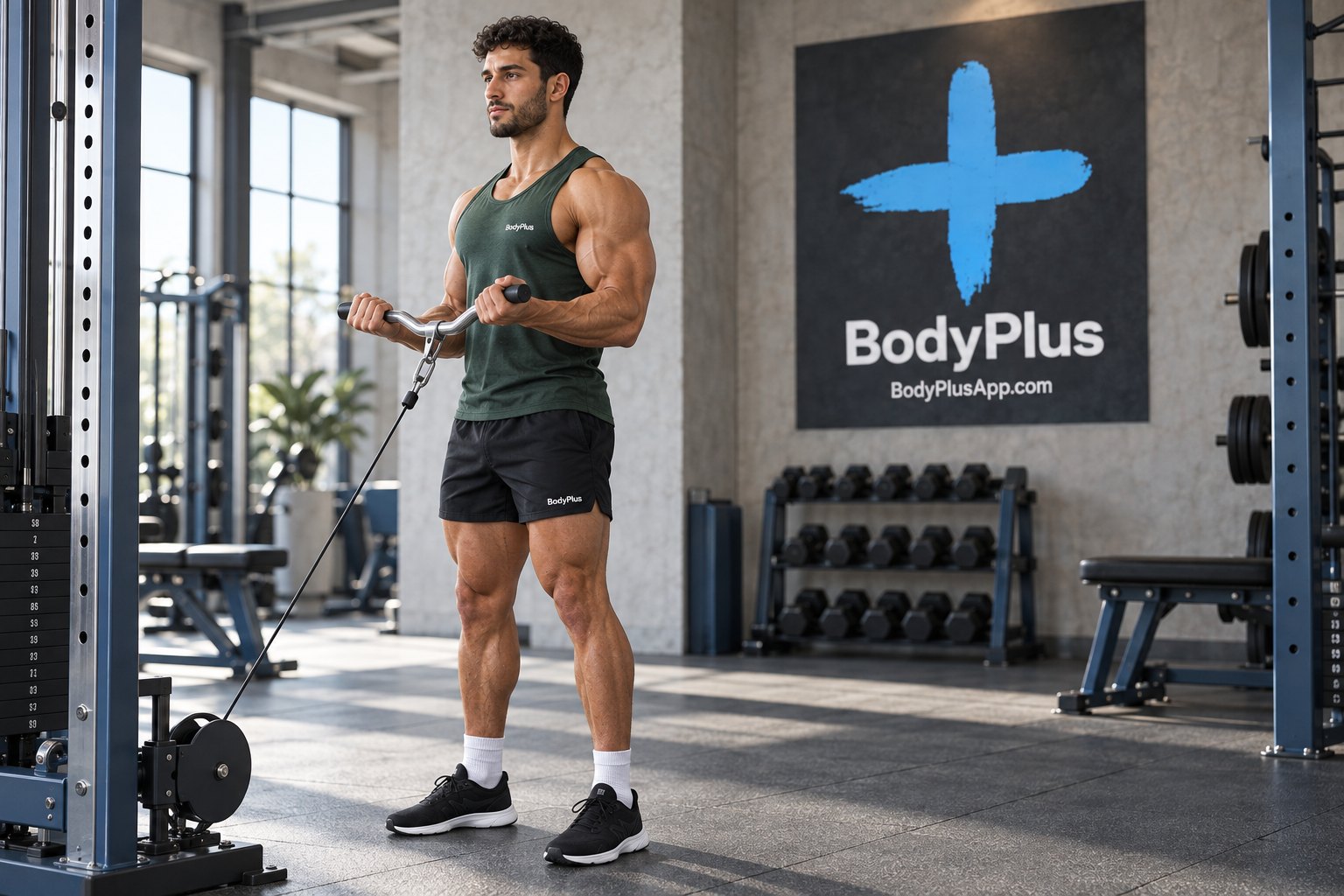
The mind-muscle connection is basically how strongly you manage to activate the muscle you want in a particular exercise. For example, when you do a biceps curl, you want to feel your biceps, not your forearms or your shoulders.
Pros of a full body workout plan
Building strength and muscle quickly
This plan is effective for beginners, because at the start you build muscle and strength the fastest. Beginners don't need a high volume (number of sets) for each muscle in order to improve.
In a full body plan you work every muscle three times a week. That helps keep a steady stimulus through the whole week, and keeps muscle building going.
After a certain time you will need to change plans, because your body will no longer manage to recover properly between workouts.
The best plan for learning exercise technique
Another reason this is the best plan for beginners: it is outstanding for learning technique.
Compound exercises like the bent-over row, the deadlift and the squat have a hard and complicated technique. In this plan you do them three times a week and not once, so you can practice the technique effectively.
Don't try to lift heavy in this plan. Do higher reps, 10 to 15. With more reps you perform the movement more times, and you get better at it.
Once you move to a plan that gives more recovery time, such as an ABC split, you can lower the reps and add an element of strength.
A flexible plan that suits everyone
In this plan you train two or three times a week. That is not many workouts, and you can fit them easily into your lifestyle.
It also suits advanced trainees who are in a stressful period of life and can't train four times a week.
You can split the plan into two different full body workouts (A and B) and alternate them during the week. You can even split it into three (A, B and C), where each workout has different exercises, but you still work the whole body.
Cons of a full body workout plan
It can lead to overload
In this plan you work all your muscles three times a week, so they may not recover fully between workouts. That can lead to overload.
Overload happens when there is too great an accumulated load on your muscles, joints, tendons, ligaments and so on. In a mild case it causes exhaustion, and a lack of energy and motivation to train. In a severe case, it can end in an injury.
That is why I split the plan so that in one workout you focus on certain muscles, and in the other on different muscles. That way you still work all your muscles, and you give them more time to recover. This helps you make the most of the muscle-building process.
After two to three months on this plan, it is worth moving up a level, to an upper/lower (A/B) split.
You can't use your maximum working weights on every exercise
No matter which workout you do, you can lift your maximum weights only in the first exercises. Because almost all the exercises are compound, after two or three exercises your muscles are already partly tired, and that stops you from lifting your maximum weight in the exercises that follow.
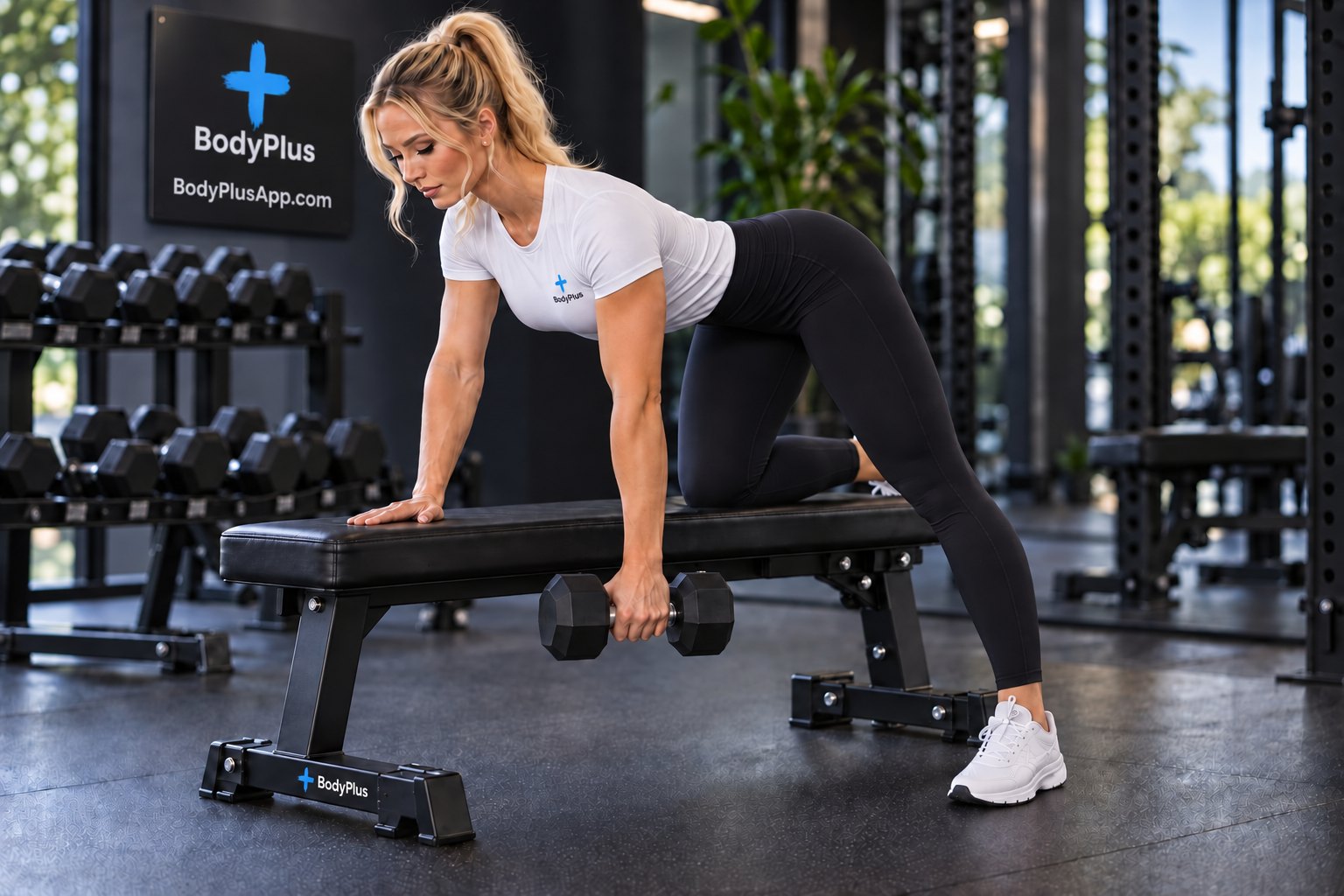
For example: if you start with the bench press, your chest, your shoulders and your triceps all work. That means that by the time you get to a shoulder exercise, they are already tired.
To reduce this drawback as much as possible, I start each workout with different exercises. That way each workout has its own focus, and working all the muscles during the week becomes much more effective. Each week some muscles get more emphasis, because you start with them twice, and the other muscles get a little more rest.
Tips for success on a full body plan
Track your progress
One of the biggest mistakes trainees make is not writing down their progress. If you don't write down what you did a week ago, or a month ago, how can you know whether you progressed?
Keep a list of the exercises, weights, number of sets and number of reps you do in each workout. This tracking helps you understand whether you need to change something in your plan.
And when you have a list, you will progress much faster. You see what you did in the previous workout, and you always strive to improve. Even one extra rep in the last set is an improvement, especially when you look across a period of several weeks.
If you are not managing to progress, you will see it clearly in your list, and then you can make the right changes.
Take at least one rest day between workouts
Many people do two or three workouts in a row, to finish them at the beginning of the week. That creates a critical problem, because your body doesn't recover. You won't arrive at your workouts at your best, and it is likely you will end up overloaded.
The goal in a full body plan is steady stimulation of your muscles through the whole week. With a rest day between workouts, the balance between recovery and load is perfect, and your body builds muscle all week long.
Don't train in low rep ranges
In a full body plan I don't work in a low rep range of fewer than 8 reps. Low reps put a big load on your body, muscles, joints, nervous system and more, and the recovery takes longer.
This rep range also raises the risk of getting hurt. With low reps the chance of cheating on technique goes up, and a wrong movement with too heavy a weight puts you at a higher risk.
If your goal is only to build strength, and not muscle and a lean body, choose programs that focus on strength, such as Starting Strength. Just note that in these programs you need to eat a great deal, and you reach high body fat percentages, so think carefully about whether that suits you.
A sample 3-day full body plan
This plan is for the gym, and it is built from two different workouts that each work the whole body: workout A and workout B. You rotate them on three non-consecutive days. In week 1 you do A, B, A, and in week 2 you do B, A, B, and so on.
| Day | Week 1 | Week 2 |
|---|---|---|
| Monday | Workout A | Workout B |
| Wednesday | Workout B | Workout A |
| Friday | Workout A | Workout B |
Workout A
| Exercise | Sets | Reps | Rest |
|---|---|---|---|
| Squat | 3 | 10-12 | 2 min |
| Bench press | 3 | 10-12 | 2 min |
| Lat pulldown or pull-up | 3 | 10-12 | 90 s |
| Romanian deadlift | 3 | 10-12 | 2 min |
| Lateral raise | 2 | 12-15 | 60 s |
| Dumbbell curl | 2 | 10-15 | 60 s |
| Plank | 2 | 30-45 s | 60 s |
Workout B
| Exercise | Sets | Reps | Rest |
|---|---|---|---|
| Barbell or dumbbell row | 3 | 10-12 | 2 min |
| Seated dumbbell shoulder press | 3 | 10-12 | 90 s |
| Leg press or goblet squat | 3 | 10-12 | 2 min |
| Incline dumbbell press | 3 | 10-12 | 90 s |
| Leg curl | 2 | 10-15 | 60 s |
| Triceps pushdown | 2 | 10-15 | 60 s |
| Crunch or dead bug | 2 | 12-15 | 60 s |
Each workout has 18 sets, including 2 core sets, and takes about an hour with warm-up sets. Start with weights you can lift for the top of the rep range with good form and two or three reps to spare.
At home: goblet squat, push-ups, one-arm dumbbell row, dumbbell Romanian deadlift, dumbbell shoulder press, dumbbell lateral raise, band curl, band pushdown and plank cover the main movements.
How to progress
Log every set. When you reach the top of the rep range on every set of an exercise, add a small amount of weight next time. Here is an example:
| Date | Exercise | Weight | Set 1 | Set 2 | Set 3 |
|---|---|---|---|---|---|
| Mon | Squat | 40 kg (88 lb) | 12 | 11 | 10 |
| Fri | Squat | 40 kg (88 lb) | 12 | 12 | 12 |
| next Wed | Squat | 42.5 kg (94 lb) | 11 | 10 | 10 |
Which plan comes next?
| Where you are | Plan |
|---|---|
| Starting out, or a busy period | Full body, 2-3 days a week |
| After about 2-3 months of steady training | Upper/lower (A/B) split, 3-4 days |
| At least 3 months of steady training, 3-4 days a week | ABC split |
| More experience, 3-6 days a week | Push/pull/legs split |
What research says
- Frequency can help, but weekly sets matter most. An earlier, smaller 2016 review (10 studies) found that training a muscle twice a week built more muscle than once a week. A larger 2019 review (25 studies) found that when weekly sets were equal, frequency made little difference. Training more often mainly helps you fit in more weekly sets. A full body plan is one good way to spread them.
- About 10 or more sets a week. The 2026 position stand of the American College of Sports Medicine (ACSM) found better muscle growth with 10 or more sets per muscle group per week. The sample plan gives your chest, back and quads about 9 direct sets a week, plus work from other exercises. That is close to this mark. If you recover well and want a bit more volume, add a fourth set to one exercise per muscle.
Safety
For the squat and the bench press, set the safety arms of the rack, or ask a spotter to stand by. Start lighter than you think you need, and add weight in small steps, only after you reach the top of the rep range on every set. Lift with a controlled tempo and keep breathing. End the set when your technique starts to slip, or if something hurts, and switch to a lighter or pain-free variation. The rest day between workouts is part of the plan, so keep it.
Bottom line
If you are a beginner, or you are in a busy or stressful period of life, the full body workout plan is excellent. A good plan takes many things into account: how the muscles are built and which exercises fit them, how to divide the muscles across the workouts, the number of sets and reps, recovery, enough stimulation, and more. The sample plan above is built that way.
Don't overthink it. Start with the sample plan, log every workout, and move to an upper/lower split when your progress slows.
Frequently asked questions
Is a full body workout good for beginners?
Yes. It trains every muscle often, gives you lots of practice with the main exercises, and takes only two or three days a week.
How many days a week should I do a full body workout?
Two or three days, with at least one rest day between workouts.
How long should a full body workout take?
About an hour, including warm-up sets.
Can I do a full body workout every day?
No. Take at least one rest day between workouts, so your body can recover and keep building muscle.
How many exercises should a full body workout have?
About six to eight: mostly compound exercises, plus two or three isolation exercises for the shoulders, arms or abs.
Can I do a full body workout at home?
Yes, with dumbbells, bands, or body weight. See the home swaps under the sample plan.
When should I switch to another plan?
When you stop progressing for a few weeks despite good sleep and nutrition, usually after about two to three months. Then move to an upper/lower split.
The information on this page and on this website is intended to provide general information only. The content on this website does not constitute a professional opinion, a recommendation, or a substitute for consulting an expert in a specific field or obtaining a medical opinion. It is not medical advice. BodyPlus is not a medical device. If you have a health condition or an injury, or are pregnant, talk to a qualified healthcare professional before starting. Stop exercising and seek appropriate help if you feel pain, dizziness or other concerning symptoms.
Sources
Accessed September 17, 2026.
- Schoenfeld B.J. et al., "Effects of Resistance Training Frequency on Measures of Muscle Hypertrophy: A Systematic Review and Meta-Analysis", Sports Med 2016;46(11):1689-1697. pubmed.ncbi.nlm.nih.gov/27102172
- Schoenfeld B.J. et al., "How many times per week should a muscle be trained to maximize muscle hypertrophy? A systematic review and meta-analysis of studies examining the effects of resistance training frequency", J Sports Sci 2019;37(11):1286-1295. pubmed.ncbi.nlm.nih.gov/30558493
- Currier B.S. et al., ACSM Position Stand, "Resistance Training Prescription for Muscle Function, Hypertrophy, and Physical Performance in Healthy Adults: An Overview of Reviews", Med Sci Sports Exerc 2026;58(4):851-872. pubmed.ncbi.nlm.nih.gov/41843416