
5x5 Workout: A Simple Strength Plan With Two Workouts, Starting Weights and Progression
In short
A 5x5 workout is a strength plan built on a few heavy barbell lifts: squat, bench press, barbell row, overhead press and deadlift. You alternate two workouts, A and B, three days a week, and do 5 sets of 5 reps on the main lifts (the deadlift gets one set of 5). You start light and add a little weight every week. It suits beginners and intermediates who want to get stronger.
Dreaming of building a powerful body? Dreaming of lifting heavy weights in the gym and developing your overall strength? Then think about the 5x5 workout plan. It is a famous and very effective strength program that has existed for decades.
In this article there is everything you need to know about it: advantages, disadvantages, the famous versions, a ready sample plan, how to choose your starting weights and how to personalize the plan. So let's begin!
What is a 5x5 workout plan?
The 5x5 workout plan is a plan whose main goal is building physical strength, raising your working weights and improving your technique in compound exercises. The plan suits both men and women.
In this plan the workouts are divided into 2 different types. In each workout you do 3 main exercises, with 5 sets of 5 repetitions.
The 5x5 plan focuses mainly on compound exercises that work a lot of muscles together, such as the squat, the deadlift, the bench press, the overhead press and the bent-over row. Focusing on these exercises means that all the muscles in the body work in every workout.
The plan focuses on 3 main exercises, but usually a few more isolation exercises are added. This is done for several reasons. The first reason is that there are muscles that are not worked sufficiently, such as the front arm (biceps), the back arm (triceps), the side delts (middle shoulder) and the calves. The second reason is to add exercises specifically for muscles that are relatively weak for you.
Note: the 5x5 applies to all the exercises except the deadlift, in which you do one set of 5 repetitions. The deadlift is a very demanding exercise that requires a lot of energy and recovery time. Doing 5 sets of deadlift is almost impossible, especially since it comes after 10 sets of compound exercises.
Who is a 5x5 program for?
The 5x5 workout plan is suitable mainly for beginner and intermediate trainees. It is excellent and suitable for women and men, for bodybuilders and also for athletes in sports that require physical strength, such as martial arts, soccer, basketball and more.
If you are brand new to the gym, you can spend the first weeks on a full body plan, learning the squat, the bench press and the deadlift with light weights, because barbell technique takes time to learn.
The standard 5x5 plan will not suit advanced strength trainees, meaning those who have done strength programs for two years. Advanced trainees will not manage to recover from it, because of the heavy weights they already lift.
Note: advanced strength trainees are not people who have trained at the gym for two years, but people who have done strength programs such as Starting Strength (SS), 5/3/1 and more for two years.
The advantages of the 5x5 workout plan
Builds crazy strength quickly
The 5x5 workout plan will give you a powerful body, and will make you lift crazy weights in compound exercises quickly. The number of repetitions and sets that you do with heavy weights in compound exercises means that all the muscles of the body work all the time. In addition, these exercises load the body's nervous system and force it to develop.
Improves technique in the fundamental exercises
It really takes a lot of time to master the technique of compound exercises. Even intermediate trainees need to practice the technique in these exercises. In this plan you will practice the technique a lot, throughout the whole week. This will help you build a good foundation for weightlifting and bodybuilding.
An excellent plan for building strength for all athletes
Not only bodybuilders and weightlifters need to build strength. For athletes such as soccer players, basketball players, martial artists and more, strength is a significant component that can be the difference between winning and losing. The 5x5 workout plan is excellent for all athletes who want to build strength, explosive strength and athleticism.
The disadvantages of the 5x5 workout plan
Focuses only on building strength
This plan is excellent for people who want to build overall strength in the whole body. It focuses on getting significantly stronger. It will not suit people who want to maximize hypertrophy, endurance, or any other goal.
You can do the plan for a short period of 1 to 3 months. That way it will build you serious strength, and then you can focus on your specific goals.
Little variety and long rest periods
Yes, this plan is a bit boring. The whole plan is based on 3 exercises that you do all the time. In addition, you are resting most of the time in the workout. These exercises are very heavy on the body, and require long rest times between sets.
It is true that accessory exercises are added, but only 1 or 2. Most people have no energy left at all for accessory exercises, so they skip them.
Not suitable for everyone
The 5x5 workout plan is not suitable for advanced trainees and for people whose main goal is hypertrophy (building muscle mass). Advanced trainees will not achieve much in this plan, because there is not enough recovery time in it. To build muscle mass it is better to focus more on volume, meaning more sets with more repetitions (see hypertrophy).
In addition, it is also not suitable for people with health problems that limit them.
Famous versions of the 5x5 workout plan
There are plenty of famous versions of 5x5. All the versions are based on the same exercises, but the structure of the plan is different.
StrongLifts 5x5
StrongLifts 5x5 is an outstanding workout plan for beginners, developed by Mehdi Hadim. It is a plan in which you train 3 times a week. Each week you do 2 different workouts, that is A, B, A, and the week after B, A, B. Progression in this plan is linear, meaning you add a little weight on a fixed schedule. The official plan adds weight every workout; the sample plan on this page adds it once a week, which is slower.
The plan is divided into workout A and workout B:
- Workout A: squat 5x5, bench press 5x5, bent-over row 5x5
- Workout B: squat 5x5, overhead press 5x5, deadlift 1x5
After finishing the workout you add accessory exercises such as pull-ups, dips, biceps curls and more.
Madcow 5x5
The Madcow 5x5 workout plan is a popular version that is based on Bill Starr's 5x5 plan. The plan focuses on building strength and muscle mass while keeping the load manageable. It is a linear plan, meaning you increase the weight slightly every week.
This variation of the plan also includes assistance exercises. The assistance exercises make it possible to focus on specific muscles, such as the arms. In addition, this makes it possible to correct an imbalance between the muscles in the body.
The Madcow program guide starts with a four-week on-ramp: lighter weeks lead back to your previous best in week four, then you try to progress weekly. That is not an automatic deload every four weeks. Whenever you fail to progress, a lighter "deload" week gives the body a chance to recover.
Texas Method
The Texas Method is a workout plan that is suitable for intermediate and advanced trainees. It was developed by Mark Rippetoe, who developed the famous SS workout plan. In this plan you divide into 3 workouts a week with different working weights, meaning a light, medium and heavy workout.
- Light: the light day is a recovery day, 3 sets of 5 repetitions with light weights.
- Medium: you do 5 sets of 5 repetitions with a moderate weight.
- Heavy: this is the workout in which you lift a heavy weight for one set of 5 repetitions.
This version is a linear plan, meaning you increase the weight every week. You increase the weight in the heavy workout. In the Texas Method too, accessory exercises are added, such as rows, dips and biceps curls.
Is the 5x5 workout plan suitable for women?
Yes, the 5x5 workout plan is suitable for women. Women too can gain a lot from strength training in general, and from these exercises in particular. Strength training will help you improve your performance in all kinds of sports.
Relative to your starting point, women and men on the same program gain muscle and lower-body strength at similar rates, so the plan works just as well for you.
A sample 5x5 workout plan
This sample follows the classic two-workout structure above.
Workout A
| Exercise | Sets | Reps | Rest |
|---|---|---|---|
| Squat | 5 | 5 | 3-5 min |
| Bench press | 5 | 5 | 3-5 min |
| Bent-over row | 5 | 5 | 3 min |
| Accessory: pull-ups or lat pulldown | 2-3 | 6-10 | 2 min |
| Accessory: dumbbell curl | 2 | 8-12 | 90 s |
Workout B
| Exercise | Sets | Reps | Rest |
|---|---|---|---|
| Squat | 5 | 5 | 3-5 min |
| Standing overhead press | 5 | 5 | 3 min |
| Deadlift | 1 | 5 | - |
| Accessory: dips or push-ups | 2-3 | 6-12 | 2 min |
| Accessory: plank | 2 | 30-45 s | 60 s |
The accessories are optional. Pick 1 or 2 per workout, and skip them if your main lifts suffer. You can also swap them for exercises for your weaker muscles, or for calf raises or lateral raises.
Weekly schedule
| Day | Week 1 | Week 2 |
|---|---|---|
| Monday | A | B |
| Tuesday | rest | rest |
| Wednesday | B | A |
| Thursday | rest | rest |
| Friday | A | B |
| Saturday | rest | rest |
| Sunday | rest | rest |
Keep at least one rest day between workouts. Any three days work, such as Sunday, Tuesday and Thursday. Week 3 starts again like week 1.
Warm-up sets
Warm-up sets are not part of the 5 sets. Before each main lift, do 2 sets of 5 with the empty bar, then 2 or 3 sets with fewer reps as you build up to your working weight. Before the first lift of the day, add a few minutes of light cardio and some body-weight squats.
How to build a personalized 5x5 workout plan
You don't have to do exactly the famous 5x5 workout plans. You can adapt one for yourself personally. It is worth basing it on StrongLifts 5x5, because it is the most basic plan.
- Define the goals. Define the main and secondary goal for which you are doing the plan. This will help you choose the suitable exercises.
- Adjust your nutrition to the goal. Whether you want to increase in strength and body weight, or you want to lose body weight and keep the strength.
- Choose the compound exercises. You can do variations of the exercises, although it is worth staying with the original exercises. This is true only for someone who cannot do a certain exercise.
- Choose isolation exercises. You can add between 1 and 3 isolation exercises for certain muscles in each workout, in order to increase the volume.
- Set a time. Set for approximately how long you are going to do the plan. It is worth staying in the range of 6 to 12 weeks.
For more help with the steps, see how to make a workout plan and the guide to strength training.
Track progress, do audits
After you start the plan you need to review it all the time. You should aim to increase between 2.5 and 5 kilos every week, depending on the exercises. If you are not progressing, you need to check what you are doing wrong, and then how to fix it.
There are many things that can go wrong, such as nutrition, overload, wrong exercises, wrong structure and division. This is usually a stage that beginner trainees cannot do alone. It is very hard to find what the problem really is and why the plan is not working. Write down every set, so you can see exactly where progress stopped.
A practical rule many lifters use: if you miss reps at the same weight in three workouts in a row, lower that lift's weight by about 10% and build back up with the same weekly jumps.
How to choose starting working weights?
In the first week that you do the workout plan, start with a light weight. Start with a weight with which you will certainly manage to finish 5 sets of 5 repetitions. You can start with about 65% of your maximum weight for one repetition (1RM), the heaviest weight you can lift once.
If you want a relatively accurate number you can use our 1RM calculator. Use it to estimate your maximum weight from a set you already did, and then multiply by 0.65. That will give you the weight you need to start with. There is no need to test a true one-rep max just to start this plan.
For example, if your estimated squat max is 100 kg (about 220 lb), your starting squat is 65 kg (about 143 lb). If your estimated bench press max is 70 kg (about 154 lb), 65% is 45.5 kg, so start at 45 kg (about 99 lb).
After the first week, start increasing the weight by 2.5 to 5 kg (about 5 to 10 lb) a week. Big lifts like the deadlift and the squat can take the larger jumps; the bench press, the row and especially the overhead press usually need the smaller ones. A simple rule: if you completed all 5 sets of 5 reps with good form, add weight the next week. If you missed reps, stay at the same weight until you complete all of them.
Sample squat log
| Week | Squat weight | Reps per set | Next week |
|---|---|---|---|
| 1 | 65 kg (about 143 lb) | 5, 5, 5, 5, 5 | add 2.5 kg |
| 2 | 67.5 kg (about 149 lb) | 5, 5, 5, 5, 5 | add 2.5 kg |
| 3 | 70 kg (about 154 lb) | 5, 5, 5, 5, 5 | add 2.5 kg |
| 4 | 72.5 kg (about 160 lb) | 5, 5, 5, 5, 5 | add 2.5 kg |
| 5 | 75 kg (about 165 lb) | 5, 5, 5, 5, 4 | stay |
| 6 | 75 kg (about 165 lb) | 5, 5, 5, 5, 5 | add 2.5 kg |
| 7 | 77.5 kg (about 171 lb) | 5, 5, 5, 4, 4 | stay |
The log shows the first squat session of each week; the other squat sessions that week use the same weight. Progress doesn't go in a straight line forever, and a repeated week is normal.
Which plan is right for you?
| Where you are | Plan |
|---|---|
| Starting out, or a busy period | Full body, 2-3 days a week |
| After about 2 months of steady training | Upper/lower (A/B) split, 3-4 days |
| At least 3 months of steady training, 3-4 days a week | ABC split |
| More experience, 3-6 days a week | Push/pull/legs split |
| Strength is your main goal and you can do the five barbell lifts with good form (beginner or intermediate, not advanced strength lifters) | 5x5, 3 days a week, for 6-12 weeks |
The 5x5 is a side route for a strength goal, not a step between the other plans.
What research says about strength and muscle
- Heavy sets build more strength; muscle size can be similar. In a small 8-week study of 17 well-trained young men, a strength-style routine (7 sets of 3 heavy reps, 3-minute rests) and a bodybuilding-style routine (3 sets of 10, 90-second rests) had the same total volume. Biceps thickness grew similarly, but the strength group gained more in the bench press, with a trend toward a bigger squat.
- Lighter loads built muscle too, but less strength. In a second 8-week study of 18 well-trained young men, sets of 8 to 12 reps and sets of 25 to 35 reps, all taken to failure, built similar muscle thickness in the arms and thighs. The heavier group gained more squat strength (19.6% vs 8.8%). Together, the two studies support the idea behind 5x5: heavy sets are the better tool for strength.
- What the ACSM recommends. The 2026 position stand of the American College of Sports Medicine, an overview of 137 systematic reviews, found that strength improved more with heavier loads (80% of 1RM or more), 2 to 3 sets, lifts done at the start of the session, and at least 2 sessions a week. Muscle growth improved with 10 or more sets per muscle group per week. A 5x5 plan matches parts of that list: the main lifts come first in each workout, and your working weights climb toward that heavy range over the weeks. It uses more sets per lift (5) than the 2 to 3 in the list, and in alternate weeks the bench press, row and overhead press are trained only once. For muscle growth, count your weekly sets per muscle group.
- Women and men adapt at similar rates. A 2020 review found similar relative gains in muscle size (10 studies) and lower-body strength (23 studies) when men and women followed the same program, and a larger relative gain in upper-body strength for women (17 studies). Most studies were short.
- A deload is not a full week off. In a 9-week study of 39 trained young men and women, a group that stopped training completely for one week in the middle gained similar leg muscle size, but less leg strength, than a group that kept training. That study tested a full break, not a lighter week, so it doesn't tell you how a lighter deload week works.
Safety
A 5x5 plan means heavy barbell lifts, often without a partner, so set up your safety before your first heavy set. Each lift has a full technique guide: squat, bench press and deadlift.
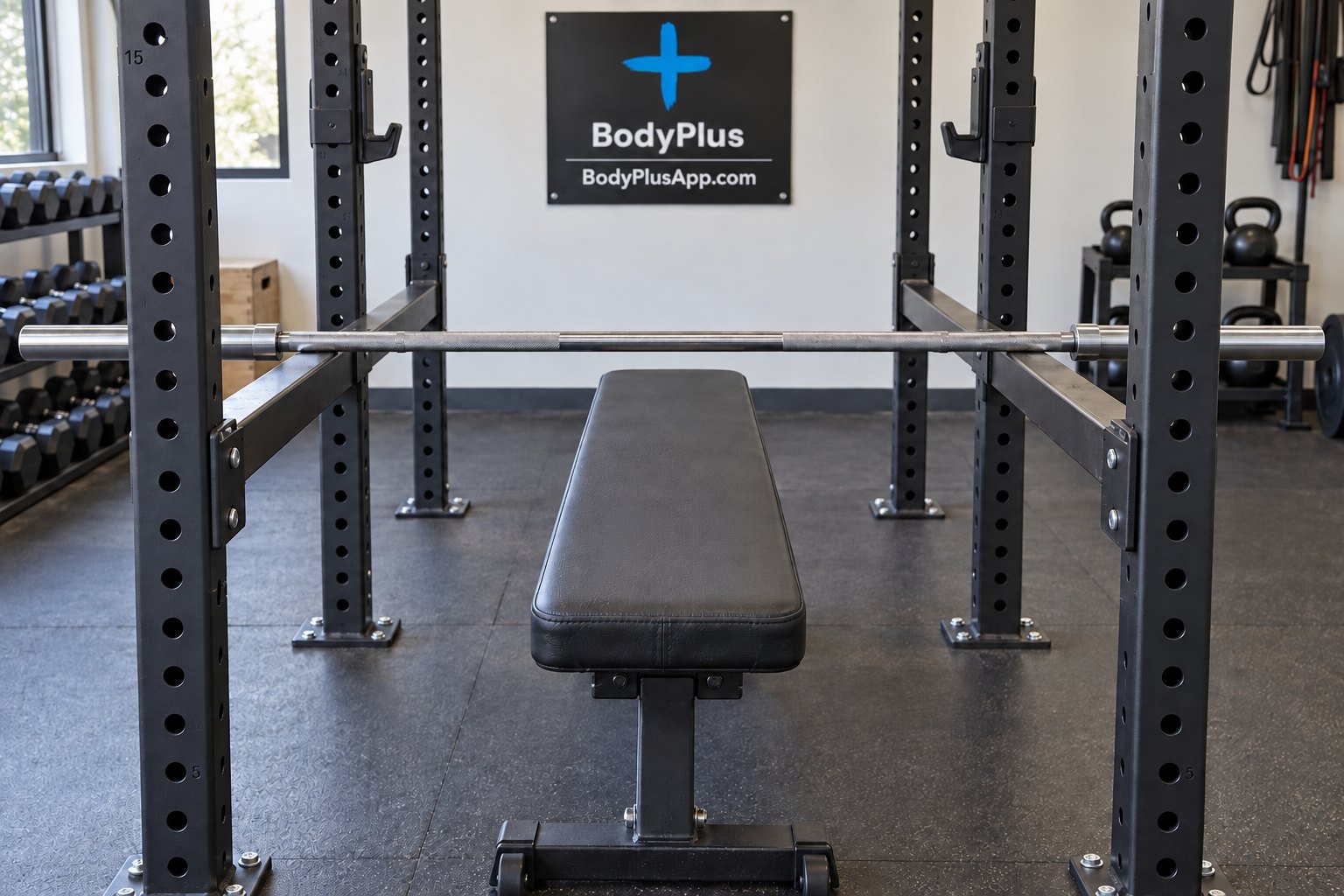
- Use a power rack. Set the safety bars just below the bar at the bottom of your squat. For the bench press, set them just above your chest when you lie on the bench, so the bar can rest on them and you can slide out. If you have no rack, bench with a spotter.
- Put collars on the bar for every working set.
- Start light and keep a controlled tempo. The starting weights above leave you room to add weight for many weeks.
- Stop a set when your form breaks, even if that means fewer than 5 reps. A missed rep is fine; a rep with a rounded back is not.
- For the deadlift, keep the bar close to your legs and set it down under control instead of bouncing it.
Bottom line
The 5x5 workout plan is a plan whose main goal is to build crazy strength and power. It focuses on 5 main exercises, which are: the squat, the bench press, the deadlift, the overhead press and the bent-over row. In this plan you do 3 different exercises in each workout. Each exercise is done for 5 sets of 5 repetitions.
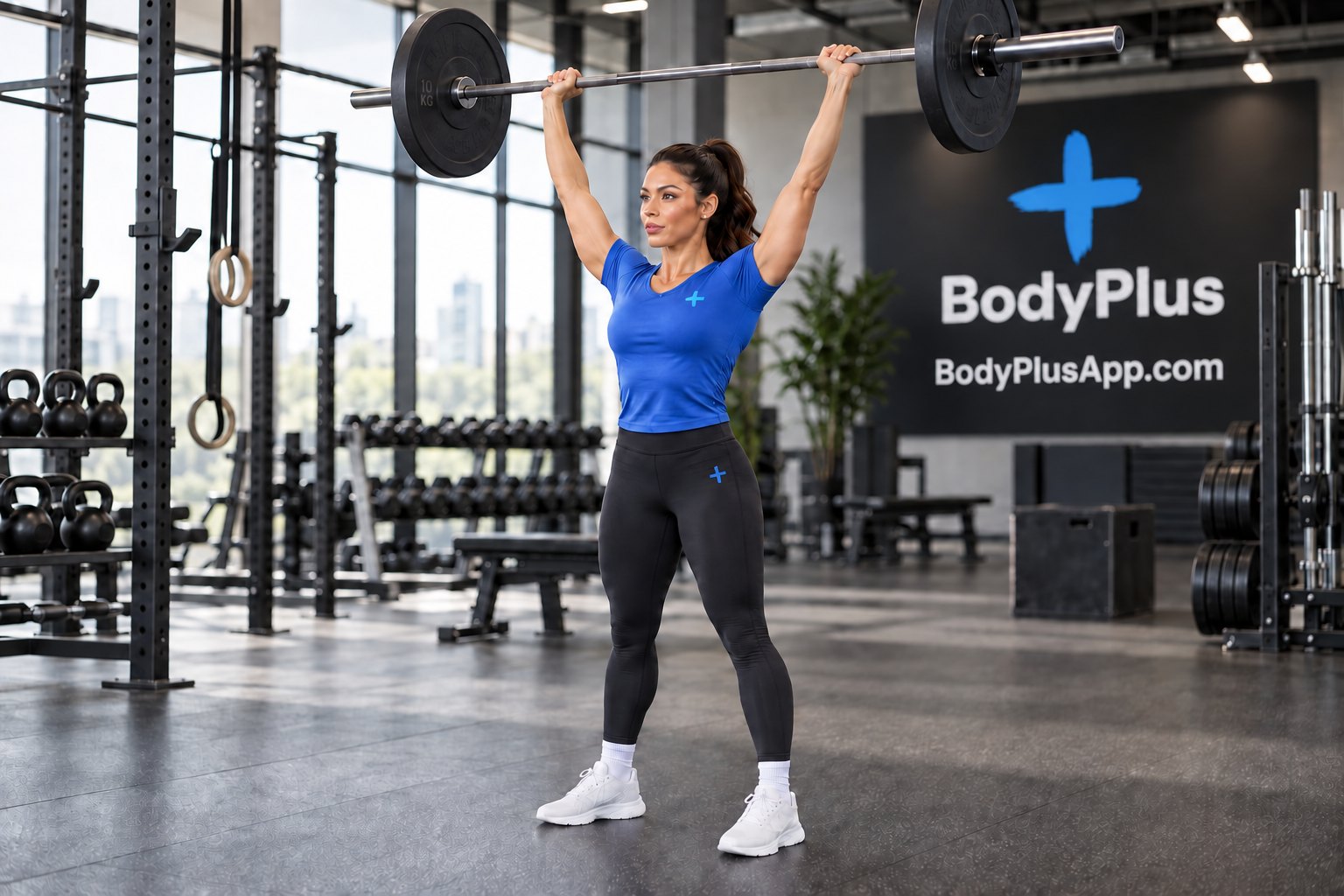
All in all, the 5x5 workout plan is excellent for building strength, but it is worth making personal adjustments. The personal adjustments will help you reach your personal goals, for example to improve in a certain exercise, or to enlarge a certain muscle while working on strength, and many other different goals.
Frequently asked questions
Is 5x5 good for beginners?
Yes, it is a classic beginner strength plan. Start with light weights, and if you are brand new to the gym, spend the first weeks learning the lifts, for example on a full body plan.
Is 5x5 good for building muscle?
It can build some muscle, but it is designed for strength. If muscle size is your main goal, a plan with more weekly sets per muscle group, such as an upper/lower or push/pull/legs split, fits better.
How long should I run a 5x5 program?
Plan for 6 to 12 weeks. Many people use it for 1 to 3 months to build a base of strength, then move to a plan for their next goal.
How much weight should I add each week?
About 2.5 to 5 kg (about 5 to 10 lb), and only after you complete all 5 sets of 5. Use smaller jumps on the upper-body lifts.
What if I can't finish all 5 sets of 5?
Stay at the same weight next time. If you miss reps at the same weight three workouts in a row, lower the weight by about 10% and build back up.
Why is the deadlift only one set of 5?
It is very demanding, and you do it after 10 sets of squats and presses. One heavy set is enough on this plan.
How long does a 5x5 workout take?
About 60 to 90 minutes with warm-ups and long rests. Most of that time is rest, which is normal on this plan.
Can I do a 5x5 workout at home or with body weight?
The plan is built on barbell lifts, so you need a barbell, plates and a rack with safety bars. A body-weight version is a different plan; see our home workout exercises.
Can I add cardio to a 5x5 plan?
Yes. Light cardio on rest days usually fits well. Keep hard cardio away from the hours before your heavy leg work.
The information on this page and on this website is intended to provide general information only. The content on this website does not constitute a professional opinion, a recommendation, or a substitute for consulting an expert in a specific field or obtaining a medical opinion. It is not medical advice. BodyPlus is not a medical device. If you have a health condition or an injury, or are pregnant, talk to a qualified healthcare professional before starting. Stop exercising and seek appropriate help if you feel pain, dizziness or other concerning symptoms.
Sources
Accessed September 17, 2026.
- Schoenfeld B.J. et al., "Effects of different volume-equated resistance training loading strategies on muscular adaptations in well-trained men", J Strength Cond Res 2014;28(10):2909-2918. pubmed.ncbi.nlm.nih.gov/24714538
- Schoenfeld B.J. et al., "Effects of Low- vs. High-Load Resistance Training on Muscle Strength and Hypertrophy in Well-Trained Men", J Strength Cond Res 2015;29(10):2954-2963. pubmed.ncbi.nlm.nih.gov/25853914
- Currier B.S. et al., ACSM Position Stand, "Resistance Training Prescription for Muscle Function, Hypertrophy, and Physical Performance in Healthy Adults: An Overview of Reviews", Med Sci Sports Exerc 2026;58(4):851-872. pubmed.ncbi.nlm.nih.gov/41843416
- Roberts B.M., Nuckols G., Krieger J.W., "Sex Differences in Resistance Training: A Systematic Review and Meta-Analysis", J Strength Cond Res 2020;34(5):1448-1460. pubmed.ncbi.nlm.nih.gov/32218059
- Coleman M. et al., "Gaining more from doing less? The effects of a one-week deload period during supervised resistance training on muscular adaptations", PeerJ 2024;12:e16777. pubmed.ncbi.nlm.nih.gov/38274324