
How to Squat: Barbell Back Squat Form, Muscles Worked and Safety
In short
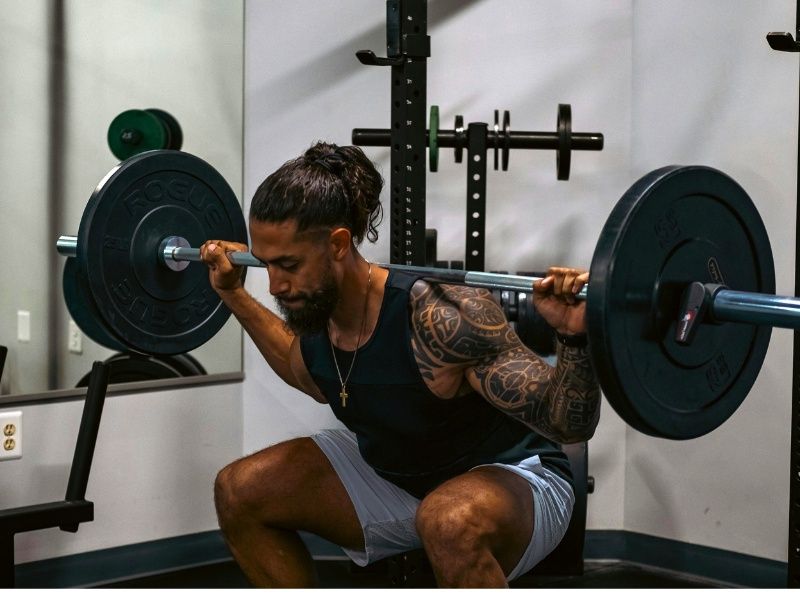
To squat with a barbell, rest the bar on your upper back, stand with your feet about shoulder-width apart and your toes turned slightly out, and brace your core. Push your hips back and bend your knees at the same time, keep your knees in line with your toes, and go down until your thighs are at least parallel to the floor. Then push up from your heels until your legs are straight. The squat mainly trains your quads, glutes and inner thighs (adductors).
The squat is known as "the king of all exercises", and for good reason. A huge number of muscles work together in a single movement! It is a wonderful exercise, both for men who dream of building big legs and for women who want shapely legs and glutes. In this article you will find everything you need to know about it: benefits, technique, common mistakes, tips, variations and more. So let's begin!
New to squatting, or training at home? Learn the pattern first with a dumbbell or goblet squat, or with body weight only (see "Easier versions" below).
Muscles worked
The main muscles that work in the squat are the quadriceps, glutes, hip muscles, abs, lower back, hip abductors and calves. Here is a closer look at what they do:
| Muscle | Where it is | Its job in the squat |
|---|---|---|
| Quads (quadriceps) | front of the thigh | straighten your knees; much of the work as you stand up |
| Glutes (mainly the gluteus maximus) | your buttocks | straighten your hips, especially out of a deep squat |
| Adductors (inner thighs) | inside of the thigh | the largest, the adductor magnus, helps straighten your hips |
| Core and lower back (abs, erector spinae) | around your trunk and along your spine | hold your torso steady under the bar |
| Hip abductors (gluteus medius and minimus) | side of the hip | steady your pelvis and knees |
| Hamstrings and calves | back of the thigh, lower leg | help the hips and knees work and keep you steady |
| Upper back | between and around your shoulder blades | holds the bar in place |
The muscle names and their basic actions follow a standard anatomy textbook (OpenStax); the roles in this exercise are coaching descriptions. For a full map of these muscles, see my guide to the leg muscles.
For the back of your thighs, the squat is not the best way to grow the hamstrings. To train them directly, add a Romanian deadlift or a leg curl.
Benefits of the squat
Builds serious muscle in your legs and works your whole body
Everyone knows that the squat is a great exercise for building dream legs, but that's not all. It activates almost all the muscles we have in the body, whether as a muscle supporting the movement or as a muscle that stabilizes the body.
The main muscles that work are the quadriceps, hamstrings, calves, abdominal muscles, spinal erectors and also the glutes. The upper body works too: it helps stabilize the weight throughout the whole movement. There are almost no exercises that recruit so many muscles at the same time!
This movement requires all of these muscles to work together as one unit, and as a result they get stronger together. In addition, the squat will solve a muscle imbalance problem for us. If a certain muscle in your body is relatively weak, it receives more stimulation than the others, so it gets stronger and closes the gap.
Builds a stronger body that may be more resistant to injury
According to the American Council on Exercise (see Sources), squats may help reduce the risk of injury. Many injuries are caused by weakness in ligaments, tendons, stabilizing muscles and the like.
Including squats can help you strengthen the tendons, ligaments, bones and muscles in your body. When a correct load is applied to all of these, they get stronger. Stronger muscles, tendons and ligaments make your joints more stable, and strong joints can reduce the chance of injury in training and help you cope easily with the load of daily activities.
A large review of research (the ACSM position stand) found that strength training improves strength, balance and physical function in healthy adults. No exercise can promise that you won't get hurt, but a well-built squat is a good place to start.
Strengthens the abs and lower back
If you want a strong core, start doing squats. A 2018 study compared core muscle activity in a plank and in back squats. Twelve resistance-trained men did a plank with 20% of their body weight on their lower back, held until failure, and a set of squats with their 6-rep maximum. The squats activated the muscles along the spine (erector spinae) more than the plank, while the abs (rectus abdominis and external obliques) were about as active in both. It was one small study that measured muscle activity, not muscle growth.
In this exercise the bar rests on your shoulders. During the movement the core muscles have to work very hard to stabilize this weight. The core muscles include all the abdominal muscles, the lower back muscles, the spinal erectors, the muscles in the pelvis and more.
Strong core muscles can also make everyday movements easier for you, such as lifting heavy objects, climbing stairs and the like. For direct core work, see my best ab exercises.
How to do a squat correctly
Bar position on the back
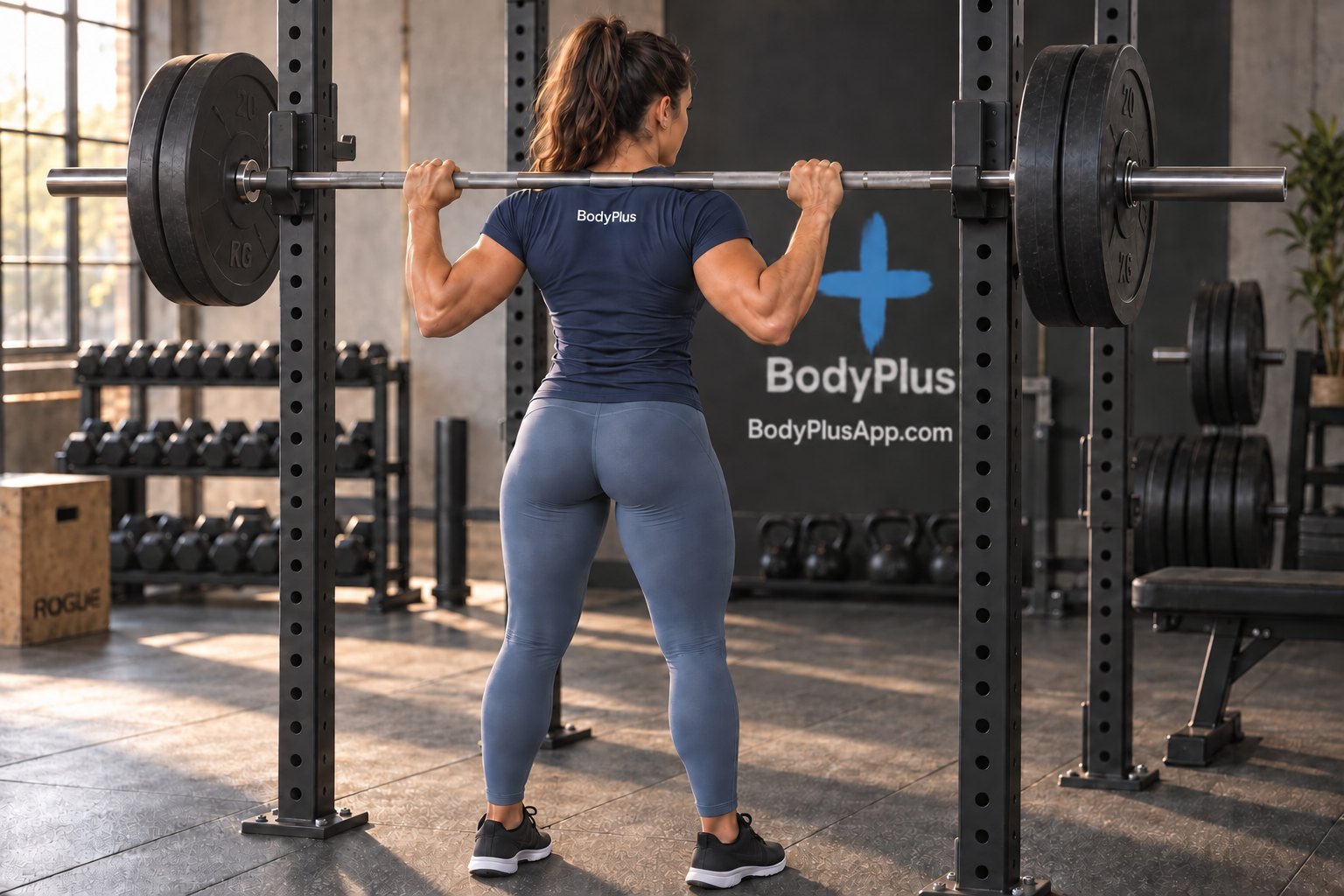
Before you start, set the bar hooks (J-hooks) at about the height of your upper chest or armpits, so you can unrack the bar by bending your knees slightly. Load both sides equally and put on collars.
- Stand facing the bar and grip it slightly wider than shoulder width.
- Breathe in, step under the bar and place it on the back part of your shoulders (on the shoulder blades).
- Lift the bar off the rack by straightening your legs.
- Take one step back with one leg, and then one step back with the other. Then adjust your stance so your feet are parallel (on the same line). Two or three short steps are enough: don't walk far from the rack.
- Stand upright with the bar, straighten your back, and push your chest out slightly upward.
Stance
Start with your feet about shoulder-width apart and your toes turned out a little. There is no single right stance: bodies differ, so adjust the width and toe angle until you can squat deep with your heels down and your knees following your toes.
What research says: in a lab study, 21 novice and 21 experienced squatters did squats with three stance widths and three toe angles (0, 21 and 42 degrees). Both changed the loads at the hips and knees, and how far the knees moved sideways. The largest loads showed up in the extreme combinations: a narrow stance with the toes turned far out, and a wide stance with the toes pointing straight ahead. Avoid those extremes and find a stance in between that fits your body.
Brace
Before each rep, take a big breath into your belly and tighten your stomach as if someone were about to poke it. Keep that brace through the whole way down and the start of the way up.
The squat movement
- Breathe in and brace.
- Begin the way down by taking your glutes back and bending your knees. Imagine you are sitting on a chair. Your knees must point in the same direction as your toes.
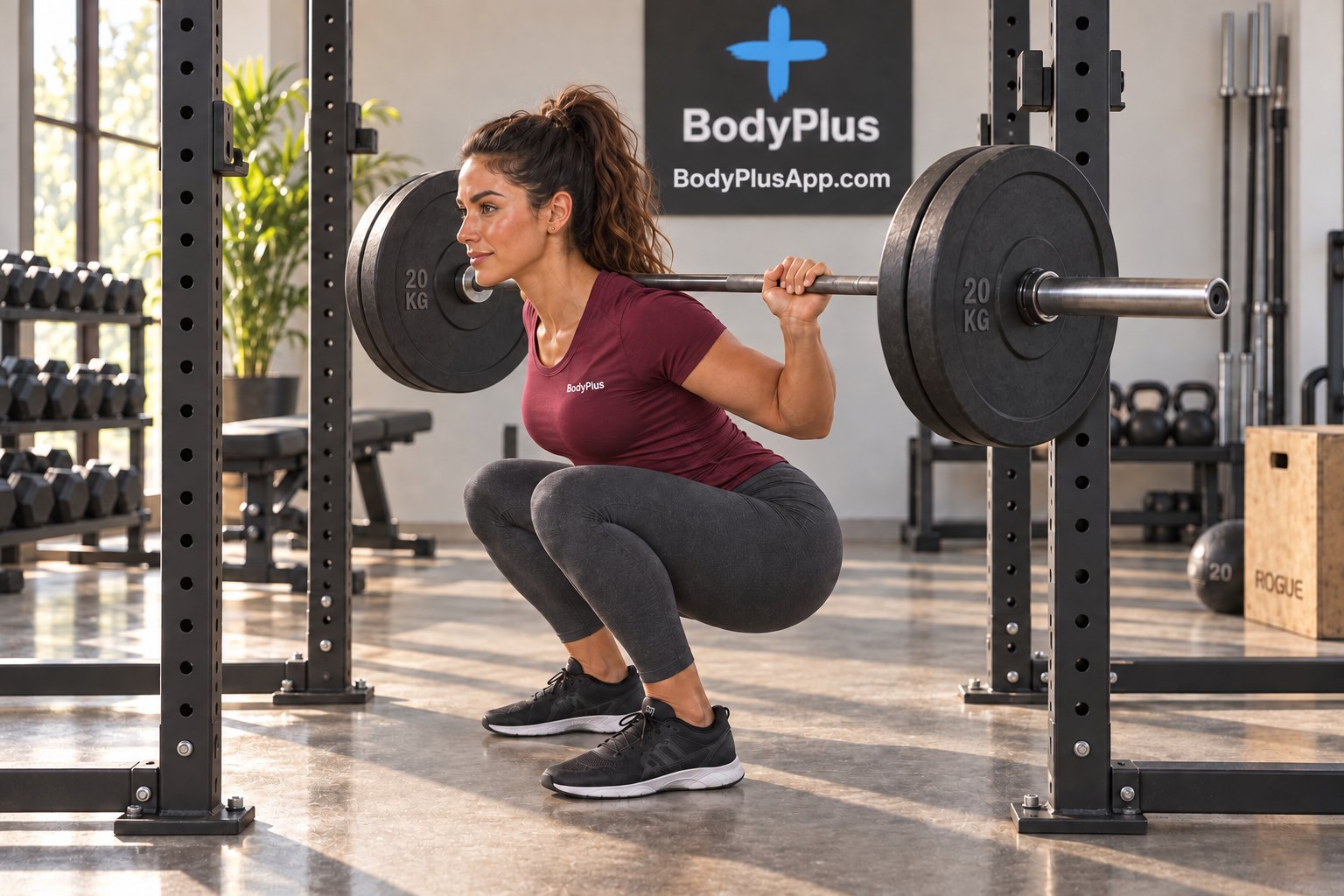
- Go down until the top of your thigh drops below your knees, or as low as you can with good form.
- Pause for a moment at the bottom.
- Push your body up from your heels. It is important to keep your back straight throughout the whole movement. Come up until your legs are straight and your body is upright.
- Do the planned number of reps until the end of the set.
Breathing: breathe out at the top, or as you pass the hardest part on the way up, then take a new breath before the next rep. Hold your breath only for one rep at a time.
Finishing the set: walk the bar forward until it touches the upright posts of the rack, then bend your knees to lower it onto both hooks. Check that both sides are on the hooks before you step out.
Technique points for the squat
- Your knees point in the same direction as your toes.
- Your back is straight, and your shoulders don't slump forward.
- Your neck is at the same angle as your spine, and does not turn up or down.
- Your thigh is below your knee, so your knees bend past 90 degrees.
How deep should you squat?
Go down at least until your thighs are parallel to the floor, and deeper if you can keep your back straight and your heels down. Parallel means the top of your thigh is level with your knee; a little below is fine.
What research says: in a 10-week study, 17 men trained twice a week with either full squats (well below parallel, 8 men) or half squats (to about 90 degrees at the knee, 9 men). The front-thigh muscles as a whole grew about the same in both groups, although one of them (the rectus femoris) did not grow in either. The glutes and inner thighs grew more with full squats, the hamstrings did not change in either group, and the full-squat group gained more strength in the full squat. It was a small study in men, so treat it as a strong hint, not a final answer.
If your heels lift or your lower back rounds before you reach parallel, stop a little higher for now and practice depth with a light goblet squat or a box squat (below).
Common squat mistakes
There are many mistakes that can be made in this exercise, but these are the main ones.
Knees collapsing inward or outward
Don't let your knees collapse inward or drift outward beyond your feet. This puts a lot of pressure on your knees, and it increases the risk of injury.
Your knees must move on the same line as your toes, not at another angle.
Rounded back
One of the most critical mistakes in this exercise is rounding your back. It puts a lot of pressure on your spine, and this increases the risk of injury.
Keep your back straight and upright throughout the whole exercise. Pushing your chest out will help you with that.
Lifting the heels off the ground
Lifting your heels moves the weight forward. This harms your stability and increases the pressure on your knees. As a result, you won't manage to lift the maximum weight you are capable of.
During the way up, try to push your body up from your heels. Practice this with a light weight. You can lift the tips of your toes slightly and train on the correct technique. This will help you get used to the correct form, and then you can start working with heavy weights. If your heels still lift, try a slightly wider stance or squat a little less deep for now.
Not going down low enough
People tend to think that the more weight they lift, the more muscle they will build. This is not exactly true. Hypertrophy is caused by the stimulus the muscle receives, not by the amount of weight you lift. If you do a quarter or half movement, you do not stimulate all the muscle fibers you could.
To use the full potential of the movement, go down at least until your thighs are parallel to the floor.
Of course, the greater the weight relative to your ability, the more the risk of injury rises, even with correct technique.
Can your knees go past your toes?
Yes. For most people, knees moving a little forward past the toes is a normal part of a deep squat, as long as your heels stay down and your knees follow the line of your toes.
What research says: in a small study, 7 weight-trained men did parallel squats with a bar equal to their body weight, once freely and once with a wooden barrier that stopped their knees from moving past their toes. Blocking the knees lowered the load on the knee but raised the load on the hips a lot, and made the lifters lean further forward. The authors concluded that the knees may need to move slightly past the toes for a sensible spread of the load. If a deep knee bend hurts, choose a range that is comfortable and pain-free.
High bar vs. low bar squat: what is the difference?
In the squat, you can place the bar high or low on your back, and of course anywhere in between.
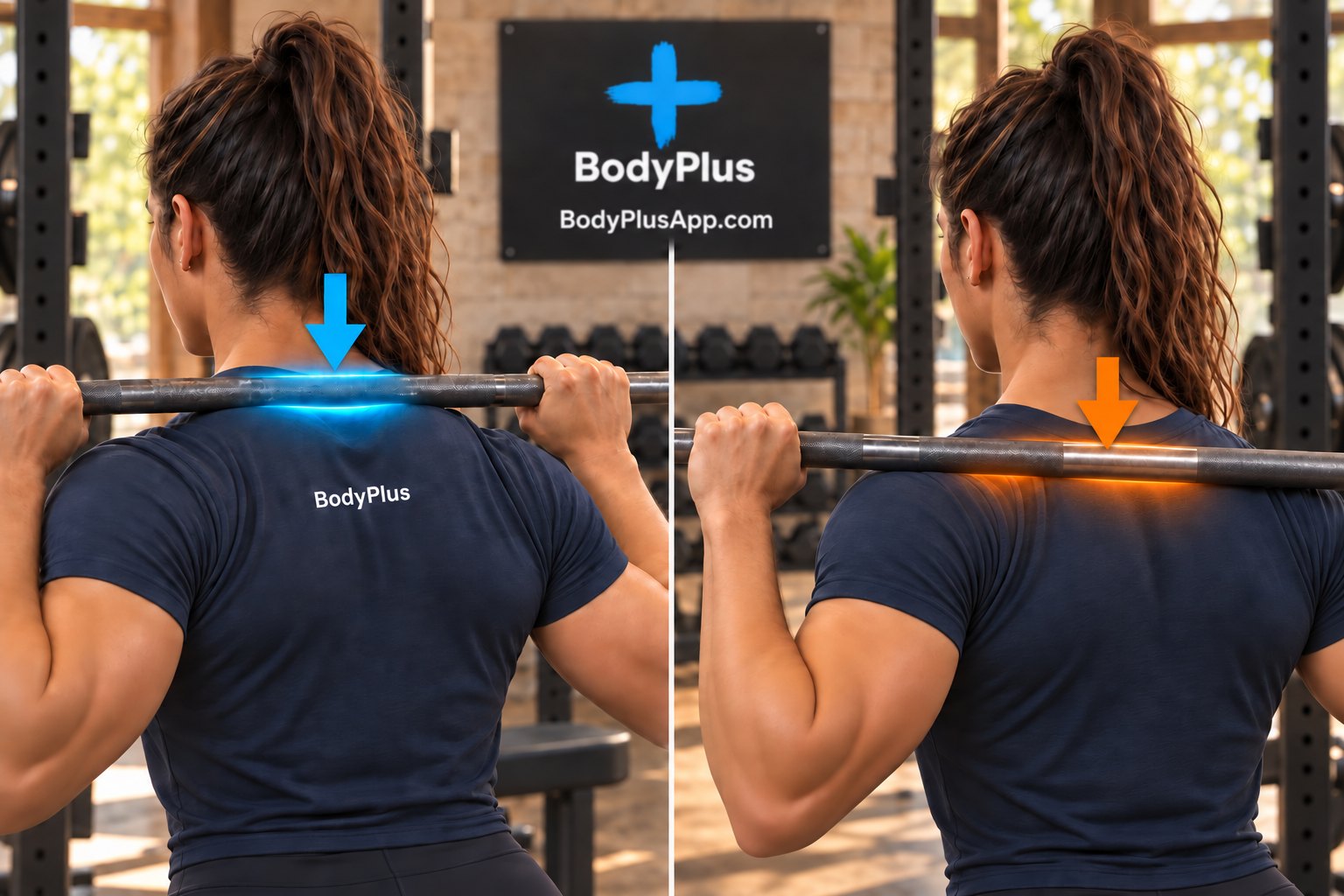
- High bar: place the bar relatively on top of your shoulder blades (traps).
- Low bar: place the bar lower, on the upper back.
Most people squat high bar. There is no clear line where "high" turns into "low". You can place the bar where it is most comfortable for you, as long as you keep the other rules such as a straight back, knees at the correct angle and everything else.
What research says:
- A 2017 review of studies found that the high-bar squat is usually done with a more upright torso, more knee bend and a deeper squat, and the low-bar squat with more forward lean and more hip bend. Some studies in the review found more quad activity with a high bar and more lower back, adductor and glute activity with a low bar.
- A later study of 12 recreationally trained men doing their 3-rep maximum with the same stance width found no significant difference between the two positions in the weight lifted (about 130 kg, or about 285 lb) or in the estimated hip, knee and ankle loads and muscle forces. The authors advise choosing by preference and comfort.
These studies measured one session, not long-term muscle growth.
Squat variations
Sumo squat
The sumo squat is a variation in which you stand with a very wide stance and your feet turned outward. This stance is similar to the stance of sumo wrestlers, which is where the name comes from.
This exercise suits people who want to reduce the load on the lower back and knees, or who want to emphasize the inner thighs. The wide stance puts more load on the glutes and inner thigh muscles, and less on the quadriceps and hips. The research on stance width is mixed, so treat this as a rule of thumb.
To manage this variation, you need flexible hips. If you are not flexible enough, you won't manage to go down low enough, and without enough depth you lose much of its value. See my full guide to the sumo squat.
Leg press machine
The leg press machine is not exactly a variation of the squat, but it is the best substitute you can do on a machine. The exercise imitates the squat movement, only without any need to stabilize your body. On the machine the movement is fixed, so the load is more focused on the big muscles, such as the quadriceps, hamstrings and glutes.
If you only do the leg press, add exercises that also work the stabilizing muscles. See my guide to the leg press.
Dumbbell squat (goblet squat)
You can squat with a dumbbell, a kettlebell or a physio ball instead of the bar. It is an excellent option for people who train at home and don't have the equipment. It is also excellent for beginners who need to learn the technique.
The dumbbell squat has several advantages:
- Easy and simple for beginners. It is a natural movement, similar to everyday activities.
- Less load on the back. In the barbell squat, the weight sits on your upper back, which puts a lot of tension on the lower back. In the goblet squat the load moves to the front. This reduces the pressure on the spine somewhat, and makes it easier to keep a correct posture.
The disadvantage of the dumbbell squat is that it is less effective for advanced trainees with developed legs. Once you start using heavy weights, your arms and core will tire long before your legs. That said, trainees of all levels can use the goblet squat as a warm-up for the barbell squat. See my full dumbbell squat guide.
Bulgarian split squat
In this exercise one foot is raised on a bench or a stable chair behind you, and you go down on the other leg. It is essentially a one-leg squat that puts the emphasis on the quadriceps, at the front of the leg.
You can do it with a bar, dumbbells or resistance bands. The Bulgarian split squat suits trainees who don't want to load heavy weight on their back. See my Bulgarian split squat guide.
Front squat
In the front squat, the bar rests on the front of your shoulders, close to your throat, with your elbows high. It keeps your torso more upright and is harder on your upper back. Most people lift less weight in it than in the back squat.
What research says: in a study of 15 trained adults, the front squat recruited the leg muscles about as well as the back squat, with lower compressive forces and extensor loads at the knee. It was a lab study of joint forces and muscle activity, not a training study.
If the barbell front rack is uncomfortable for your wrists, cross your arms over the bar, or try a dumbbell front-rack squat.
Box squat
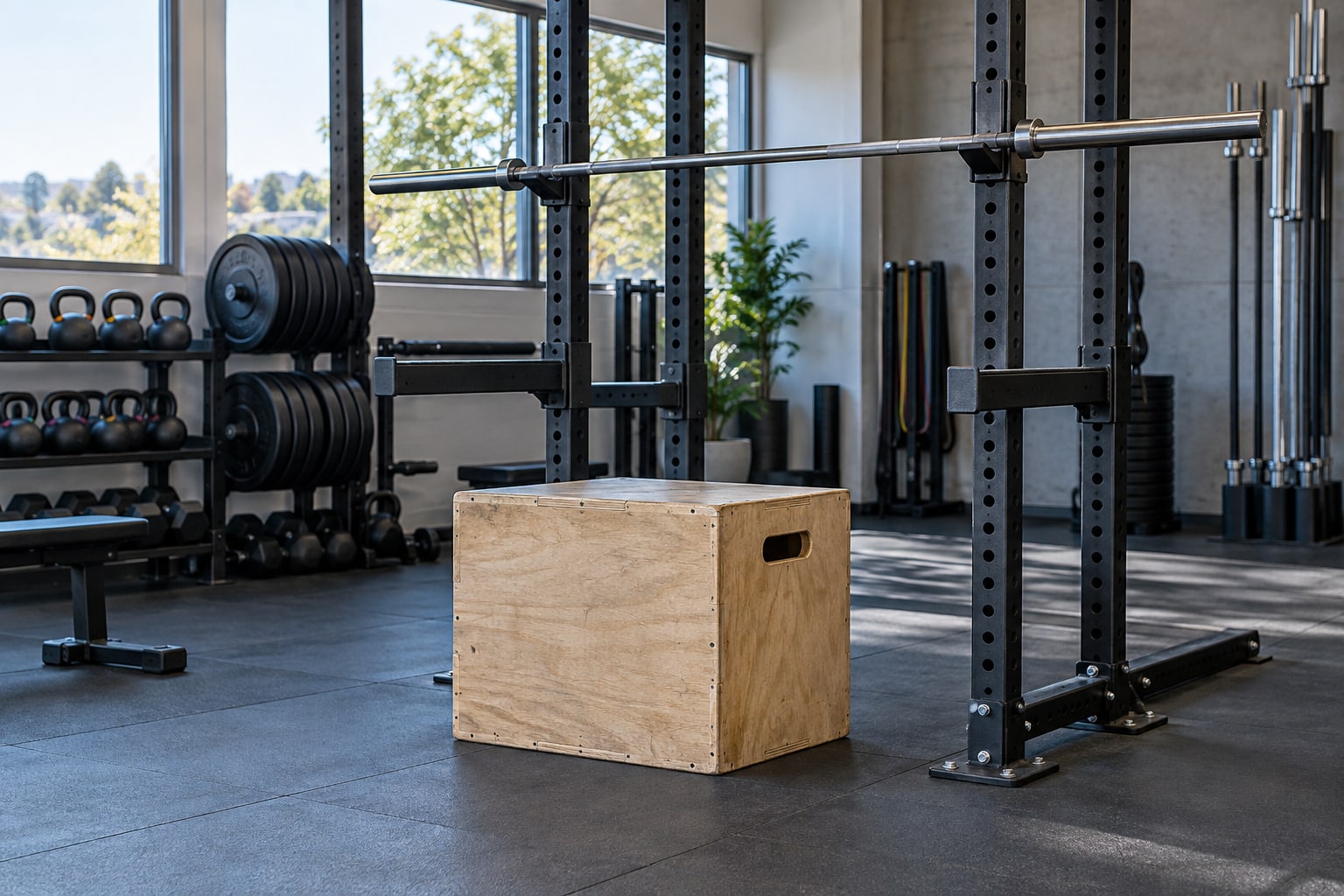
In the box squat, you squat back to a sturdy box or bench set at your target depth, sit on it briefly without relaxing or bouncing, then stand up. The box shows you exactly how deep you went. It helps you learn to push your hips back and to hit the same depth every rep. Lower the box over time as your depth improves. Keep the pause short and controlled: don't drop onto the box with a heavy bar.
Easier versions (to learn the pattern)
- A body-weight squat, reaching your arms forward as a counterweight.
- A squat to a chair or box, standing up without rocking.
- A squat while holding a sturdy support in front of you.
Sets, reps and a sample leg workout
- For strength: 3-5 sets of 3-6 reps, with 2-3 minutes of rest.
- For muscle: 3-4 sets of 6-12 reps, with about 2 minutes of rest.
- For beginners: 2-3 sets of 8-12 reps with a light weight, to practice the technique.
- Effort: stop most sets when you could still do one to three more good reps.
- Order: do it first in your leg workout, while you are fresh.
- Weekly volume: the ACSM position stand links more muscle growth with about 10 or more hard sets per week per muscle group; squats can count toward your quads, glutes and inner thighs. It also links strength gains with heavier loads, a full range of motion and training at least twice a week.
To pick your working weights from a recent set, use the one rep max calculator. Don't test a true one-rep max without safety bars or a spotter.
Sample leg workout
| Exercise | Sets | Reps | Rest |
|---|---|---|---|
| Barbell back squat | 3-4 | 6-8 | 2-3 min |
| Romanian deadlift | 3 | 8-10 | 2 min |
| Bulgarian split squat | 2-3 | 8-12 each leg | 90 s |
| Leg curl | 2-3 | 10-15 | 60-90 s |
| Calf raise | 3 | 10-15 | 60 s |
How to track your squat
Write down every set. When every set reaches the top of your rep range with full depth and good form, add the smallest step, 2.5 kg (about 5 lb) in total, and build the reps back up.
| Session | Bar weight | Set 1 | Set 2 | Set 3 |
|---|---|---|---|---|
| Week 1 | 70 kg (about 155 lb) | 8 | 7 | 6 |
| Week 2 | 70 kg (about 155 lb) | 8 | 8 | 7 |
| Week 3 | 70 kg (about 155 lb) | 8 | 8 | 8 |
| Week 4 | 72.5 kg (about 160 lb) | 7 | 6 | 6 |
| Week 5 | 72.5 kg (about 160 lb) | 8 | 7 | 6 |
Some weeks you won't add anything, and that is normal. Write a short note when something changes, such as "heels lifted on set 3" or "used a box".
Safety
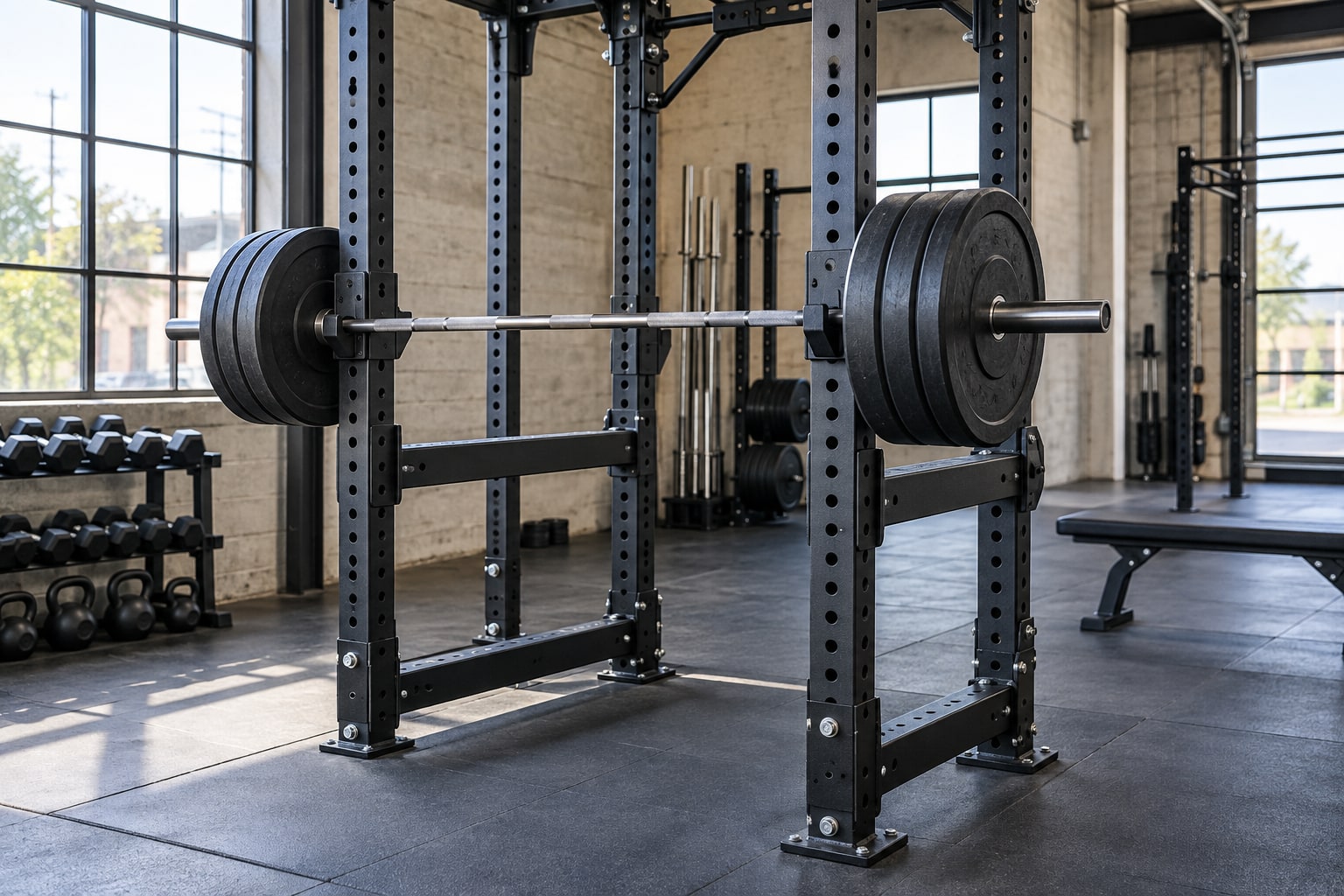
Squat inside a power rack with the safety bars set just below the bar at your lowest point, and test the height with the empty bar first. If you fail a rep inside the rack, keep your back tight, sit down under control until the bar rests on the safety bars, then slide out from under it.
Without a rack, use a spotter and a weight well within your ability, and agree before the set on how many reps you will do and the word you will say if you need help. Warm up with body-weight squats, then the empty bar and a few lighter sets, and stop most sets one or two reps before you would fail. Keep the bar on the muscles of your upper back, not on the bones of your neck. Stop the set if a rep hurts your knees, hips or back, and switch to a lighter or pain-free variation such as the goblet squat.
Bottom line
Let's be real: not many people are willing to do the squat. It is hard, tiring, and sometimes it will make you wonder why you even started training.
But here's the thing: the squat is one of the craziest exercises for people who want to develop and build lower body strength. There is nothing like the feeling of victory of breaking a personal record, and seeing your progress over time.
What is important is that you keep correct technique. Only with correct technique will you manage to use the full potential that this exercise offers, and reduce your risk of getting injured.
If you nevertheless decide that the exercise doesn't suit you, there are plenty of other exercises, such as the Bulgarian split squat or the leg press. See my best leg exercises for the full list.
Frequently asked questions
Do squats work your hamstrings?
They help, but the squat is not the best way to grow them. Add a Romanian deadlift or a leg curl for the back of your thighs.
Should I squat high bar or low bar?
Choose the position you find most comfortable and can squat deepest with good form. Research shows small differences in torso angle, and one study found no difference in the weight lifted or in leg muscle forces.
Should I push through my heels?
Yes, try to push your body up from your heels, and keep your heels on the floor the whole time. If your heels lift, practice with a light weight first.
How do I squat safely without a spotter?
Squat inside a power rack with the safety bars set just below your lowest point, and stop your sets one or two reps before failure.
How much does the bar weigh?
A standard Olympic bar weighs 20 kg (about 44 lb). Many gyms also have lighter bars, so check before you count your total.
Is the barbell squat good for beginners?
Yes, once you can squat to depth with body weight and a light goblet squat. Start with the empty bar and add weight in small steps.
Are squats good for women?
Yes. The technique is the same for everyone; pick a starting weight that fits your level.
The information on this page and on this website is intended to provide general information only. The content on this website does not constitute a professional opinion, a recommendation, or a substitute for consulting an expert in a specific field or obtaining a medical opinion. It is not medical advice. BodyPlus is not a medical device. If you have a health condition or an injury, or are pregnant, talk to a qualified healthcare professional before starting. Stop exercising and seek appropriate help if you feel pain, dizziness or other concerning symptoms.
Sources
Accessed September 17, 2026.
- Kubo K. et al., "Effects of squat training with different depths on lower limb muscle volumes", Eur J Appl Physiol 2019;119(9):1933-1942. pubmed.ncbi.nlm.nih.gov/31230110
- van den Tillaar R., Saeterbakken A.H., "Comparison of Core Muscle Activation between a Prone Bridge and 6-RM Back Squats", J Hum Kinet 2018;62:43-53. pubmed.ncbi.nlm.nih.gov/29922376
- Glassbrook D.J. et al., "A Review of the Biomechanical Differences Between the High-Bar and Low-Bar Back-Squat", J Strength Cond Res 2017;31(9):2618-2634. pubmed.ncbi.nlm.nih.gov/28570490
- Larsen S. et al., "A Biomechanical Comparison Between a High and Low Barbell Placement on Net Joint Moments, Kinematics, Muscle Forces, and Muscle-Specific Moments in 3 Repetition Maximum Back Squats", J Strength Cond Res 2024;38(7):1221-1230. pubmed.ncbi.nlm.nih.gov/38900172
- Fry A.C., Smith J.C., Schilling B.K., "Effect of knee position on hip and knee torques during the barbell squat", J Strength Cond Res 2003;17(4):629-633. pubmed.ncbi.nlm.nih.gov/14636100
- Gullett J.C. et al., "A biomechanical comparison of back and front squats in healthy trained individuals", J Strength Cond Res 2009;23(1):284-292. pubmed.ncbi.nlm.nih.gov/19002072
- Lorenzetti S. et al., "How to squat? Effects of various stance widths, foot placement angles and level of experience on knee, hip and trunk motion and loading", BMC Sports Sci Med Rehabil 2018;10:14. pmc.ncbi.nlm.nih.gov/articles/PMC6050697
- Currier B.S. et al., ACSM Position Stand, "Resistance Training Prescription for Muscle Function, Hypertrophy, and Physical Performance in Healthy Adults: An Overview of Reviews", Med Sci Sports Exerc 2026;58(4):851-872. pubmed.ncbi.nlm.nih.gov/41843416
- OpenStax, Anatomy and Physiology 2e, "11.6 Appendicular Muscles of the Pelvic Girdle and Lower Limbs" (names and actions of the quadriceps, gluteal muscles, adductors and hamstrings). openstax.org/books/anatomy-and-physiology-2e/pages/11-6-appendicular-muscles-of-the-pelvic-girdle-and-lower-limbs
- American Council on Exercise, "5 Ways to Supercharge the Squat" (blog article). acefitness.org/resources/everyone/blog/3578/5-ways-to-supercharge-the-squat