
Hip Dips: What They Are and 5 Leg Exercises
In short
Wondering about the dip just below your hip bone? Hip dips are a normal part of your body's shape. You cannot change your bone structure with exercise, but strength training for your glutes and legs may soften the dip's appearance. How much, if at all, depends on your body.
I'll start with what hip dips are and whether you need to do anything about them. Then we'll go through five exercises for your next leg workout. Let's start.
What are hip dips?
Hip dips are an inward indentation on the side of your body, a little below your hip bone. Not everyone has them. Genetics has a lot to do with it: some people have a deeper indentation, while others naturally have none at all.
Are hip dips normal?
Yes, definitely. Hip dips do not indicate a particular health problem; they come from the way your body is built. That said, you do not have to like them. Usually, they bother people only when the dip is very pronounced.
You do not have to like even "normal" things such as hip dips. It is up to you to decide whether you want to do anything about them, and whether it really matters to you. Only you should decide what to do with the parts of your body you like less. People who decide to address hip dips usually choose physical activity or cosmetic surgery.
Can you get rid of hip dips?
It depends. Hip dips are normal and natural, and your bone structure is genetic. That is different from building your abs or glutes: those are muscles and can get bigger. We also cannot tell our bodies where to store fat and where not to.
Exercise also can't choose where you lose fat. In a 12-week study, 104 adults trained only one arm. MRI scans found no more fat loss in the trained arm than in the untrained one (a simpler skinfold test suggested a small local effect in men only). Research on this "spot reduction" is mixed, and none of it shows that side leg raises burn fat from your hips, so don't count on them for that.
Still, strength training with weights may soften how deep hip dips look for some people. In your workouts, focus on your glutes and legs. A good leg workout can help you with this, although no exercise can promise a particular shape.
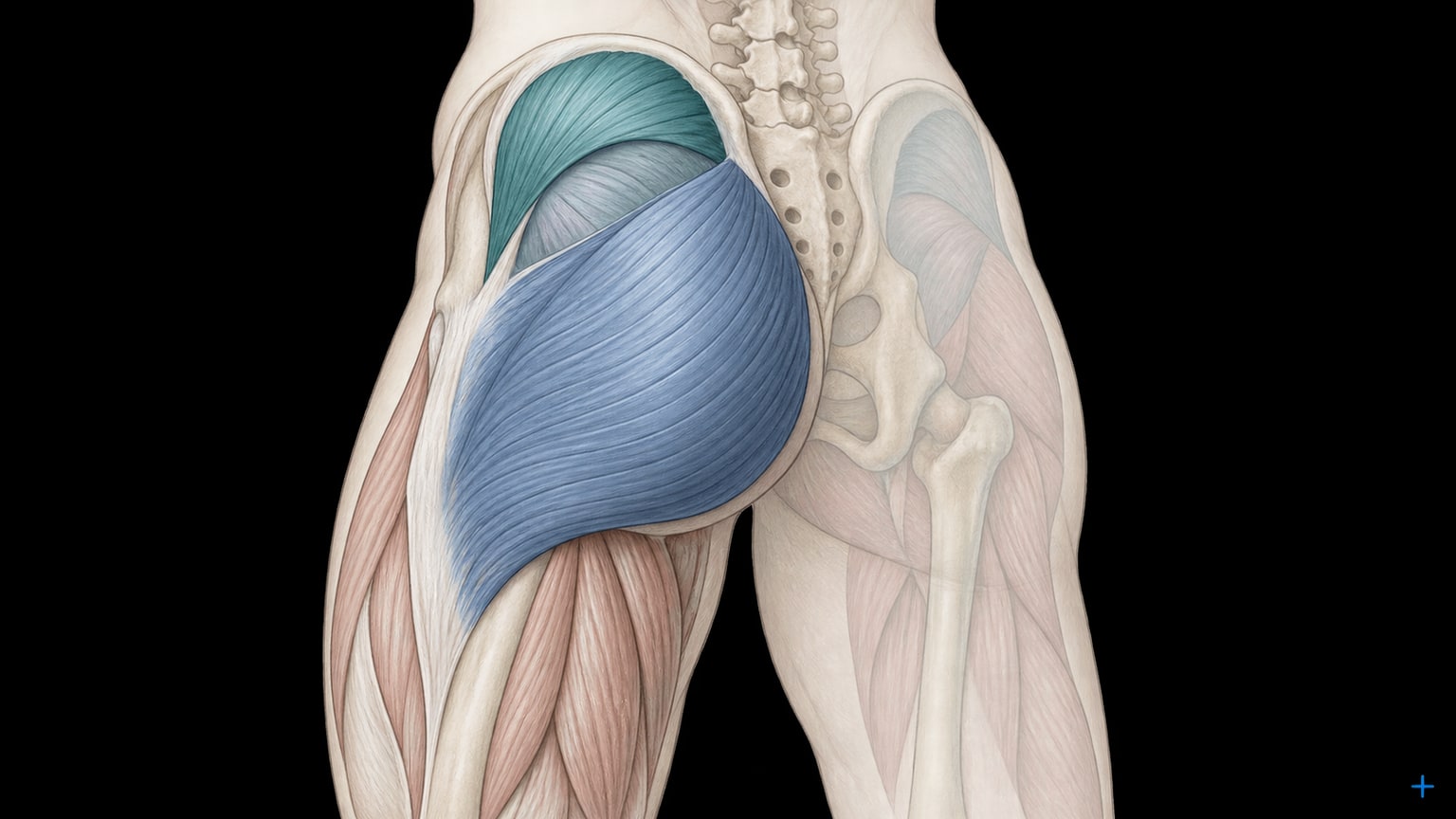
The glute muscles around your hips are part of the leg workout below:
5 exercises for a leg workout
1. Squat
One of the best exercises you can do to work on the muscles around hip dips is the squat. Almost every trainer who respects themselves will recommend squats. The squat mainly works your lower body and your overall strength.
Before you start with a bar and weights, learn the technique well. Start with your feet about shoulder-width apart. Then sit back, keeping your knees in line with your feet.
Go as low as you can with good form and no pain. A 10-week study supports this: full squats built more glute muscle than half squats.
2. Hip thrust
The hip thrust is one of the exercises women most like to do in their leg workouts. It is an excellent exercise for building muscle, flexibility and strength while working the glutes and thighs. Strength training through a full range of motion improved flexibility about as much as stretching in a review of 11 trials (study).
You can do it with weights or use your body weight in a home leg workout. Lie on the floor or set your upper back against a bench, then position the bar in line with your pelvis if you are using one. Raise your hips and squeeze your glutes as much as you can. Lower with control.
A 9-week study found that hip thrusts and squats built similar glute muscle in untrained adults. For more on technique, see the hip thrust section in my glute exercises guide.
3. Standing side leg raise
Standing side leg raises help strengthen the muscles along the sides of your pelvis and glutes. They put the emphasis on the muscles in the hip dip area. Use your body weight, or add resistance with a band or cable machine.
Stand straight and hold a chair or another steady object for balance. Raise one leg to the side and hold it there for one second. Then bring it back slowly. Keep your body straight; do not move it to the side as you raise your leg.
4. Glute bridge
The bridge is a variation of the hip thrust that you can include in a home leg workout. It, too, may help soften the look of hip dips. The main difference is that you do the bridge on the floor. You can increase the difficulty with a band or a weight.
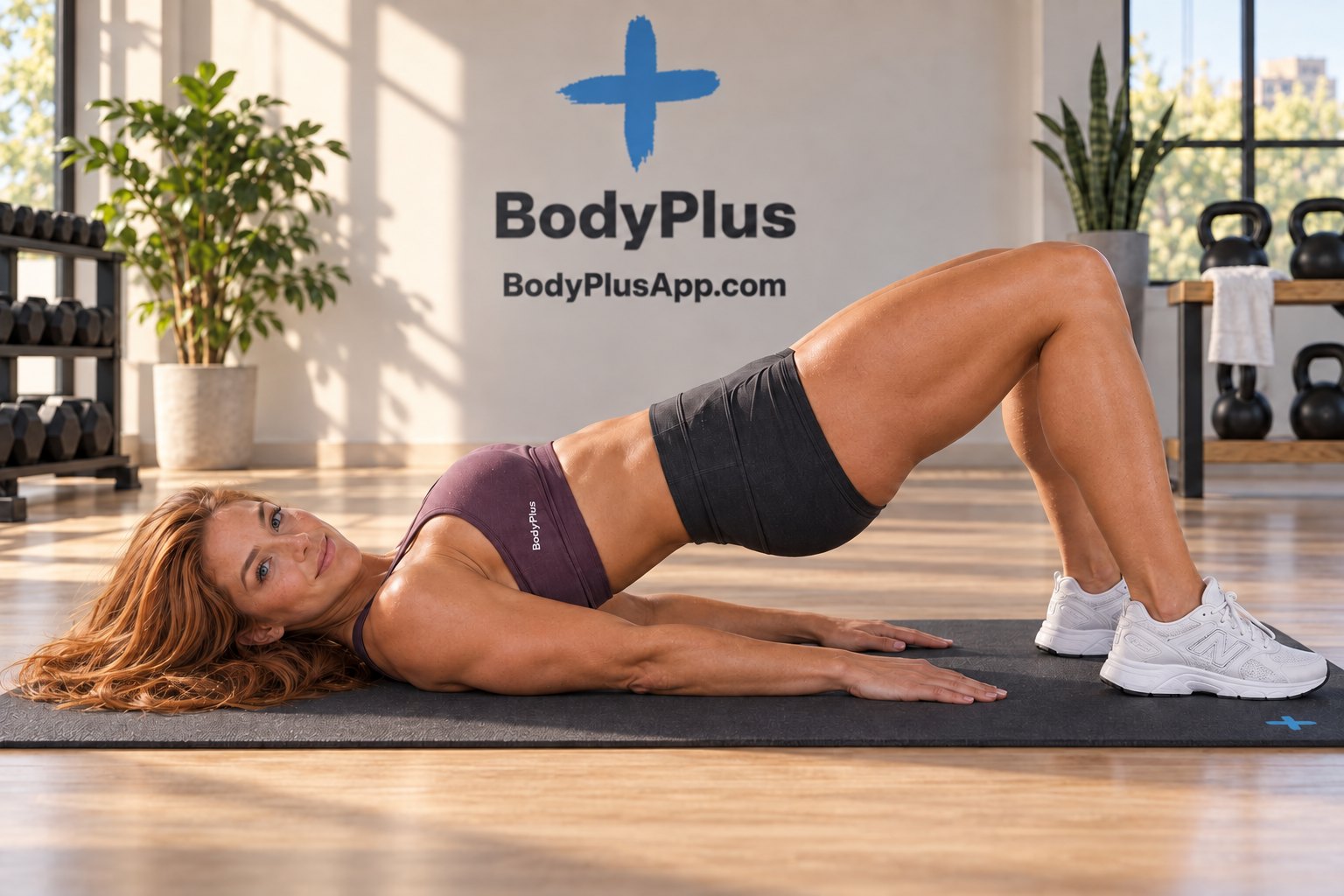
Lie on your back with your knees bent and your feet on the mat. Breathe in and raise your hips. At the top, push your knees outward and squeeze your glutes as much as you can. Then bring your knees back and lower your hips to the mat.
5. Kickback
The kickback is an excellent exercise for isolating your glutes. They are a central muscle group around your hips and play a central role in squats, Romanian deadlifts and more. Strengthening them can help you improve the weights you use in those exercises.
Get on all fours, with your palms and knees on the floor. Kick one leg back and extend it as far as you can without arching your lower back. Return it to the starting position. Do 8 to 12 repetitions on each leg.
To make it harder, add resistance with a band, cables or straps.
Safety
Warm up with easy movement and a few practice reps, then start with body weight or light resistance. For barbell squats, set safety arms just below your lowest position and secure the plates with collars; for hip thrusts, use a bench that cannot slide, and check cable attachments before leg raises or kickbacks. Keep the lifting and lowering controlled rather than swinging through the reps.
Hold a sturdy chair or fixed support during side leg raises so you can keep your body upright. End the set if you feel pain or dizziness, or if your form starts to break down. For more setup and technique details, see my squat guide and hip thrust guide.
Bottom line
Hip dips are a normal and natural part of our body structure. For some people they matter more, and for others less. In the end, no body is perfect, even the people with the most beautiful bodies you can think of. If you ask them what they do not like about their bodies, they will make you a list.
If your hip dips are not very pronounced, do not think about them too much. Train your whole body in a balanced way. What matters most is how you feel about your progress, not what anyone else thinks about one part of your body.
Remember that the main goal of workouts is to maintain a healthy lifestyle, develop self-confidence, and fulfill yourself.
The information on this page and on this website is intended to provide general information only. The content on this website does not constitute a professional opinion, a recommendation, or a substitute for consulting an expert in a specific field or obtaining a medical opinion. It is not medical advice. BodyPlus is not a medical device. If you have a health condition or an injury, or are pregnant, talk to a qualified healthcare professional before starting. Stop exercising and seek appropriate help if you feel pain, dizziness or other concerning symptoms.
Sources
Accessed September 17, 2026.
- Kostek M.A. et al., "Subcutaneous fat alterations resulting from an upper-body resistance training program", Med Sci Sports Exerc 2007;39(7):1177-1185. pubmed.ncbi.nlm.nih.gov/17596787
- Kubo K. et al., "Effects of squat training with different depths on lower limb muscle volumes", Eur J Appl Physiol 2019;119(9):1933-1942. pubmed.ncbi.nlm.nih.gov/31230110
- Plotkin D.L. et al., "Hip thrust and back squat training elicit similar gluteus muscle hypertrophy and transfer similarly to the deadlift", Front Physiol 2023;14:1279170. pubmed.ncbi.nlm.nih.gov/37877099
- Afonso J. et al., "Strength Training versus Stretching for Improving Range of Motion: A Systematic Review and Meta-Analysis", Healthcare (Basel) 2021;9(4):427. pubmed.ncbi.nlm.nih.gov/33917036