
The 10 Best Leg Exercises for Stronger, Fuller Legs
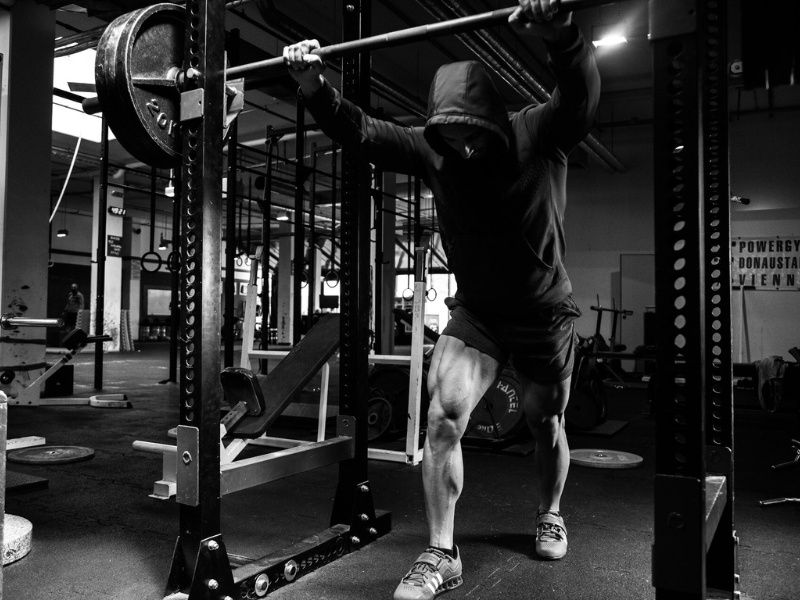
In short
Looking for the best leg exercises? I start with the squat, Romanian deadlift and split squat, then add exercises for the front and back of your legs. Below are my ten picks, the technique tips that matter to me, and a leg workout you can use.
Imagine how good it will feel to make progress in your leg training. First I will explain how the leg muscles work, then take you through the exercises. Let's start!
This list is mainly for people who train legs in a gym. If you have suitable equipment at home, you can do almost all of them. If not, try variations with body weight, dumbbells or resistance bands.
How your legs are built
I think of the legs in four main muscle groups:
- Quads (quadriceps): four muscles at the front of your thigh. You can often see how developed they are. Their main job is to straighten your knee.
- Hamstrings: three muscles at the back of your thigh. They bend your knee, straighten your hip and help stabilize your pelvis.
- Glutes: three muscles in your buttocks. The gluteus maximus is the largest muscle in your body. Your glutes can produce a lot of force, and they play a big part in leg exercises.
- Calves: two main muscles at the back of your lower leg. They help point your foot down and support your balance.
Now that you know how your legs are built, here is one tip that matters a lot when you plan your leg training. Then we will go through the exercises.
Balance the front and the back of your legs
To train your whole leg, give the front and the back attention. Men often neglect the back, and women the front. That is a mistake: these muscle groups support each other when you train.
I would not leave your hamstrings behind while you focus on quads, or forget them when you train your glutes. Keep the load balanced between the front and the back. If one area is lagging, add a few sets for it, but keep training the other areas too.
The 10 best leg exercises
1. Squat: the king of leg exercises
There is no doubt the squat is one of the most powerful exercises for building leg muscle. It works your quads, glutes and inner thighs hard, and your hamstrings help. If you progress in it, you can be sure that all your leg muscles will get stronger. I still give the hamstrings their own exercise, such as the Romanian deadlift or leg curl.
Your core works very hard in the squat too: your abdominals, the muscles along your spine, and the muscles around your pelvis all work to keep you upright.
- Stand with your feet about shoulder-width apart, the bar resting on your upper back.
- Brace your midsection, then bend your hips and knees together to sit down between your heels.
- Go as deep as you can while your back stays flat and your heels stay down.
- Drive through your whole foot to stand back up.
- Keep your knees in line with your toes, and squat in a rack with the safety bars set just below your lowest point.
Get good control of the technique and use a full range of motion. The lower you descend with that control, the more work your muscles do. Here is the squat-depth study I cited in my original article.
You can squat with body weight, a barbell, dumbbells, a kettlebell, or bands.
2. Romanian deadlift
I like to include at least one deadlift variation in a good leg workout, because it works the muscles along the back of your body. The Romanian deadlift is an excellent option for a few reasons.
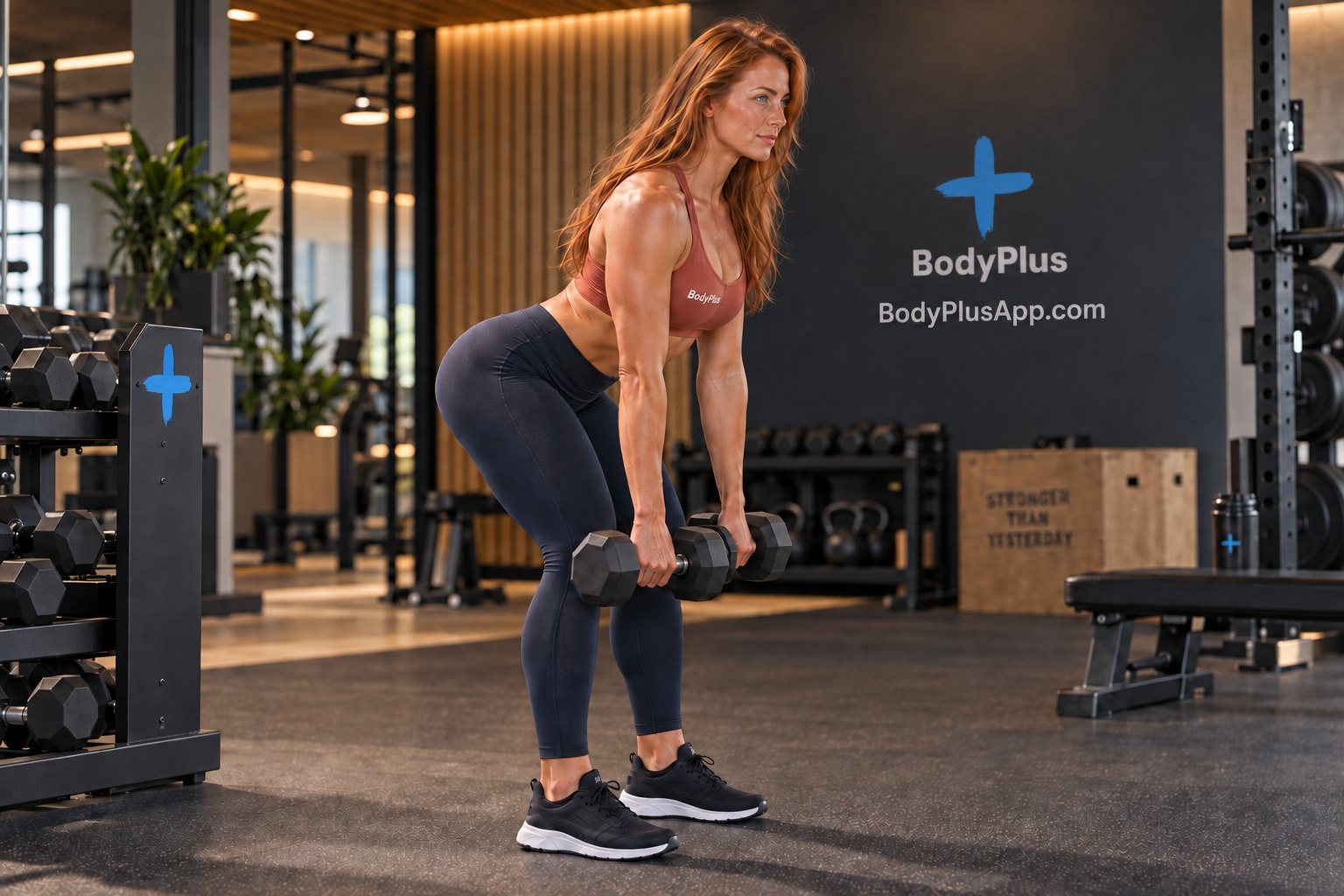
First, it is relatively easy to learn compared with the classic deadlift. In the Romanian deadlift you don't lower the weight all the way to the floor, only to about your shins, and then you stand up again. That keeps constant tension on the muscles, which is great for building muscle.
Second, you don't need very heavy weights to make it a serious challenge. Because you don't lower the weight all the way, there is no rest between reps, and you can do higher reps, slowly.
On top of that, the Romanian deadlift works the whole back of your body, from your upper back to your calves. All of this helps you build muscle on the back of your body.
- Stand tall holding the bar in front of your thighs, knees slightly bent.
- Push your hips back and let the bar slide down your thighs, back flat.
- Stop when you feel a strong stretch in your hamstrings (about shin level), then drive your hips forward to stand up.
3. Stiff-leg deadlift
The stiff-leg deadlift is an advanced variation of the Romanian deadlift. You keep your legs almost completely straight and lower the weight until your back is about parallel to the floor, or as far as you can with good form.
It increases the load on your glutes and hamstrings. With your legs straight, the range of motion grows, and your glutes and hamstrings are stretched more.
The catch: this exercise is mainly for experienced trainees, because the technique is hard and it takes a lot of flexibility. Before you try the stiff-leg deadlift, make sure you have the Romanian deadlift down perfectly.
4. Split squat
The split squat is a great exercise for building muscle in your whole legs. All your leg muscles work in this movement, and it gives them a unique working angle. A popular version is the Bulgarian split squat, with your rear foot on a bench.
The split squat is very similar to a stepping lunge, but one small difference changes how you perform it.
In a stepping lunge you step into each rep; in a split squat your feet stay in the same stance. I like to finish all the reps on one leg before switching. That can keep the working leg under tension longer before it gets a break.
Another advantage: because each leg works on its own, it is easy to spot and fix a strength gap between your legs.
- Stand in a long stride, rear foot on the floor or on a bench behind you.
- Lower your back knee toward the floor, front shin close to vertical.
- Push through your front foot to come back up. Finish all reps, then switch.
You can do it with a barbell or dumbbells. I prefer the barbell, because dumbbells tire your arms. At a certain weight, your forearms will probably give out long before your legs do.
5. Leg curl (machine)
To build a top-level leg workout, include isolation exercises too. The machine leg curl is an isolation exercise that works your hamstrings precisely.
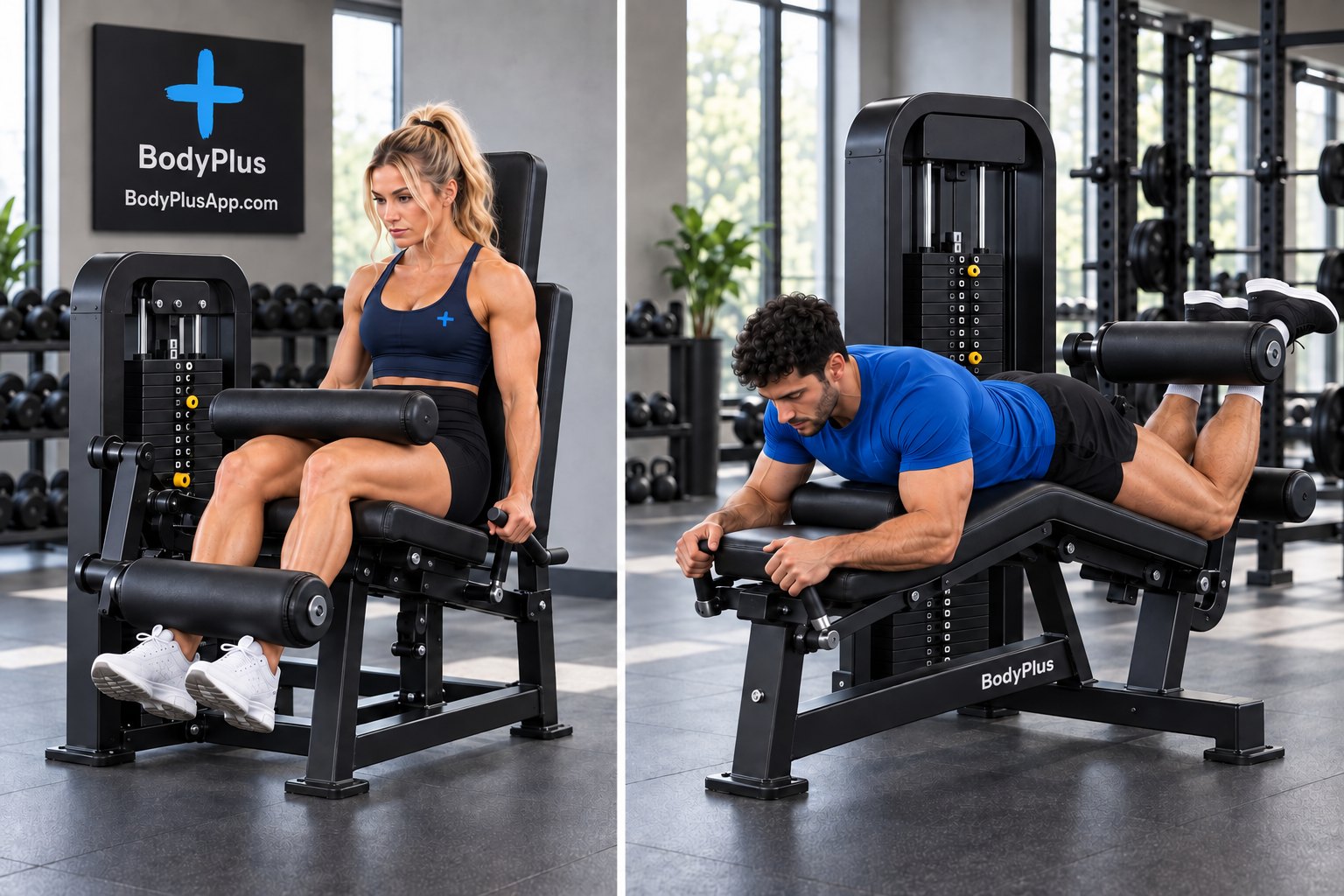
- Line up your knees with the machine's pivot.
- Curl your heels toward your glutes while your hips stay down.
- Lower slowly.
The most common mistake here is loading too much weight. If you want to go heavy, do it in the squat, not here. If you try to curl too much weight, your technique suffers. Then you can't focus the load on your hamstrings or work them through their full range of motion.
Stick to higher reps and do them slowly. I recommend keeping the weight where you can control every rep through the full range of motion.
6. Leg extension (machine)
The leg extension is also an isolation exercise. It focuses the load precisely on your quads. It removes the need to stabilize your body, and it helps you add volume for your quads.
- Line up your knees with the machine's pivot.
- Straighten your legs, pause for a moment, then lower slowly.
As with the leg curl, I recommend a lighter weight and higher reps. That makes it easier to avoid cheating and use the full range of motion.
7. Leg press (machine)
The leg press is a compound exercise that works your quads, glutes and inner thighs (adductors); your hamstrings help, but they grow very little from it. It is an excellent exercise if you know how to fit it into your workout.
Of course you can only do it in a gym, because it needs a special machine. There are two kinds of leg press machine, seated and 45-degree incline. Both work well; use the one your gym has.
- Place your feet about shoulder-width apart on the platform.
- Lower the platform under control until your knees are well bent, without letting your lower back lift off the pad.
- Press back up without snapping your knees straight.
There is always the debate: which is better, the leg press or the squat? Each has its own strengths. In the leg press you don't have to balance a bar, so you can load the big leg muscles more precisely. It also puts less load on your spine.
However, to build serious leg muscle, you also need to train the stabilizing muscles. Most trainees don't know how to plan a balanced leg workout that gives all those muscles their share. If you are torn between the two, do the regular squat and keep it simple.
8. Front squat
The front squat is a squat variation in which the bar rests on the front of your shoulders. This puts more load on your quads and your core.
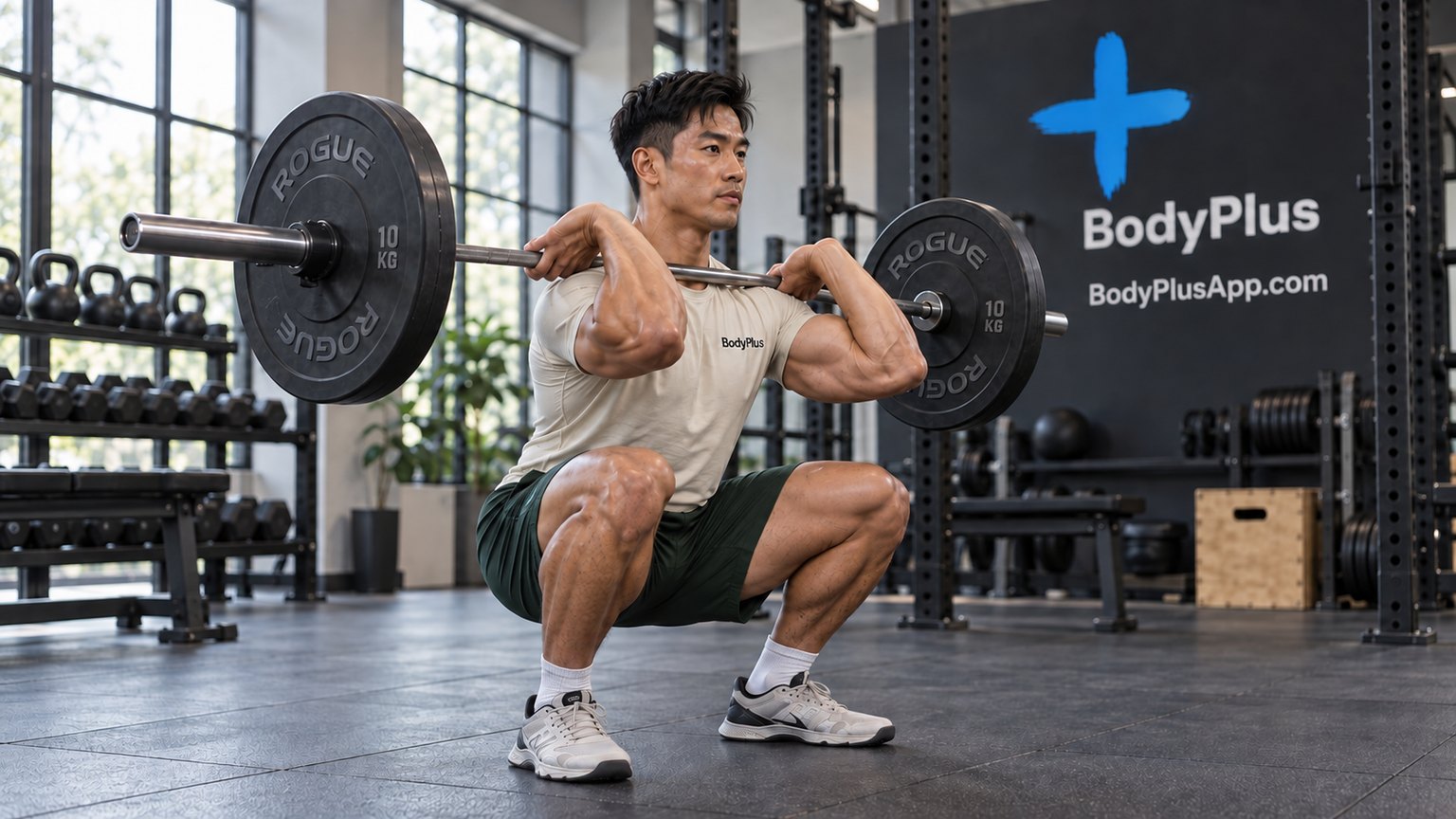
- Rest the bar on the front of your shoulders with your elbows high.
- Squat as usual, chest up, as deep as you can with good form.
- Stand up while keeping your elbows high.
In a regular squat, technique can slip toward the end of a set. In the front squat, the bar position forces your body to stay upright: if you lean forward, the bar tips forward. In other words, the front squat keeps your technique honest.
You can use it instead of the regular squat or in addition to it. Its main drawback is that it is hard to learn.
9. Hip thrust
The hip thrust is one of the exercises women like most. It lets you load heavy weight and focus it very precisely on your glutes. Your glutes sit right under the bar, and gravity pulls the bar straight down onto them.
- Sit on the floor with your upper back against a bench and the bar, with a pad, across your hips. Plant your feet about hip-width apart.
- Drive through your heels to lift your hips until your body is straight from shoulders to knees.
- Squeeze your glutes at the top, keeping your ribs down (don't arch your lower back), then lower slowly.
As I explained at the start, the gluteus maximus is the largest muscle in your body. Stronger glutes can also help you in exercises like the squat and the deadlift.
The hip thrust pairs well with the front squat, because together they cover your glutes and the front of your legs. You can do it in many variations: with a barbell, a dumbbell, bands, or body weight.
10. Sissy squat: a leg exercise with body weight
The sissy squat is an outstanding quad exercise done with body weight only. It gives the front of your thigh a strong pump because of the large range of motion and the stretch it puts on your quads. It also helps you build coordination, stability and balance.
To do it, rise onto your toes, then bend your knees and lean back until you reach the bottom of the movement. Keep your hips pushed forward so your body stays in a straight line from knees to shoulders. Hold onto something for balance at first, and go only as deep as your knees feel comfortable. You can add resistance with a band.
How to choose and plan your workout
Now you have the ten exercises. For a balanced workout, I would choose a squat, a hip hinge, a single-leg move and work for both the quads and hamstrings. The table gives you gym choices and home swaps. I also add calf raises, because the ten picks put little direct work on the calves.
| Movement | Gym choice | Home or dumbbell swap |
|---|---|---|
| Squat | back or front squat, or leg press | goblet squat or body-weight squat |
| Hip hinge | Romanian deadlift | dumbbell Romanian deadlift |
| Single leg | split squat | dumbbell or body-weight split squat |
| Hamstrings | leg curl | band leg curl or single-leg glute bridge |
| Quads (isolation) | leg extension | sissy squat |
| Calves | seated or standing calf raise | calf raise on a step |
What research says about leg exercises
In a 10-week study by Kubo and colleagues, full squats built more glute and inner-thigh muscle than half squats; quad growth was similar. In a 9-week study by Plotkin and colleagues with untrained adults, squats and hip thrusts built similar glute muscle, while the squat group gained more quad and inner-thigh muscle.
The 2026 American College of Sports Medicine position stand found better muscle growth at about 10 or more sets per muscle group each week. A smaller 2016 review found an advantage for training a muscle twice weekly, while a larger 2019 review found little difference when weekly sets were equal.
A sample leg workout
| Exercise | Sets | Reps | Rest |
|---|---|---|---|
| Squat | 3 | 6-10 | 2-3 min |
| Romanian deadlift | 3 | 8-12 | 2 min |
| Split squat | 2 | 8-12 each leg | 90 s |
| Leg curl | 2 | 10-15 | 60-90 s |
| Leg extension | 2 | 12-15 | 60-90 s |
| Calf raise | 3 | 10-15 | 60 s |
This is an example, not a rule for everyone. You could do it twice a week if you recover well, with at least two rest days between hard leg sessions. Once a week still works if that fits your schedule. End most sets when you feel you could do only one to three more good reps.
Home version: goblet squat 3 x 10-15, dumbbell Romanian deadlift 3 x 10-12, split squat 3 x 10 each leg, sissy squat 2 x 8-12, calf raise on a step 3 x 15.
Write down your sets, reps and weights. When you reach the top of your rep range on every set with good form, add a little weight and build the reps again.
Safety
Warm up with easy movement and light practice sets before adding weight. For barbell squats, set the rack safety arms just below your lowest position and secure the plates with collars; on machines, adjust the seat, pads and safety stops before starting. Keep leg curls and extensions light enough to move slowly through a range you control, rather than swinging the weight. End the set if you feel pain or dizziness, or your form starts to break down.
Give your legs time to recover between hard sessions, go lighter if you are still tired, and add weight only when every rep stays controlled. For more setup and technique details, see my squat and leg press guides.
In summary: the leg exercises
Your next leg workout begins with choosing exercises that suit you. I chose these ten by considering their value for muscle growth, the time they take, how hard the technique is to learn and the demands of each movement.
But choosing exercises is only the beginning. To build leg muscle, plan the exercises, sets, reps and recovery days, balance the load across your leg muscles, and pay attention to nutrition too. Start with the sample workout if it suits you, then adjust it as you progress.
Frequently asked questions
What is the best leg exercise?
The squat, if you can do it well. It trains most of your major leg muscles at once. Add a hip hinge such as the Romanian deadlift for the back of your legs.
How many leg exercises should I do in one workout?
Four to six is plenty for most people: a squat, a hinge, a single-leg exercise, and one or two isolation exercises.
How often should I train legs?
Once or twice a week. Twice a week makes it easier to fit in enough weekly sets, if you can recover from it.
Can I train legs at home or with dumbbells only?
Yes. Goblet squats, dumbbell Romanian deadlifts, split squats, sissy squats and calf raises cover the main movements.
Is the leg press as good as the squat?
Both build leg muscle. The leg press is easier to learn and to load heavy, and the squat also trains your core and stabilizers. If you can do only one, choose the squat.
What if leg exercises hurt my knees?
Stop the exercise that hurts. Try a smaller range of motion, a lighter weight, or a different exercise that feels comfortable.
Are the best leg exercises different for men and women?
The same exercises work for both. Many men need more work on the back of the legs, and many women on the front.
The information on this page and on this website is intended to provide general information only. The content on this website does not constitute a professional opinion, a recommendation, or a substitute for consulting an expert in a specific field or obtaining a medical opinion. It is not medical advice. BodyPlus is not a medical device. If you have a health condition or an injury, or are pregnant, talk to a qualified healthcare professional before starting. Stop exercising and seek appropriate help if you feel pain, dizziness or other concerning symptoms.
Sources
Accessed September 17, 2026.
- Kubo K. et al., "Effects of squat training with different depths on lower limb muscle volumes", Eur J Appl Physiol 2019;119(9):1933-1942. pubmed.ncbi.nlm.nih.gov/31230110
- Plotkin D.L. et al., "Hip thrust and back squat training elicit similar gluteus muscle hypertrophy and transfer similarly to the deadlift", Front Physiol 2023;14:1279170. pubmed.ncbi.nlm.nih.gov/37877099
- Schoenfeld B.J. et al., "Effects of Resistance Training Frequency on Measures of Muscle Hypertrophy: A Systematic Review and Meta-Analysis", Sports Med 2016;46(11):1689-1697. pubmed.ncbi.nlm.nih.gov/27102172
- Schoenfeld B.J. et al., "How many times per week should a muscle be trained to maximize muscle hypertrophy? A systematic review and meta-analysis of studies examining the effects of resistance training frequency", J Sports Sci 2019;37(11):1286-1295. pubmed.ncbi.nlm.nih.gov/30558493
- Currier B.S. et al., ACSM Position Stand, "Resistance Training Prescription for Muscle Function, Hypertrophy, and Physical Performance in Healthy Adults: An Overview of Reviews", Med Sci Sports Exerc 2026;58(4):851-872. pubmed.ncbi.nlm.nih.gov/41843416