
How to Do the Upright Row: Form, Muscles Worked, Grip Width and Pull Height
In short
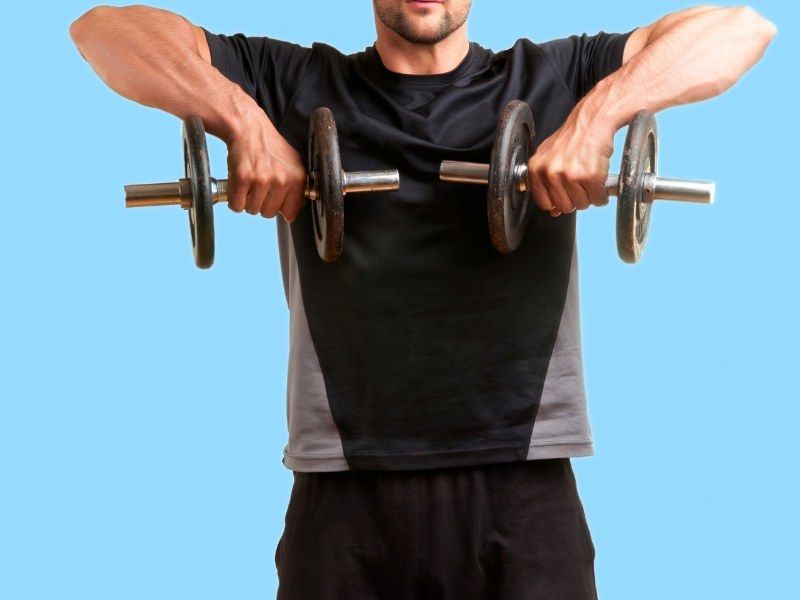
Looking for an exercise to add to your shoulder workout? Try barbell upright rows! Stand straight with the bar at your hips and your arms straight, lead with your elbows as you pull the bar close to your body to about upper-chest height, then lower it slowly.
This exercise is especially popular with bodybuilders and weightlifters, and for good reason: it is an excellent exercise for the shoulders, upper back and traps. Its technique is not simple at all. This guide covers the benefits, technique, tips, mistakes and variations.
For more shoulder exercises, see the best shoulder exercises guide.
Muscles worked
The main muscles working in this exercise are the front, middle and rear shoulders, the traps, and the upper back muscles as stabilizers.
| Muscle | Role in the exercise |
|---|---|
| Side (lateral) delt, outside of the shoulder | part of the deltoid, the main muscle that lifts your arm out to the side; a main mover |
| Front and rear delts | help lift the arm |
| Upper trapezius, between your neck and shoulder | lifts the shoulder blades, like a shrug; a main mover |
| Middle trapezius and upper back | steady the shoulder blades |
| Biceps and forearms | bend the elbow and hold the bar |
| Core and lower back | keep your body still |
Benefits of the upright row
Works the muscles that add upper-body width
The barbell upright row works almost all the muscles that give the upper body size and width: all three parts of the shoulders, the upper back and the traps.
Improves shoulder flexibility
The upright row is a unique shoulder movement with a very large range of motion, which can help you improve flexibility and mobility. It also imitates everyday actions, such as lifting objects from the floor. Work through a range that feels comfortable for your shoulders.
How to do the upright row with good form
- Stand straight, holding the bar with a shoulder-width overhand grip. Your arms are straight and the bar is at waist level.
- Tighten your abdominal and lower back muscles, and push your chest out a little.
- Slowly lift the bar toward your upper chest, with your elbows leading the movement. Keep the bar close to your body.
- When your elbows reach about shoulder height, pause for a second and start lowering the bar.
- Lower it slowly to your waist, keeping it close to your body. Repeat until you finish the set.
If your shoulder pinches before your elbows reach that height, stop lower. You can also try the movement without weight beside a mirror to find a comfortable top position.
Grip width: where to start
Start with the shoulder-width grip from the steps above. You can try a slightly wider grip with a light bar and see how it feels; the variations below compare different grips.
What research says: in one study, 16 weight-trained men did two reps with three grip widths (half, equal to, and double the width between the bony tips of their shoulders) and the same heavy load. Delt and trap activity rose as the grip got wider, the trap difference mostly while lowering the bar, and biceps activity fell. Try a few widths with a light bar and use the one that feels best.
Common mistakes and how to fix them
Using momentum
Many people are tempted to lift weights that are too heavy in this exercise. This makes them use momentum to lift the weight, which almost completely ruins the exercise's effectiveness. Remember: the goal is to load the muscles as effectively as possible, not to lift as much weight as possible.
As you raise the bar, keep your body straight and stable, and let the movement come from your elbows. If you need to swing, the weight is usually too heavy. People who swing it up often lower it quickly too, which brings me to the next mistake.
Lowering the bar too quickly
Lowering the bar too quickly can take away part of the exercise's effect. Do not drop it on the way down; lower it slowly and under control. A fast drop may strain your shoulders.
Pulling the weight too high
Lifting the bar above shoulder level may put a lot of pressure on your shoulder joints in a poor position. Raise your elbows until they reach about shoulder height. That is the full range of motion for this exercise, usually with the bar at upper-chest height.
Are upright rows bad for your shoulders?
Not for everyone, but they deserve care. Under the bony tip of your shoulder is a small space that the rotator cuff tendons pass through, and it normally narrows as you lift your arm. People with shoulder impingement often feel pain in a middle part of the lift as they raise the arm out to the side, roughly between 70 and 120 degrees. In this exercise, your upper arm goes up and out while it is turned inward.
In one ultrasound study of 25 healthy young men holding a 4 kg (about 9 lb) weight, that space was smaller at the top of a high upright row than with the arm held out at shoulder height and turned outward (it was not larger with the arm at shoulder height without that outward turn). The study measured the space in single positions; it did not follow injuries over time.
That is not proof that upright rows cause injury. If the exercise pinches or hurts even with a light weight, a wider grip and a lower pull height, I would switch to lateral raises for the side delts or shrugs for the upper traps.
Upright row variations
Different grips
One benefit of the barbell upright row is that you can change your grip and feel the exercise differently. Wider grips raise delt and trap activity and lower biceps activity.
Start at shoulder width and choose a grip that feels comfortable. Changing your grip width from time to time lets you train your shoulders from different angles.
With an EZ bar (W bar)
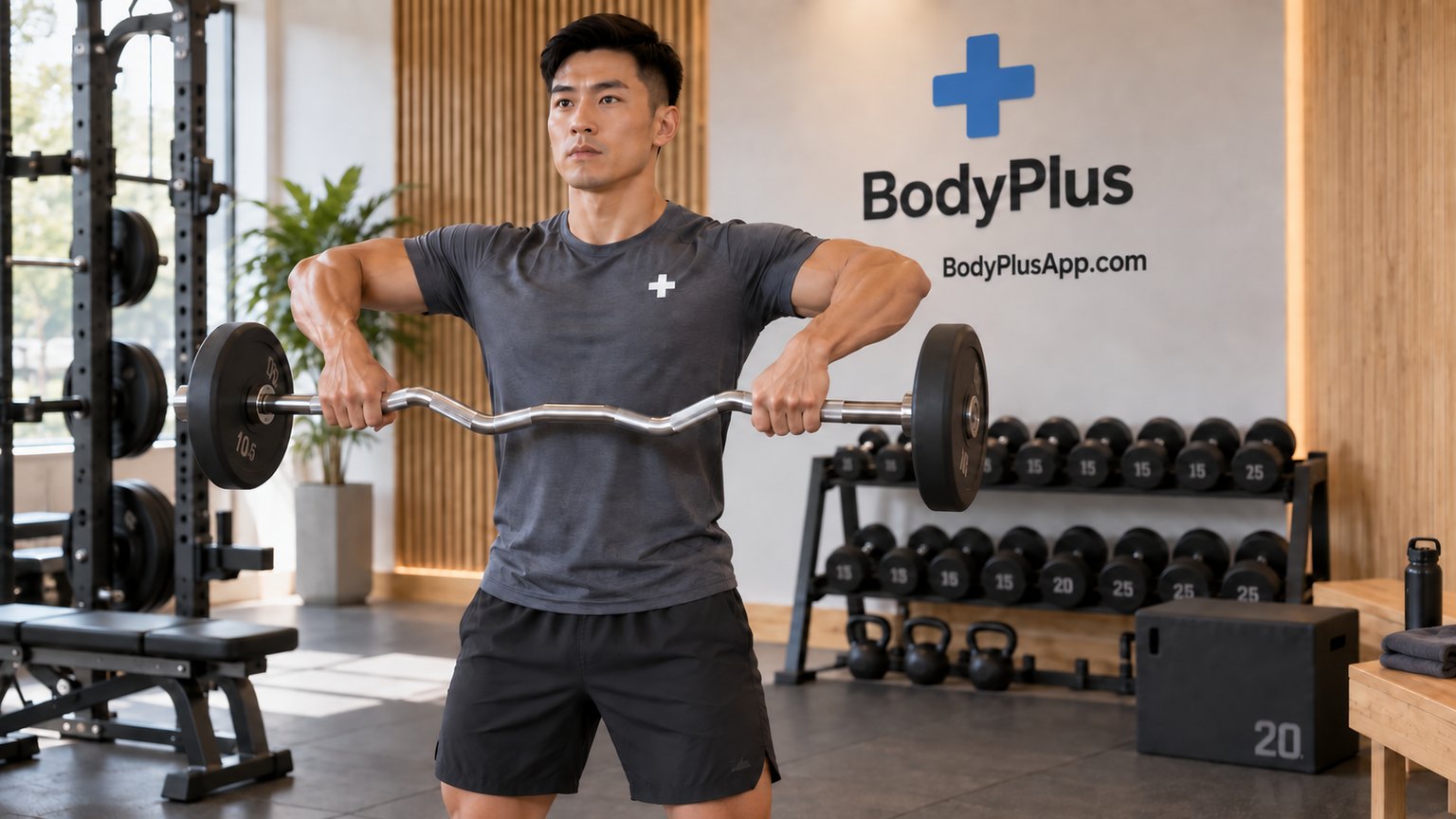
You can use a W bar instead of a straight bar. Its angled grip is often more comfortable for your wrists.
With a cable
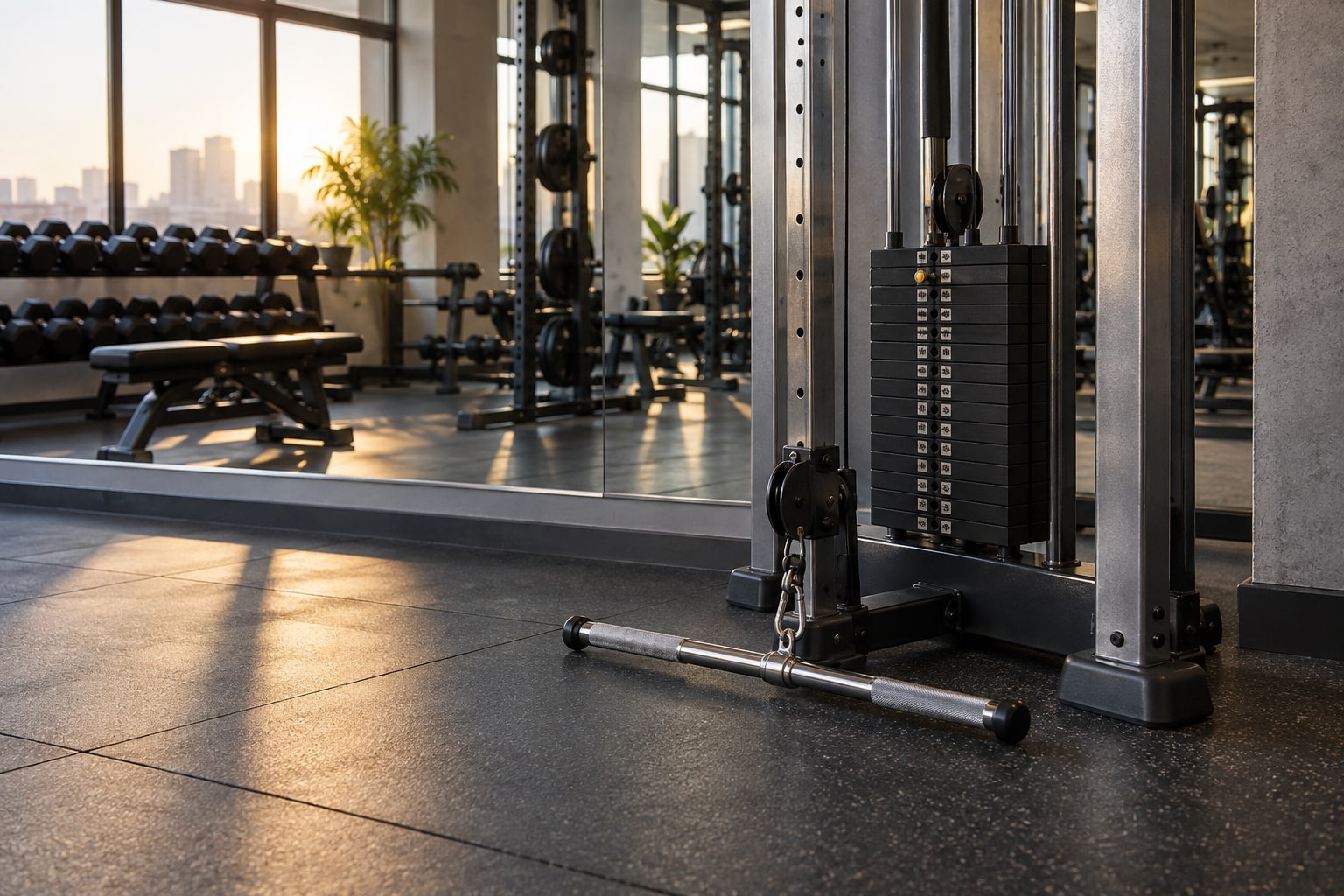
Attach a bar or rope to a low pulley, stand close and row the same way. The cable keeps some tension at the bottom, and the weight steps are small.
With dumbbells
You can also do the upright row with dumbbells. They can help you improve an imbalance between your sides and add variety to your shoulder workout.
Try this variation only after you have mastered the technique with the bar. With dumbbells, it is easier to move the joint incorrectly. Keep the dumbbells close to your body and let your elbows lead.
With resistance bands
Resistance bands are a must-have accessory for everyone who trains. With a bar or dumbbells, the load drops as you straighten your arms. A band can keep tension there if it is already stretched at the bottom.
Training with bands can help you improve hypertrophy significantly and add variety. You can use them anywhere: at home, on vacation, while traveling and elsewhere.
| Variation | Why choose it |
|---|---|
| Barbell | the classic; easy to add weight |
| EZ bar | more comfortable for many wrists |
| Cable | tension at the bottom; small weight steps |
| Dumbbells | each side lifts its own weight |
| Band | train at home or while traveling |
A large overview of reviews from the American College of Sports Medicine found that equipment type did not consistently change training results, so pick the version you control best.
Sets, reps and where it fits in your workout
- Reps and sets: 2-4 sets of 8-15 reps with a weight you control, with about 60-90 seconds of rest.
- Effort: stop most sets when you could do one to three more good reps.
- Order: after your main press on a shoulder or push day, or at the end of a pull workout.
- Weekly volume: the same overview linked about 10 or more hard sets per muscle group per week with more muscle growth; this exercise can cover part of that for your side delts, together with presses and raises.
Sample shoulder workout
| Exercise | Sets | Reps | Rest |
|---|---|---|---|
| Seated dumbbell shoulder press | 3 | 8-10 | 2 min |
| Barbell upright row, shoulder-width or wider grip | 3 | 10-12 | 90 s |
| Dumbbell lateral raise | 3 | 12-15 | 60-90 s |
| Reverse dumbbell fly | 3 | 12-15 | 60-90 s |
For the press, see the shoulder press guide. The push/pull/legs and upper/lower plans show where shoulder work fits in a week.
How to track it and when to go heavier
An example log for someone who already trains, with a straight bar:
| Session | Bar and plates | Set 1 | Set 2 | Set 3 |
|---|---|---|---|---|
| Week 1 | 25 kg (about 55 lb) | 12 | 11 | 10 |
| Week 2 | 25 kg (about 55 lb) | 12 | 12 | 11 |
| Week 3 | 25 kg (about 55 lb) | 12 | 12 | 12 |
| Week 4 | 27.5 kg (about 61 lb) | 10 | 10 | 9 |
| Week 5 | 27.5 kg (about 61 lb) | 11 | 10 | 10 |
The rule: when all three sets reach 12 clean reps, with your elbows stopping at shoulder height and a slow way down, add the smallest step your gym allows, usually 2.5 kg (about 5.5 lb). If the new weight makes you swing, pull too high or feel a pinch, go back to the old weight.
Safety
Secure the plates with collars before using a barbell; for the cable version, set the pulley low and check that the handle clip and weight pin are fully engaged. Warm up with a few easy shoulder movements, then do a light practice set before adding weight. Lift and lower under control, keeping your body still and the weight close rather than swinging it up.
Let your elbows lead and stop them at about shoulder height, or lower if you feel a pinch; do not chase your chin with the bar. End the set if you feel pain or dizziness, or if you can no longer keep that controlled movement, and lower the weight before your next set if your form broke down.
Bottom line
The standing barbell upright row is an exceptional compound exercise for the shoulders, upper back and traps, the muscles that give the upper body much of its size and width.
You can change your grip from time to time. That keeps your shoulders from getting used to one version and adds variety to your training.
Remember that good technique matters especially in shoulder exercises. The shoulders are joints that tend to get injured and develop inflammation. This is one of the most common injuries among people who train, so train correctly and without ego.
Frequently asked questions
What muscles do upright rows work?
Mainly the side delts and the upper traps, with help from the other shoulder and upper-back muscles, the biceps and your grip.
Are upright rows bad for your shoulders?
Not for everyone. In one small study, the space under the shoulder tip was smaller at the top of a high pull than in some other arm positions. Common coaching advice is to pull only until your elbows reach about shoulder height, use a shoulder-width or wider grip and a moderate weight, and stop if it hurts.
How high should I pull the bar?
Until your elbows reach about shoulder height.
Should I use a wide or narrow grip?
Start at shoulder width or a little wider (see the grip study above).
Upright row or lateral raise: which is better?
Neither for everyone. The row trains the side delts and traps together with a heavier load; the lateral raise focuses on the side delts and is the simpler choice if the row bothers your shoulders.
Is the upright row a push or a pull exercise?
A pull. Many plans put it on a shoulder or push day anyway, because it trains the shoulders.
Is the upright row good for traps?
Yes, the upper traps are one of its main muscles. Shrugs train them more directly if that is your main goal.
The information on this page and on this website is intended to provide general information only. The content on this website does not constitute a professional opinion, a recommendation, or a substitute for consulting an expert in a specific field or obtaining a medical opinion. It is not medical advice. BodyPlus is not a medical device. If you have a health condition or an injury, or are pregnant, talk to a qualified healthcare professional before starting. Stop exercising and seek appropriate help if you feel pain, dizziness or other concerning symptoms.
Sources
Accessed September 17, 2026.
- McAllister M.J. et al., "Effect of grip width on electromyographic activity during the upright row", J Strength Cond Res 2013;27(1):181-187. pubmed.ncbi.nlm.nih.gov/22362088
- Longo S. et al., "Ultrasound evaluation of the subacromial space in healthy subjects performing three different positions of shoulder abduction in both loaded and unloaded conditions", Phys Ther Sport 2017;23:105-112. pubmed.ncbi.nlm.nih.gov/27776926
- Creech J.A. et al., "Shoulder Impingement Syndrome", StatPearls (updated 2026-01-10), NCBI Bookshelf. www.ncbi.nlm.nih.gov/books/NBK554518
- Vigotsky A.D. et al., "Longing for a Longitudinal Proxy: Acutely Measured Surface EMG Amplitude is not a Validated Predictor of Muscle Hypertrophy", Sports Med 2022;52(2):193-199. pubmed.ncbi.nlm.nih.gov/35006527
- Currier B.S. et al., ACSM Position Stand, "Resistance Training Prescription for Muscle Function, Hypertrophy, and Physical Performance in Healthy Adults: An Overview of Reviews", Med Sci Sports Exerc 2026;58(4):851-872. pubmed.ncbi.nlm.nih.gov/41843416
- OpenStax, Anatomy and Physiology 2e, "11.5 Muscles of the Pectoral Girdle and Upper Limbs" (the deltoid as the major abductor of the arm; the trapezius elevates the shoulders). openstax.org/books/anatomy-and-physiology-2e/pages/11-5-muscles-of-the-pectoral-girdle-and-upper-limbs