
The 9 Best Home Workout Exercises (With Easier and Harder Versions)
In short
You don't really have to go to a gym to get started. You can train at home with a few exercises. Here are nine home workout exercises and a full-body workout plan. Let's get started!
I'll start with a few workout tips and then move on to the exercises.
Tips for a home workout
Choose exercises that work all the muscles in your body
If you want to get into good shape, make sure to do exercises for all the muscles in your body. You can train your whole body in the same workout, or split it: your upper body in one workout and your lower body in another.
Set specific goals
Instead of a general goal like “get into shape,” tell yourself: “I want to be able to do five pull-ups.” The clearer your goals are, the easier they will be to reach. When your goal is clear, you can know exactly how to get there.
Add resistance to strength exercises
You can increase the difficulty of all the exercises in this article. The more resistance you add over time, the stronger you'll get. Try different variations or external resistance such as weights, resistance bands and kettlebells. When the exercises become easy for you, make them harder.
The 9 best exercises to do at home
Here they are at a glance. Pull-ups need a secure bar, and rollouts need an ab wheel; the other seven need little more than floor space.
| Exercise | Main focus | Equipment | Easier version | Harder version |
|---|---|---|---|---|
| Push-up | chest, shoulders, triceps | none | hands on a wall or table, or on your knees | feet raised, clap push-up |
| Squat | quads, glutes, inner thighs | none | squat to a chair | jump squat, weight held at your chest |
| Lunge | glutes, quads, core | none | hold a chair, shorter step | walking lunge, backpack or dumbbells |
| Pull-up | back, shoulders, arms, forearms | pull-up bar | band-assisted or negative pull-up | slower reps, backpack |
| Ab wheel rollout | abs, core | ab wheel | kneeling, short range | longer range, from your feet |
| Bicycle crunch | abs, obliques | none (a mat helps) | slower, smaller range | holding a weight |
| Glute bridge | glutes, hamstrings | none (a mat helps) | smaller range | single leg, band or weight |
| Burpee | whole body, conditioning | none | step back instead of jumping | push-up in every rep |
| Mountain climber | whole body, conditioning | none | slow pace, hands on a sturdy raised surface | faster pace, knee across your body |
1. Push-up
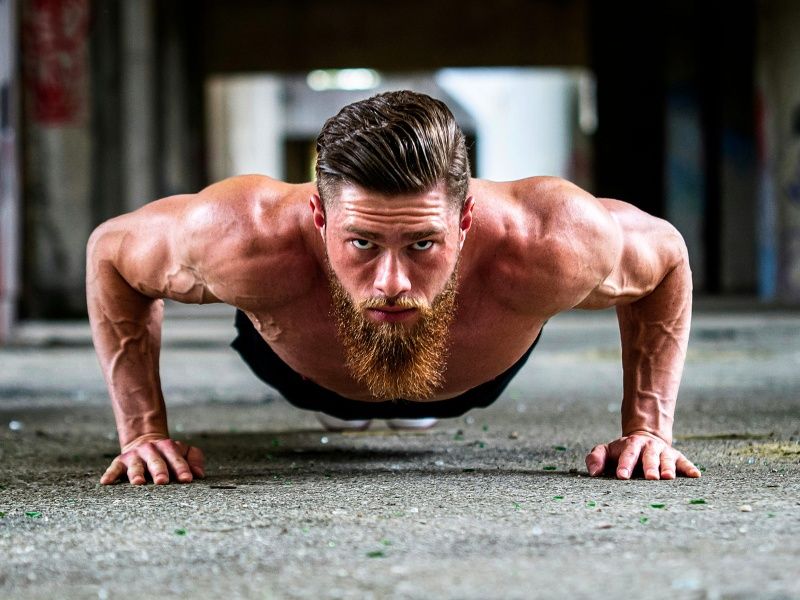
Push-ups are an exceptional exercise that will strengthen your upper body. They will help you build an especially strong chest, shoulders and arms. They also have a huge advantage: lots of variations for all difficulty levels.
Place your hands on the floor a little wider than your shoulders, hold your body in a straight line, lower your chest toward the floor and push back up. If you can't do regular push-ups, try them on your knees: instead of supporting your body on your feet, support it on your knees. You can also place your hands on a sturdy counter.
To increase the difficulty and add an explosive element, try push-ups with a clap once regular push-ups feel easy. Land with soft elbows. The push-up guide shows the movement in more detail.
2. Squat
The squat is one of the most popular and familiar strength exercises. Everyone loves it because of all its benefits. It is very effective for building strength and muscle in the lower body. It will even improve flexibility and stability, and your abdominal muscles work hard to stabilize your body during the movement.
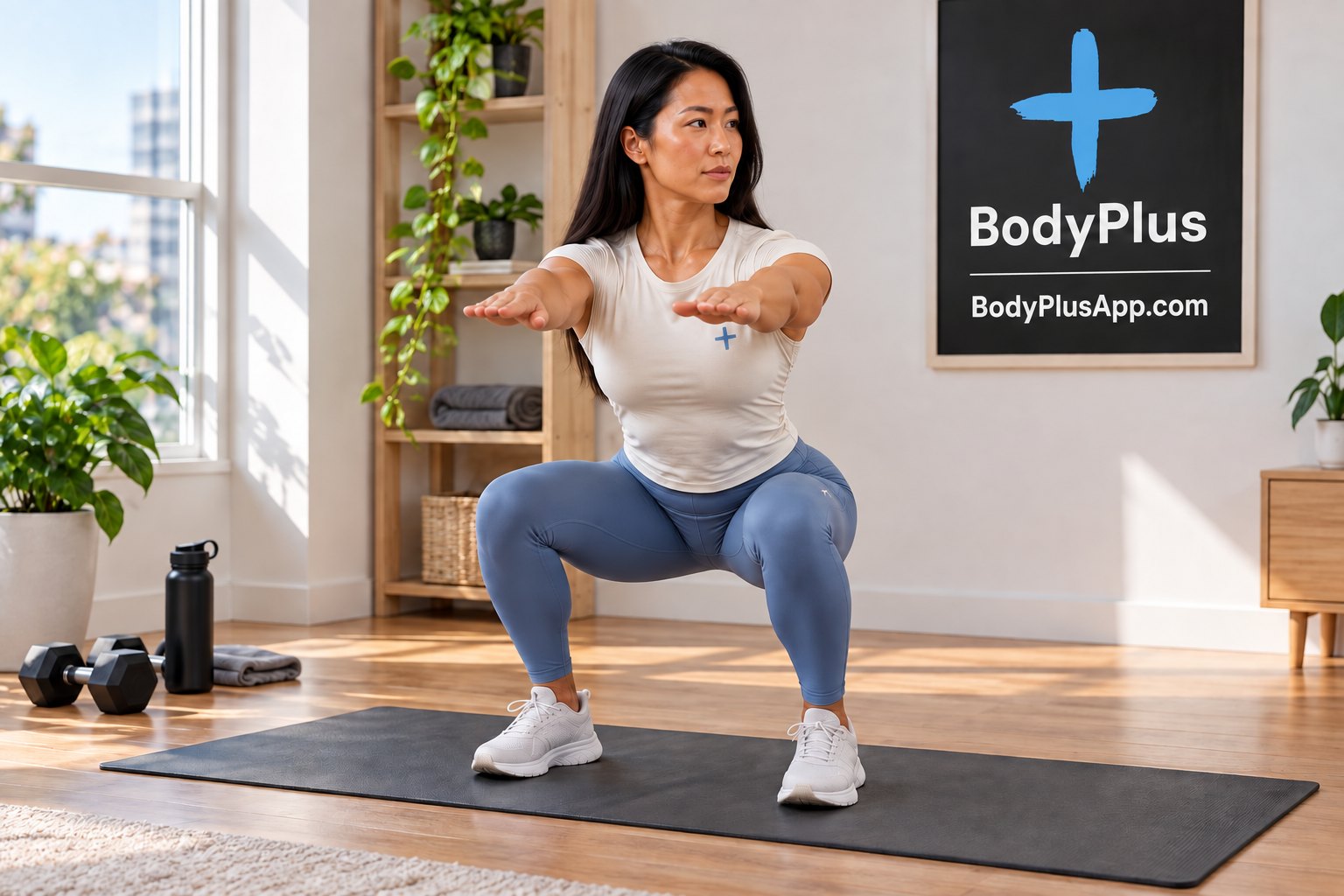
To do a squat, the muscles of the lower body work together. That joint work helps you strengthen the lower body in a balanced way. Stand with your feet about shoulder-width apart, bend your hips and knees to lower yourself, then push through your feet to stand. A sturdy chair can help you choose a comfortable depth.
If you want to increase the difficulty, add a jump each time you come up, landing softly. You can also hold a weight at your chest; the dumbbell squat guide shows that version.
3. Lunge
Lunges are an exceptional functional exercise: fairly simple, very effective and something you can do anywhere. They work the glutes, quadriceps, thighs and even the core, so they will help you strengthen the muscles in the lower body.
They will also help you improve your stability and flexibility. It is a functional exercise that can help with everyday movements. Step forward, bend both knees to lower yourself, then push through your front foot to return. Hold a sturdy chair if you want help with balance. For more difficulty, try walking lunges or hold weights.
4. Pull-up
One of the most powerful exercises for building the upper body is the pull-up, and even professional bodybuilders do it. Pull-ups work your back, shoulders, arms and forearms. Many organizations, including the army and police, use them to test strength.
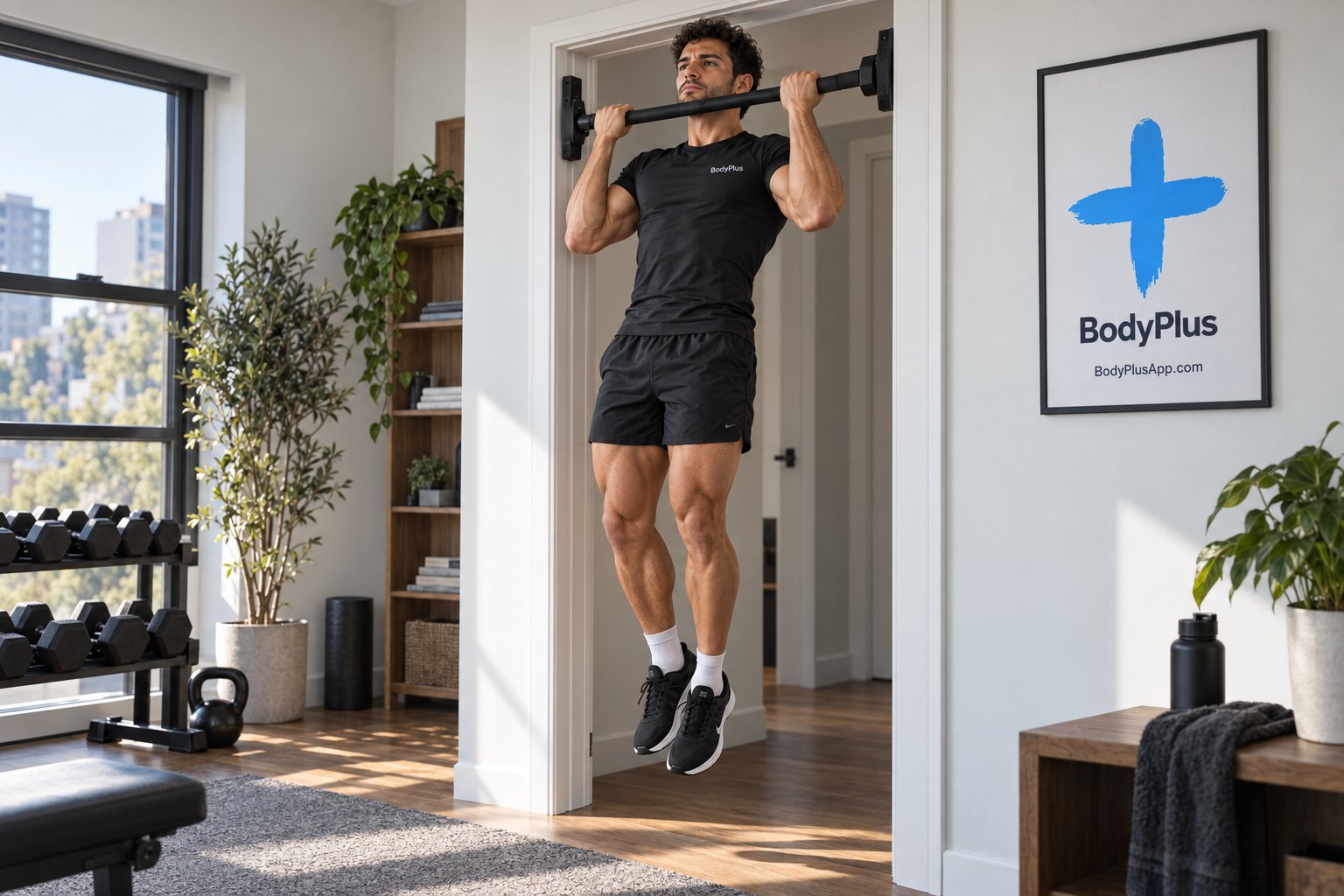
That said, this is a very difficult exercise, and not everyone can do it. If you can't do a pull-up either, try a resistance band or negative pull-ups. Check that the bar is secure before hanging from it.
With a band: tie the band securely to the bar, then put a foot in it. The band helps you go up. Negative pull-up: get your head above the bar with a small jump or by stepping up on a sturdy chair. Lower yourself slowly, taking about three seconds. That is one repetition. Repeat while you can still control the descent; stop the set when you cannot. Step down rather than dropping from the bar. The pull-up guide has more technique details.
5. Ab wheel rollout
The ab wheel is a special piece of equipment that lets you do one of the best exercises for developing the abdominal muscles. It is a wheel with handles on the sides. Grip the handles, roll your body outward and bring it back while your abs control the movement.
It may take you a few workouts to learn the technique. Once you understand it, you'll feel your abdominal muscles working like you've never felt them before. You can try different levels: roll out a short way from your knees, go farther, try a static hold, roll to the sides or, when ready, try the advanced version from your feet.
Start with a short range and keep your lower back from sagging. If you cannot hold that position, shorten the rollout or end the set. For more ideas, see the ab exercises guide.
6. Bicycle crunch
Every good workout needs an exercise to strengthen the core muscles, and bicycle crunches are an excellent choice. This is an advanced variation of classic crunches. The difference is that you bend your abdomen and legs diagonally.
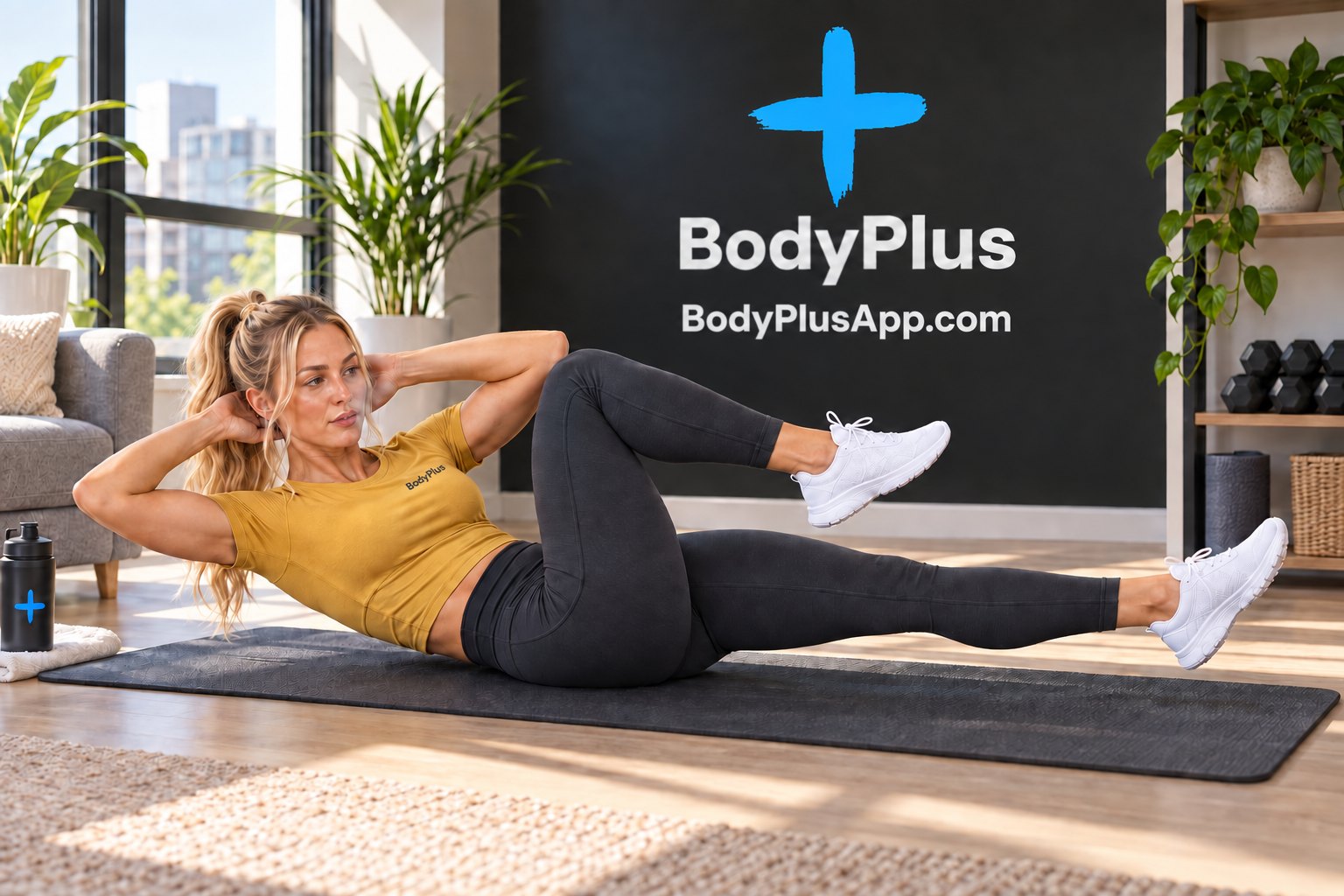
They are excellent for strengthening the abdominal muscles and lower back, and improving coordination in the body. Lie on your back, bring one elbow toward the opposite knee and switch sides in a smooth pedaling motion. Keep the movement controlled rather than pulling on your neck. If you want to make it harder, hold a light weight at your chest.
7. Bridge
The bridge is a wonderful exercise for building strong glutes. It also strengthens the thighs and lower back. It is excellent for people who sit a lot during the day, because it can help improve flexibility around the hips.
The technique is very simple. Lie on the floor or an exercise mat with your feet on the ground and knees bent. Lift your hips and squeeze your glutes as hard as you can. Hold for one to two seconds, then lower yourself. For more difficulty, try the single-leg variation or add resistance. See more in the glute exercises guide.
8. Burpee
If you do 15 repetitions in a row, you're probably in good physical shape. The burpee is a super intense exercise that many people include in HIIT or Tabata. It is great for building explosive strength, cardiovascular endurance and burning calories.
Squat down, put your hands on the floor, move your feet back to a push-up position, bring them forward and stand up with a jump. To make it easier, step your feet back and forward and skip the final jump. To increase the difficulty, add a push-up in every repetition.
9. Mountain climber
There aren't many exercises like the mountain climber that you can do inside the house and use to improve your cardiovascular endurance. It is an aerobic exercise that works the whole body and raises your heart rate easily. It gets its name because moving your legs looks like climbing a mountain.
Start in a push-up position, bring one knee toward your chest, then switch legs. Keep your hips steady. You can go slowly to learn the movement, or move faster when you can keep control.
Full-body workout plan
Here is a workout plan that works the whole body and will help you improve your physical fitness. It doesn't include all the exercises in the article; some of them work the same muscles.
| Exercise | Sets | Reps | Rest |
|---|---|---|---|
| Pull-up or negative pull-up | 4 | max reps | 90 s |
| Push-up | 4 | max reps | 90 s |
| Squat | 4 | max reps | 90 s |
| Bicycle crunch | 4 | max reps | 60 s |
| Burpee | 3 | max reps | 90 s |
“Max reps” means as many good repetitions as you can do. Stop the set when you can no longer keep the movement controlled. If you're starting out, choose easier versions and fewer sets, then build up toward the plan.
Workout B, to alternate with the one above: lunge 3 x 8–12 per leg, glute bridge 3 x 12–20, push-up (a different version) 3 x max reps, ab wheel rollout 3 x 6–10, mountain climber 3 x 30 seconds.
What research says about training at home
- Push-ups can build muscle like a light bench press. In an 8-week study, 18 young men did either a bench press at 40% of their one-rep max or push-ups adjusted (for example on the knees) to a similar load, twice a week. Both groups gained similar strength and chest and triceps thickness. The study was small and used only men.
- Progressing the push-up builds strength. In a 4-week study of 23 moderately trained men, a group that moved to harder push-up variations over time increased its bench press one-rep max, as did a bench press group. Neither group showed a significant change in muscle thickness in that short time.
- The type of equipment is not what matters most. The 2026 position stand of the American College of Sports Medicine (ACSM), an overview of 137 reviews of trials in healthy adults, found that equipment type did not consistently change training results. Muscle growth was better with about 10 or more sets per muscle group per week.
- Squats do little for the hamstrings. In a 10-week study of 17 men doing squat training, the quads, glutes and inner thighs grew, but the hamstrings did not change. That is why Workout B adds the glute bridge.
- Wheel rollouts work the abs hard. In one study that measured muscle activity (EMG) in 21 healthy adults, rollouts and pikes on a wheel device with foot straps were among the exercises with the highest ab activity. High activity in one session does not prove more growth, and the authors noted that the wheel pike and knee-up variations also worked the hip flexors hard, which may not suit some people with lower-back problems.
- How much to do. The Physical Activity Guidelines for Americans advise adults to do muscle-strengthening activities on two or more days a week, plus regular aerobic activity.
Safety
Check that your pull-up bar and bands are secure, and use a sturdy chair or counter when you need support. Warm up with a few easy repetitions and start with an easier variation or light weights. Keep each repetition controlled; for negative pull-ups, take about three seconds to lower yourself, then step down rather than dropping. With the ab wheel, shorten the rollout before your lower back sags.
End the set if you feel pain or dizziness, or if your form starts to break down. Give yourself time to recover between workouts, choose lighter weights or easier versions when tired, and add reps or resistance only while you can keep good form. For more technique details, see my push-up guide and pull-up guide.
Bottom line
If you really want to get into shape, the first step you need to take is to start. Starting the process and building the habits is the hardest thing. By the way, this is true for everything you do in life.
An important part of training and a healthy lifestyle is proper nutrition. Here are some simple nutrition guides for beginners to help you understand where to begin.
Include these exercises in your routine, eat regularly and keep building the habit.
Frequently asked questions
Can you build muscle with home workouts?
Yes, if the exercises stay challenging. In a small study listed below, adjusted push-ups and light bench presses produced similar muscle gains over eight weeks. You can progress with harder variations, more reps, bands or weights.
What are the best exercises to do at home with no equipment?
Push-ups, squats, lunges, bridges, bicycle crunches, burpees and mountain climbers. To add a pulling exercise for your back, you need a bar, band or another form of resistance.
How often should I work out at home?
The US Physical Activity Guidelines advise muscle-strengthening activity on at least two days a week. The sample plan gives you one way to begin.
What if an exercise hurts?
Stop that set. Try a shorter range or an easier variation that feels comfortable.
The information on this page and on this website is intended to provide general information only. The content on this website does not constitute a professional opinion, a recommendation, or a substitute for consulting an expert in a specific field or obtaining a medical opinion. It is not medical advice. BodyPlus is not a medical device. If you have a health condition or an injury, or are pregnant, talk to a qualified healthcare professional before starting. Stop exercising and seek appropriate help if you feel pain, dizziness or other concerning symptoms.
Sources
Accessed September 17, 2026.
- Kikuchi N., Nakazato K., "Low-load bench press and push-up induce similar muscle hypertrophy and strength gain", J Exerc Sci Fit 2017;15(1):37-42. pubmed.ncbi.nlm.nih.gov/29541130
- Kotarsky C.J. et al., "Effect of Progressive Calisthenic Push-up Training on Muscle Strength and Thickness", J Strength Cond Res 2018;32(3):651-659. pubmed.ncbi.nlm.nih.gov/29466268
- Currier B.S. et al., ACSM Position Stand, "Resistance Training Prescription for Muscle Function, Hypertrophy, and Physical Performance in Healthy Adults: An Overview of Reviews", Med Sci Sports Exerc 2026;58(4):851-872. pubmed.ncbi.nlm.nih.gov/41843416
- Kubo K. et al., "Effects of squat training with different depths on lower limb muscle volumes", Eur J Appl Physiol 2019;119(9):1933-1942. pubmed.ncbi.nlm.nih.gov/31230110
- Escamilla R.F. et al., "Electromyographic analysis of traditional and nontraditional abdominal exercises: implications for rehabilitation and training", Phys Ther 2006;86(5):656-671. pubmed.ncbi.nlm.nih.gov/16649890
- Piercy K.L. et al., "The Physical Activity Guidelines for Americans", JAMA 2018;320(19):2020-2028. pubmed.ncbi.nlm.nih.gov/30418471