
How to Do a Sumo Squat: Form, Muscles Worked and Variations
In short
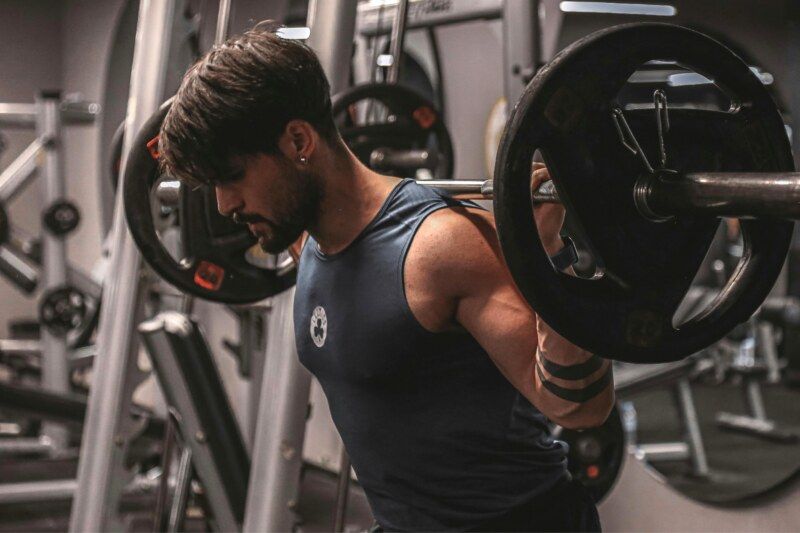
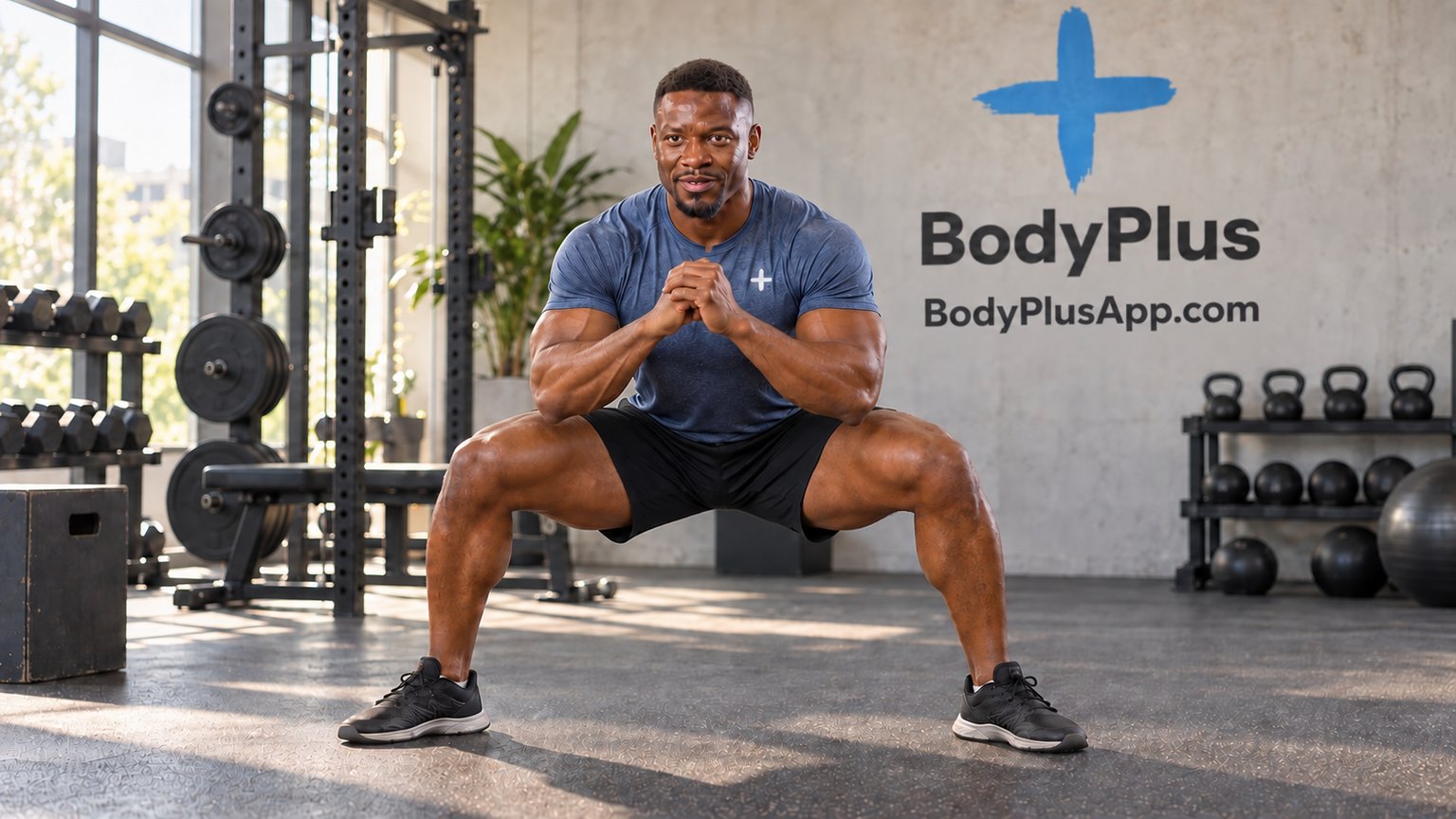
Have you ever heard of the sumo squat? Stand with your feet wider than your shoulders and your toes pointing out, then lower yourself while your knees follow your toes. It is a variation of the regular squat that emphasizes your inner thighs while your glutes and quads work too.
In this guide I will explain its benefits, technique, tips and variations. Before we start, one detail: it is called a “sumo squat” because the stance imitates that of sumo wrestlers. So let's get started!
Main muscles worked: inner thighs (adductors), quadriceps, hamstrings, glutes, abdomen and lower back. For a full map, see my guide to the leg muscles.
The benefits of the sumo squat
Emphasizes the inner thighs
One of the main benefits of the sumo squat is that it emphasizes the inner thigh muscles. The glutes, quadriceps and hamstrings also work during the exercise, so it helps build all the leg muscles.
Small studies by McCaw and Melrose and by Paoli and colleagues measured changes in muscle activity with stance width. A study by Hopkins and colleagues found no change in hip-adductor demand, so these measurements do not prove that a wider stance builds more inner-thigh muscle.
In Kubo and colleagues' 10-week study, full squats grew the glutes and adductors more than half squats. The study compared depth, not sumo and regular squats, but it is a useful reminder not to give up depth just to stand wider.
The sumo squat has a smaller range of motion than the regular squat. If your goal is the overall development of all your leg muscles, it is probably better for you to stick with the classic variation.
Lower-back and knee load
You may find it easier to keep your upper body upright in a sumo squat. The wide stance can also keep your shins more vertical than in a regular squat.
That does not mean it reduces strain on your lower back or knees. Escamilla and colleagues measured more vertical shins in a wide stance, but no difference in torso lean and higher knee forces in their squat studies. If a wide stance feels comfortable to you, use a width you can control; don't count on it to solve knee or back sensitivity.
How to do a sumo squat
- First, position the bar on the rack at about chest height. Set the safety bars below the lowest point of your squat.
- Get under the bar and place it on the upper part of your trapezius muscles, across your upper back.
- Hold the bar with both hands and lift it off the rack.
- Take a step back. Stand with your feet wider than shoulder width and your toes pointing outward.
- Keep your chest up, your back straight, and tighten your core muscles.
- Slowly bend your knees and lower your buttocks, as if you are sitting on a chair. As you lower yourself, keep your knees in line with your toes rather than letting them collapse inward.
- Go as low as you can while maintaining proper technique.
- At the bottom, pause for one second. Then rise back up, pushing through your heels.
- Repeat for the desired number of repetitions, then walk the bar forward and rack it before letting go.
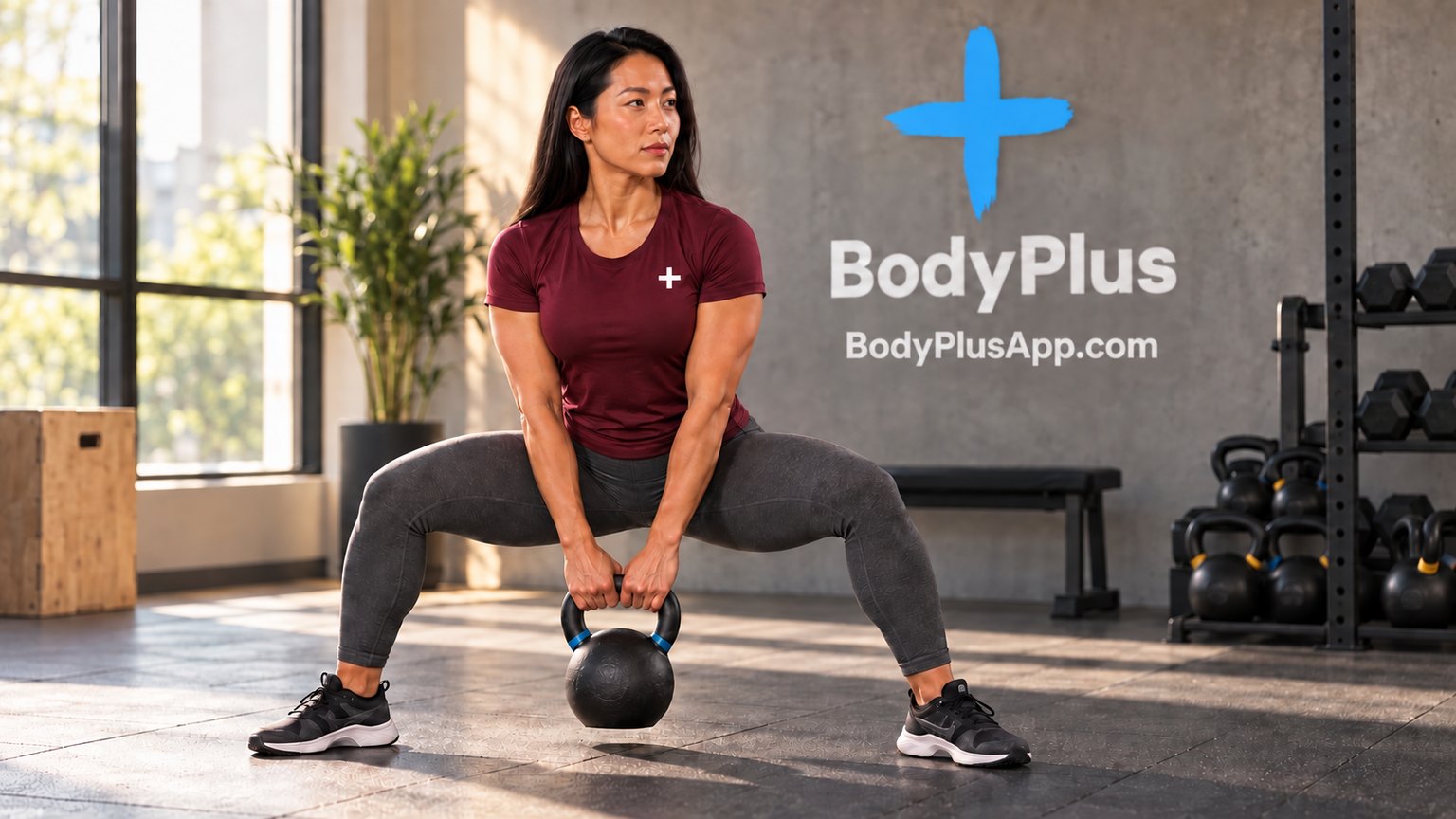
You can also do this with a kettlebell or dumbbell at your chest or hanging between your legs. If a hanging weight touches the floor too soon, hold it at your chest.
For more ways to hold dumbbells, see my dumbbell squat guide.
Common mistakes in the sumo squat
A stance that is too narrow or too wide
The most common mistake is not knowing how wide to stand. If your stance is too narrow, the exercise becomes a regular squat. If it is too wide, you won't be able to go down properly, and you won't have enough range of motion.
At the bottom, look for shins that are roughly perpendicular to the floor, forming about a 90-degree angle with it. Go only as low as you can while keeping your back straight and your knees in line with your toes.
Knees collapsing inward or moving outward
Do not let your knees move outward or collapse inward. This puts a lot of pressure on the knees and could lead to injury. Keep your knees at the same angle as your feet.
Rounding the back
In almost every strength exercise, it is important to keep your back straight. Bending your back will put enormous pressure on the spine. It will also make the exercise less effective and increase the risk of injury.
Sumo squat variations
Sumo squat with a kettlebell
You can use a kettlebell instead of a bar. This is especially suitable for beginners, because the technique is easy to learn. You can hold the kettlebell or a dumbbell against your chest or hold it between your legs.
Wide leg press
A leg press on a machine in a wide stance is not exactly the same variation, but it works the same muscles. It also focuses on the inner thighs. You can only do it in a gym, because it requires a machine.
A sample leg workout
Here is one way to combine the sumo squat with your other leg exercises. Adjust the weight so you can keep the technique above; Currier and colleagues' resistance-training review supports using several sets across a training week, but this is an example, not a required plan.
| Exercise | Sets | Reps | Rest |
|---|---|---|---|
| Barbell squat or leg press | 3 | 6-10 | 2 min |
| Wide-stance squat (goblet or barbell) | 3 | 10-15 | 90 s |
| Romanian deadlift | 3 | 8-12 | 90 s |
| Leg curl | 2 | 10-15 | 60 s |
| Calf raise | 3 | 12-15 | 60 s |
If you track your sets, a simple log can show when to add weight. For example:
| Session | Weight | Set 1 | Set 2 | Set 3 |
|---|---|---|---|---|
| Week 1 | 20 kg (about 44 lb) | 12 | 11 | 10 |
| Week 4 | 20 kg (about 44 lb) | 15 | 15 | 15 |
| Week 5 | 24 kg (about 53 lb) | 11 | 10 | 9 |
In this example, the weight goes up only after all three sets reach the top of the 10–15 rep range with good technique.
Safety
For barbell sumo squats, secure the plates with collars and set the safety arms just below your lowest squat position, checking their height with an empty bar. If you use the wide leg press option, adjust the seat so your back and hips stay against the pad, and check how to engage the safety stops before loading it. Warm up with bodyweight squats, then start with a light weight before adding more.
Lower under control, pause briefly at the bottom and stand up without bouncing. End the set if you feel pain or dizziness, or if your back rounds or your knees stop following your toes, and put the weight down safely. Don't force an extra-wide stance; choose a width that lets you keep your knees in line with your toes throughout the squat.
Bottom line
The sumo squat is an excellent exercise if you want to emphasize your inner thigh muscles. A wide stance may feel more comfortable for you, but it is not a proven way to reduce strain on the knees or lower back.
You can combine the variations. Every few weeks, change the squat variation you do. This will help you develop strong, balanced legs and give your body a different stimulus, so it does not get used to one movement.
It is important that you maintain proper technique. Proper technique is the key to success in strength training.
Frequently asked questions
What muscles does a sumo squat work?
Mainly your inner thighs (adductors), glutes and quadriceps. Your abdomen and lower back help keep you steady, and your hamstrings also work.
Is the sumo squat better than the regular squat?
If your goal is overall leg development, I would stick with the classic squat and use the sumo variation for a different emphasis. Both train your legs; the stance is the main difference.
Is it good for your glutes?
Your glutes work in both versions. Paoli and colleagues found higher glute activity with the widest stance in a small study; a separate study by Kubo and colleagues found more glute growth with full squats than half squats.
How wide should my feet be?
Wider than shoulder width, with your toes pointing outward. At the bottom, check whether your shins are roughly vertical and whether you can keep your knees in line with your toes.
Sumo squat vs. goblet squat: what is the difference?
“Sumo” describes the wide stance. “Goblet” describes holding a weight at your chest. You can use a goblet hold for a sumo squat.
Is a wide stance easier on the knees?
Not necessarily. Escamilla and colleagues found higher knee forces in a wide-stance squat in one study. Choose a stance you can control rather than assuming the wider one will reduce strain.
The information on this page and on this website is intended to provide general information only. The content on this website does not constitute a professional opinion, a recommendation, or a substitute for consulting an expert in a specific field or obtaining a medical opinion. It is not medical advice. BodyPlus is not a medical device. If you have a health condition or an injury, or are pregnant, talk to a qualified healthcare professional before starting. Stop exercising and seek appropriate help if you feel pain, dizziness or other concerning symptoms.
Sources
Accessed September 17, 2026.
- McCaw S.T., Melrose D.R., "Stance width and bar load effects on leg muscle activity during the parallel squat", Med Sci Sports Exerc 1999;31(3):428-436. pubmed.ncbi.nlm.nih.gov/10188748
- Paoli A., Marcolin G., Petrone N., "The effect of stance width on the electromyographical activity of eight superficial thigh muscles during back squat with different bar loads", J Strength Cond Res 2009;23(1):246-250. pubmed.ncbi.nlm.nih.gov/19130646
- Hopkins J.E., Hopkins C.E., Chiu L.Z.F., "Greater squat stance width alters three-dimensional hip moment demands", J Biomech 2024;177:112391. pubmed.ncbi.nlm.nih.gov/39486379
- Escamilla R.F. et al., "A three-dimensional biomechanical analysis of the squat during varying stance widths", Med Sci Sports Exerc 2001;33(6):984-998. pubmed.ncbi.nlm.nih.gov/11404665
- Escamilla R.F. et al., "Effects of technique variations on knee biomechanics during the squat and leg press", Med Sci Sports Exerc 2001;33(9):1552-1566. pubmed.ncbi.nlm.nih.gov/11528346
- OpenStax, Anatomy and Physiology 2e, "11.6 Appendicular Muscles of the Pelvic Girdle and Lower Limbs" (the adductors; the adductor magnus extends the thigh). openstax.org/books/anatomy-and-physiology-2e/pages/11-6-appendicular-muscles-of-the-pelvic-girdle-and-lower-limbs
- Kubo K. et al., "Effects of squat training with different depths on lower limb muscle volumes", Eur J Appl Physiol 2019;119(9):1933-1942. pubmed.ncbi.nlm.nih.gov/31230110
- Currier B.S. et al., ACSM Position Stand, "Resistance Training Prescription for Muscle Function, Hypertrophy, and Physical Performance in Healthy Adults: An Overview of Reviews", Med Sci Sports Exerc 2026;58(4):851-872. pubmed.ncbi.nlm.nih.gov/41843416