
How to Do the Leg Press: Form, Foot Placement and Muscles Worked
In short
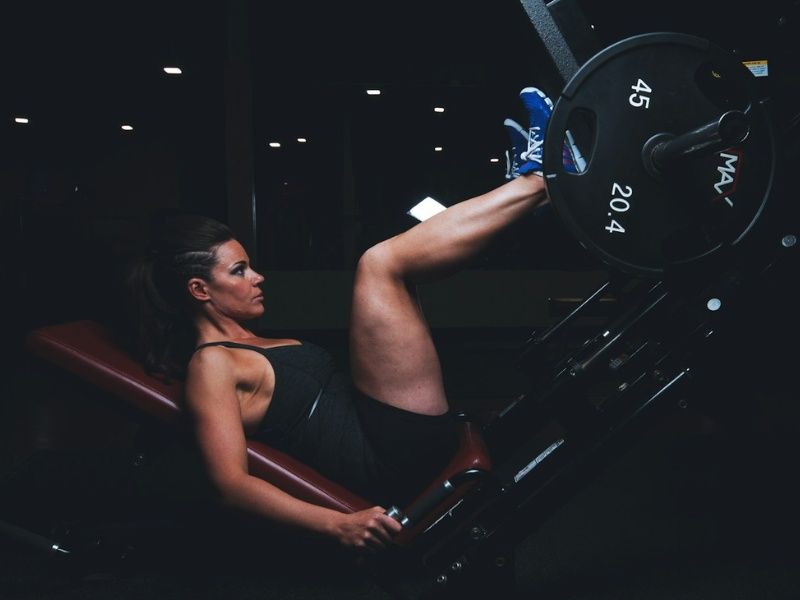
To do a leg press, sit with your back and buttocks against the pad, place your feet about shoulder-width apart, press until your legs are almost straight, then lower the weight slowly. Your quadriceps and glutes do most of the work.
It is a controversial exercise. Some people love it very much, and the other group just badmouths the people who do it. Don't worry, you've come to the right article. Here are the benefits, technique, common mistakes, variations, and the answer to the question: which is better, the leg press or the squat? Let's begin!
Most gyms have two types: an inclined machine that you load with weight plates, and a seated machine whose weight is connected by cables.
Main muscles worked: quadriceps (front of the thighs) and glutes, with the inner thighs helping. The hamstrings help, but the press gives them little training. In a 12-week study of 17 untrained adults, Kinoshita and colleagues found growth in the quads, glutes and adductor magnus after leg-press training; the hamstrings grew only slightly. For a map of the muscles, see my guide to leg muscles.
Benefits
Lots of variations
A major benefit of this exercise is the number of variations and how easy they are to change. Your foot position affects how the work is shared between the leg muscles. For example, putting your feet higher on the platform may shift more work toward the glutes and the back of the legs; putting them lower may emphasize the quadriceps. I'll come back to the foot positions below.
What's more, you can train your calves on this machine. Place the front of your shoes on the platform with your heels free, and move the weight by pointing and flexing your ankles.
Easy to learn and beginner-friendly
The technique is not as difficult or complex as squat technique. You still need to keep the movement clean, but it is easy compared with a squat and a Romanian deadlift.
In general, machines are more beginner-friendly because the path of movement is set. Many trainers give their trainees this exercise as the main exercise for leg training until they learn squat technique.
Focus on the leg muscles
A leg press gives you the ability to focus the load on the large leg muscles without balancing the weight. You sit with your back against a pad and press with your legs. That can be especially helpful if a nagging shoulder or elbow injury makes it uncomfortable to hold a bar.
In squats and lunges, you need to stabilize the weight, so more muscles work together. I'll return to that difference when we compare the leg press and squat.
How to do a leg press correctly
Both types of machine use a similar pressing movement. I'll go through the seated machine first, then the inclined one.
Seated machine with cables
- Set your desired weight on the machine.
- Sit with your buttocks at the back of the seat, your legs at about 90 degrees to your upper body, and your back against the pad.
- Place your feet shoulder-width apart.
- Push the platform away until your legs are almost straight. Stop just short of straight, without snapping your knees into place.
- Pause for a moment.
- Bring the platform slowly back toward you to the starting position.
- Repeat for your chosen number of reps, then let the weight settle gently onto the stack.
Inclined machine
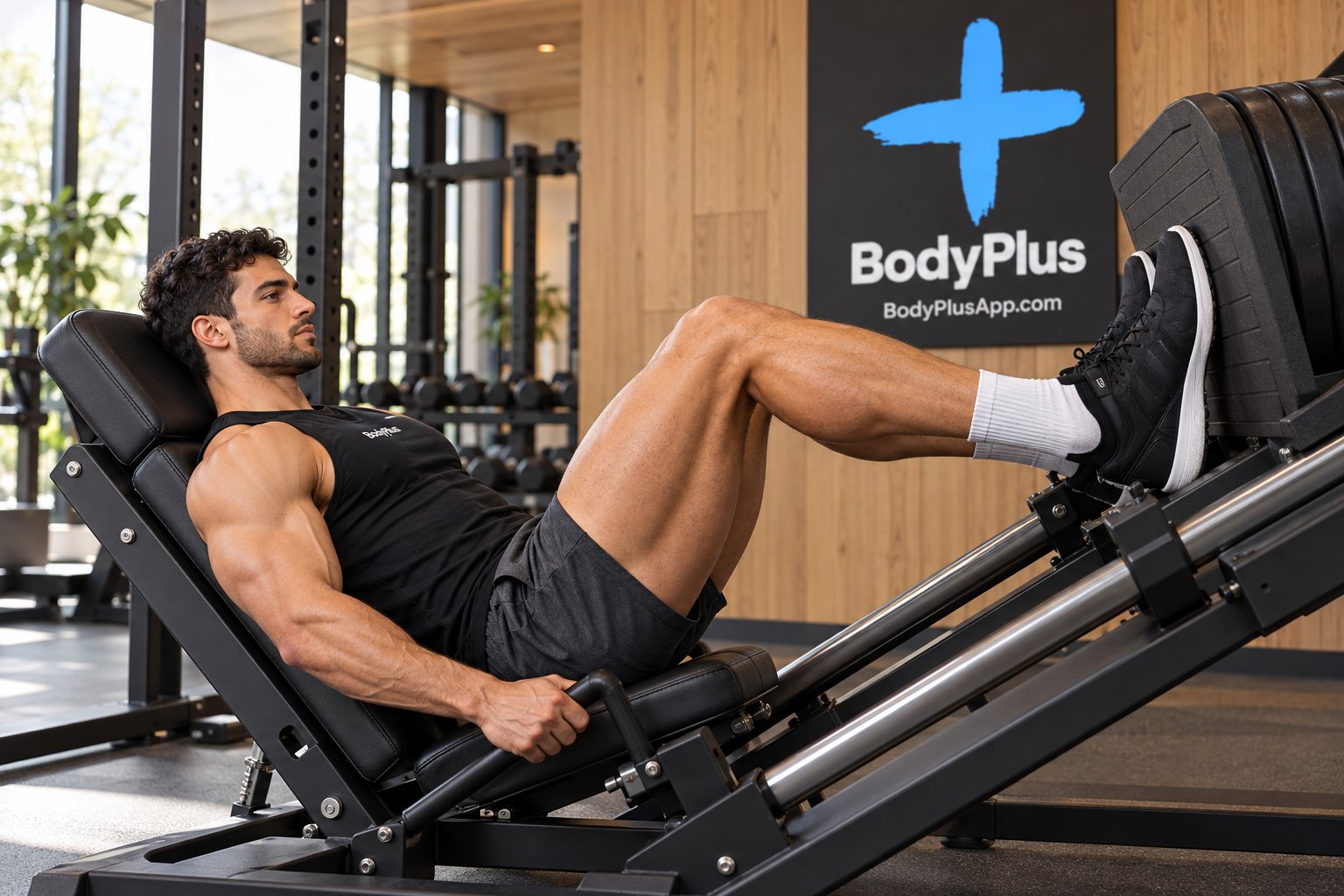
- Choose your weight, with the same number of plates on both sides. If there are adjustable safety stops, set them just below your lowest planned position.
- Sit with your buttocks at the back of the seat and your back against the pad. Place your feet shoulder-width apart on the platform.
- Press the sled up and carefully release the safety handles. Hold the side handles.
- Lower the weight slowly until your knees bend to about 90 degrees, or as far as you can while your buttocks and lower back stay on the pad. Pause for a moment at the bottom.
- Push back to the starting position and stop just short of straightening your legs completely. Repeat for your chosen number of reps.
- At the end of the set, lock the safety handles and lower the sled onto them before taking your feet off the platform.
Breathe in as you lower the weight and breathe out as you press it away.
Common mistakes
Lifting too much weight
For some reason, this is the exercise where everyone tries to impress and lift as much as possible. Is a very poor idea, for several reasons:
- A heavy weight you can't control puts a lot of stress on your knees and pelvis.
- If your goal is to build muscle, you need to control the movement. A controlled movement is the best way to challenge your muscle fibers.
- If your goal is pure strength, this is not the right exercise. Real strength is not measured on machines but with free weights (a bar and weights). Heidel and colleagues found that strength gains tended to follow the exercise people trained, while muscle growth was similar with machines and free weights. If you want to get stronger at barbell lifts, train those lifts too.
If you can't control the movement, you probably need to lower the weight. End the set if your form breaks down or the movement hurts. Good technique matters far more than the amount of weight you lift.
Hips sliding forward or lifting off the seat
If your buttocks slide forward or rise off the seat, a lot of the load moves to your lower back, and that can be dangerous. Sit with your buttocks all the way back, your back flat against the pad, and your thighs at about 90 degrees to your upper body. If your hips still lift at the bottom, shorten the range.
Knees caving in
Make sure your knees don't collapse inward. When they do, your knee joints are in an unstable position that puts a lot of extra stress on them.
To avoid it, turn your feet out very slightly, and keep your knees bending in the same direction as your toes.
Locking your knees hard at the top
Stop just short of straight and keep the push smooth, rather than snapping your knees into place.
Short, bouncing reps
Dropping the sled fast and bouncing it out of the bottom makes it hard to control and hard to track. Lower it over two or three seconds, pause, then press.
Foot placement and variations
The variations are affected by the position of your feet. Each position can change which part of your legs does more work. Here are the positions you can use in a leg workout:
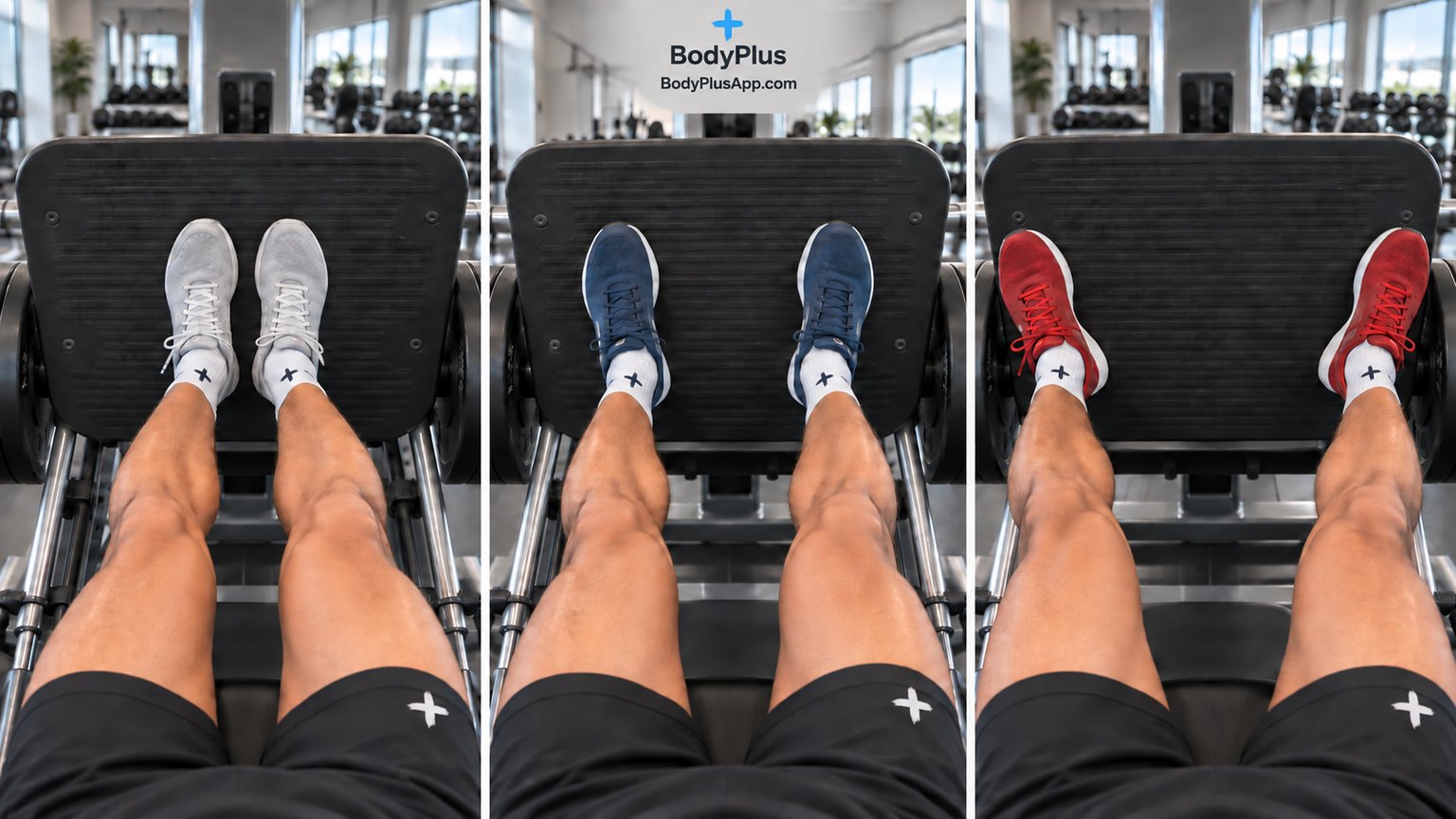
| Foot position | How it changes the press |
|---|---|
| Middle, shoulder-width (classic) | A balanced starting position for the legs overall. |
| Higher on the platform | More hip bend and less knee bend; often used to emphasize the glutes and back of the legs. |
| Lower on the platform | More knee bend; often used to emphasize the quadriceps. |
| Wider stance | More space for your knees to open outward. |
| Narrower stance | Feet and knees stay closer together. |
Martín-Fuentes and colleagues measured muscle activity with different foot positions in two small studies. A high, wide stance showed more hamstring activity than a high, narrow stance in one comparison, but wider or turned-out feet did not consistently increase quad activity. These are activity measurements, not proof of more muscle growth. Kinoshita and colleagues found only slight hamstring growth from leg pressing, even with the feet fairly high.
Match your foot position to the muscle you want to emphasize, but if the leg press is your main leg exercise, choose the classic position. It is good for working your legs overall. Keep your whole foot secure on the platform and choose a position where your knees follow your toes.
You can also work your calves on the machine: place only the front of your shoes on the platform and move through your ankles. This is not a variation of the leg press itself. Use a load you can control and keep your feet secure, especially near the platform edge.
How deep? On the inclined machine, lower until your knees are bent to about 90 degrees, or as far as you can while your buttocks and lower back stay against the pad. In an eight-week study of 23 experienced lifters, Larsen and colleagues found similar quad-thickness growth with partial and full-range single-leg presses; that study did not measure the glutes. Kubo and colleagues found more glute and inner-thigh growth with deeper squats, but their study did not test the leg press.
Leg press vs. squat
The question of which is better comes up again and again. Each exercise has its own unique advantages. Both are compound exercises: more than one joint moves, and many muscles work at the same time. There is still an important difference between them.
The leg press is a machine exercise: the movement is guided, and you don't need to stabilize your body. It focuses the load on your quads and glutes, and because no bar rests on your back, your spine carries much less of the load.
In a squat, with the bar on your back, the muscles all over your body have to help keep the weight stable. It works many more muscles and helps you build muscle in a balanced way across your whole lower body. It is more effective for developing general strength, balance, stability and coordination. Escamilla and colleagues reported more quad and hamstring activity during the squat than the leg press in a study of experienced lifters.
| Leg press | Squat | |
|---|---|---|
| Balance and stability needed | little | a lot |
| Main muscles | quads, glutes, adductors | quads, glutes, adductors |
| Load on your spine | low | higher (bar on your back) |
| How hard to learn | easy | harder |
| Pushing close to failure | simple and fairly safe with safety stops | needs a rack with safety bars or a spotter |
| Best for | extra leg volume, beginners, training around a sore upper body | general strength, balance and coordination |
In the end, choose based on the goals of your leg training. And of course, you can do both. If you don't have a barbell, a dumbbell squat is a good way to learn the squat pattern.
Sets, reps and a sample workout
For most people, 3 to 4 sets of 8 to 15 reps works well. Rest about 90 seconds to 2 minutes between sets, and stop most sets when you could do only one to three more good reps. Aim for about 10 or more hard sets per week for your legs in total; this press can be one or two exercises of those.
A sample leg workout
| Exercise | Sets | Reps | Rest |
|---|---|---|---|
| Barbell squat (or dumbbell squat) | 3 | 6-10 | 2-3 min |
| Leg press | 3 | 10-15 | 90 s |
| Romanian deadlift | 3 | 8-12 | 2 min |
| Leg curl | 2 | 10-15 | 60-90 s |
| Calf press on the same machine | 3 | 12-15 | 60 s |
This follows the order I recommend: a free-weight exercise first, then the machines as additions. Do it once or twice a week, with at least two rest days between hard leg sessions. For more exercise choices, see my best leg exercises.
How to track your progress
Write down the weight you load and the reps of every set, and keep your foot position and depth the same. Machines differ, and the sled itself also has weight, so compare your numbers only on the same machine. When all your sets reach the top of your rep range with full, controlled reps, add 5 to 10 kg (10 to 20 lb) and build the reps again.
| Day | Machine | Plates loaded | Set 1 | Set 2 | Set 3 |
|---|---|---|---|---|---|
| Mon | 45-degree sled | 80 kg (175 lb) | 12 | 11 | 10 |
| Thu | 45-degree sled | 80 kg (175 lb) | 12 | 12 | 11 |
| 3 weeks later | 45-degree sled | 80 kg (175 lb) | 15 | 15 | 14 |
| a week later | 45-degree sled | 80 kg (175 lb) | 15 | 15 | 15 |
| next session | 45-degree sled | 90 kg (200 lb) | 12 | 11 | 10 |
Safety
Before you start, adjust the seat so your back and buttocks stay against the pad, and set any adjustable safety stops just below your lowest planned position. On the inclined machine, check how the safety handles work with a light load, and lock the sled onto them before taking your feet off the platform.
Warm up with light sets and start with a weight you can control through every rep. Lower slowly, pause without bouncing, and press smoothly rather than snapping your knees straight.
End the set if you feel pain or dizziness, or if your form starts breaking down. Keep your buttocks and lower back on the pad throughout the press; if they lift at the bottom, shorten the range or reduce the weight.
Bottom line
The leg press has truly special benefits, but you need to know how to fit it into a leg workout. It can be an excellent option for adding volume for your quads and glutes, but you cannot base an entire lower-body workout on it.
You can use it as your main exercise, together with exercises for your stabilizing muscles. Still, my most recommended approach is to make barbell exercises the main exercises and add machine leg work. You get both: work for the stabilizers and a chance to focus on your leg muscles.
Frequently asked questions
What muscles does the leg press work?
Mainly your quads and glutes, with your inner thighs (adductors) helping. Your hamstrings and calves get little training from it.
Where should I put my feet on the leg press?
For most people, shoulder-width in the middle of the platform, toes turned out slightly. Higher feet make your hips bend more; lower feet make your knees bend more. Studies found only small differences in muscle activity between positions.
What is the best foot placement for glutes?
A higher foot position may shift more work toward your glutes. Keep your lower back and buttocks on the pad, and remember that foot position alone does not prove more muscle growth.
Is the leg press as good as squats?
Each exercise has benefits. My preference for general strength, balance and coordination is the squat; I use the leg press to focus more on the leg muscles. You can do both.
How deep should I go?
Until your knees are bent to about 90 degrees, or deeper if your hips and lower back stay on the pad.
Should I lock my knees at the top?
No. Stop just short of fully straight and keep the movement smooth.
How much weight should I use?
A weight you can move for 8 to 15 controlled reps, with one to three good reps left at the end of the set. Numbers vary a lot between machines, so compare only on the same machine.
What if my lower back lifts off the pad?
Shorten the range or lower the weight so your buttocks and lower back stay on the pad.
The information on this page and on this website is intended to provide general information only. The content on this website does not constitute a professional opinion, a recommendation, or a substitute for consulting an expert in a specific field or obtaining a medical opinion. It is not medical advice. BodyPlus is not a medical device. If you have a health condition or an injury, or are pregnant, talk to a qualified healthcare professional before starting. Stop exercising and seek appropriate help if you feel pain, dizziness or other concerning symptoms.
Sources
Accessed September 17, 2026.
- Kinoshita M. et al., "Hypertrophic Effects of Single- versus Multi-Joint Exercise: A Direct Comparison between Knee Extension and Leg Press", Med Sci Sports Exerc 2026;58(7):1566-1580. pubmed.ncbi.nlm.nih.gov/41630124
- Escamilla R.F. et al., "Effects of technique variations on knee biomechanics during the squat and leg press", Med Sci Sports Exerc 2001;33(9):1552-1566. pubmed.ncbi.nlm.nih.gov/11528346
- Martín-Fuentes I. et al., "Muscle Activation and Kinematic Analysis during the Inclined Leg Press Exercise in Young Females", Int J Environ Res Public Health 2020;17(22):8698. pubmed.ncbi.nlm.nih.gov/33238589
- Martín-Fuentes I. et al., "Influence of Feet Position and Execution Velocity on Muscle Activation and Kinematic Parameters During the Inclined Leg Press Exercise", Sports Health 2022;14(3):317-327. pubmed.ncbi.nlm.nih.gov/34085847
- Larsen S. et al., "Knee flexion range of motion does not influence muscle hypertrophy of the quadriceps femoris during leg press training in resistance-trained individuals", J Sports Sci 2025;43(10):986-994. pubmed.ncbi.nlm.nih.gov/40113586
- Kubo K. et al., "Effects of squat training with different depths on lower limb muscle volumes", Eur J Appl Physiol 2019;119(9):1933-1942. pubmed.ncbi.nlm.nih.gov/31230110
- Heidel K.A. et al., "Machines and free weight exercises: a systematic review and meta-analysis comparing changes in muscle size, strength, and power", J Sports Med Phys Fitness 2022;62(8):1061-1070. pubmed.ncbi.nlm.nih.gov/34609100
- Currier B.S. et al., ACSM Position Stand, "Resistance Training Prescription for Muscle Function, Hypertrophy, and Physical Performance in Healthy Adults: An Overview of Reviews", Med Sci Sports Exerc 2026;58(4):851-872. pubmed.ncbi.nlm.nih.gov/41843416