
How to Do the Barbell Curl: Form, Straight Bar vs EZ Bar and Variations
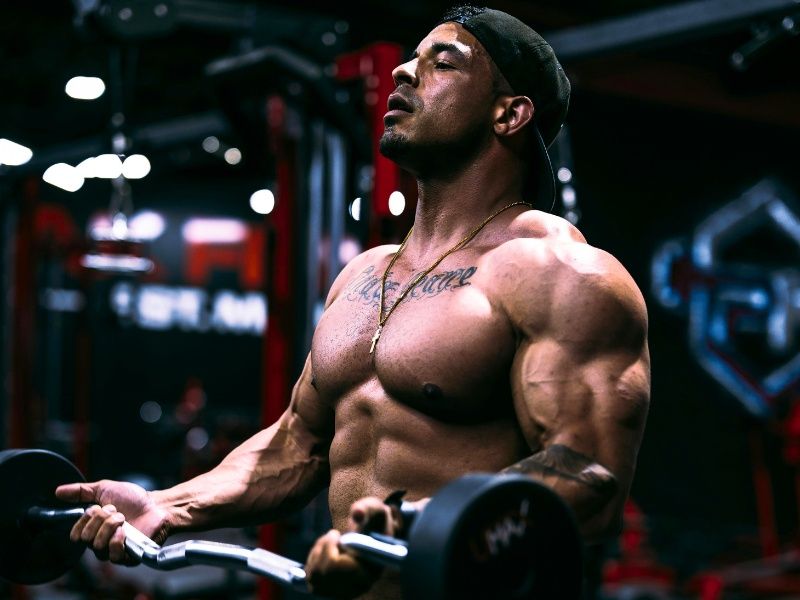
In short
Dreaming of building impressive biceps that you can be proud of? If so, start doing barbell curls. It is an isolation exercise that helps put specific emphasis on the biceps. In this article you will find everything you need to know about barbell curls, including technique, benefits, tips and different variations. So let's get started.
You do the exercise standing, holding a barbell with straight arms. Then you raise the barbell by bending the elbows, and lower it slowly. Barbell curls are usually done in a range of 8-12 repetitions, in order to maximize hypertrophy (see the hypertrophy guide). For a full arm workout, see the best bicep exercises guide.
Muscles worked
The main muscles that work in the exercise are the biceps and the forearms.
| Muscle | Role in the curl |
|---|---|
| Biceps brachii, front of the upper arm | the main mover: bends the elbow |
| Brachialis, under the biceps | bends the elbow in every curl |
| Brachioradialis and other forearm muscles | help bend the elbow and hold the bar |
| Front of the shoulders, upper back, core | keep your upper arms and body still |
The benefits of barbell curls
Progressing in small jumps
When working with a barbell you can progress in small jumps. With dumbbells you can go up 2.5 kg (about 5.5 lb) in each hand each time, whereas with a barbell you can go up 2.5 kg across both hands: a 1.25 kg plate on each side. These small jumps help you progress in a friendly way, especially when working with heavy weights.
Developing the forearms and a strong grip
True, the biceps lift the weight, but the forearms also take part in barbell curls. This exercise will strengthen both the forearms and the power of your grip. A strong grip will help you in many exercises, and will improve your other workouts as well.
How to do barbell curls
Set up: take the bar from a rack at about hip height, or lift it from the floor by bending your hips and knees with a straight back, keeping the bar close to your body. Don't round your back to grab it.
- Hold the barbell with your palms at shoulder width, facing forward.
- Stand upright with a straight back. Squeeze your shoulders back and down, so that they do not move during the exercise.
- Press your elbows to your body and raise the forearms upward, until the biceps is fully contracted. The elbows should stay pressed to the body throughout the whole movement.
- At the top, pause for a moment and contract the biceps as hard as you can.
- Begin to slowly lower the barbell down to the starting position. A tip from me: do not fully straighten the elbows, otherwise the load will come off the biceps, and the stimulus the muscle fibers receive will decrease.
- Repeat for the number of repetitions to finish the set.
Finishing the set: lower the bar under control until it rests against your thighs, then return it to the rack, or bend your hips and knees to set it on the floor. Don't drop it from the top.
Common mistakes in barbell curls
Too heavy a weight
If you try to lift too heavy a weight, your technique will suffer. This will cause you to not manage to focus the load precisely on the muscle fibers of the biceps. Less stimulus to the muscle equals less hypertrophy (the process of building muscle mass in the body).
Using too heavy a weight in barbell curls will drag you into many additional mistakes, such as: using momentum, leaning backward, raising the elbows and more.
True, you should aim to increase the weight, but not at the price of cheating in technique. When you want to increase the weight, check that you manage to lift it without cheating in technique.
Using momentum
Many people use momentum in order to lift the barbell. During the rise they lift the elbows upward, and swing with the lower back. This momentum harms the effectiveness of the exercise dramatically. It causes the load to come off the biceps and go to other muscles.
Remember that the main goal in barbell curls is to train the biceps, and not to lift as much weight as possible. To fix this mistake, reduce the weight and press the elbows to the body. A simple check: stand with your back against a wall or a post. If you can't curl the bar without your back leaving it, the weight is too heavy.
Lowering the weight quickly
Lowering the barbell too quickly will cost you a large part of the effectiveness of the exercise. Try to control the barbell in the lowering movement as well. You can count 2-3 seconds every time you need to lower the barbell.
Variations of barbell curls
W-bar (EZ bar) barbell curls
In this variation you replace the regular barbell with a W bar, also called an EZ bar. There are several main differences between a straight bar and a W bar. With the W bar the grip is more comfortable for the wrist joint, and less pressure reaches it.
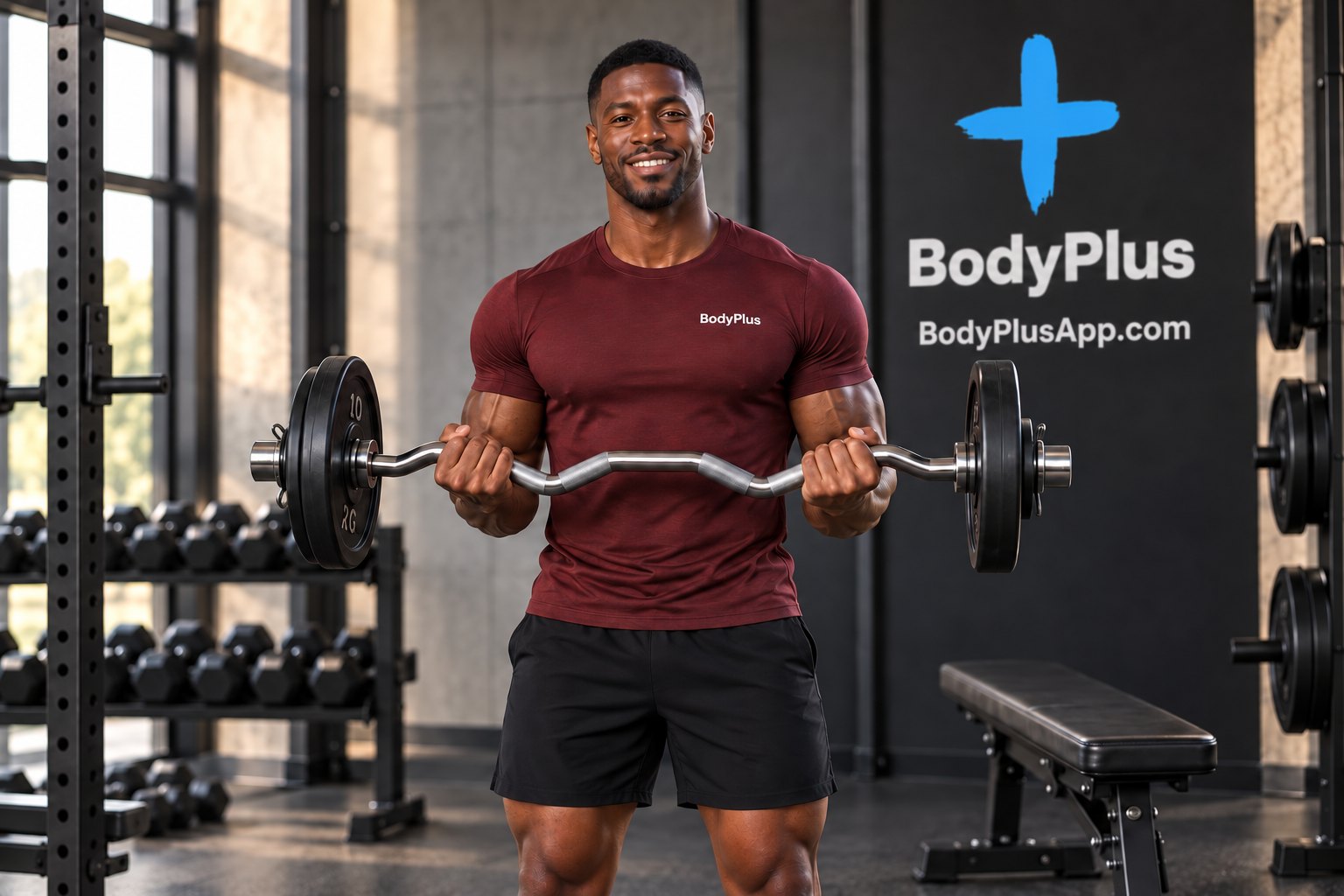
Choose the exercise according to your goals. On an EZ bar, hold the angled sections that put your hands roughly under your shoulders. With no wrist discomfort, the straight bar is a great default; otherwise, use the EZ bar. In addition, you can change variation from time to time, and so vary the workout.
Dumbbell curls
You can also do curls with dumbbells. In exercises with a barbell, the strong side will take a greater load, and will compensate for the weak side. In contrast, when working with dumbbells each hand receives an equal load, and so an imbalance between the sides can be improved. For the full technique, see my dumbbell curl guide.
| Barbell curl | Dumbbell curl | |
|---|---|---|
| Load | often a little more total weight | each arm lifts its own weight |
| Wrist position | fixed (straight bar) or angled (EZ bar) | free to turn |
Drag barbell curls (drag curls)
In this variation of the exercise you take the elbows slightly back, and keep the barbell pressed to the body throughout the exercise. You basically drag the barbell up to the chest. This variation locks the arms in place, and creates a huge load on the biceps. This exercise usually suits the end of a workout, to maximize the pump in the biceps. Use a lighter weight than in your regular curl.
Reverse curl
Hold the bar with your palms facing down, hands about shoulder-width apart, and curl as usual. With your palms facing down, the biceps does less of the work: in a study of competitive bodybuilders, biceps activity while lifting was about 19% higher with palms up than with palms down, and a forearm muscle (the brachioradialis) was also slightly more active with palms up. The reverse curl is still a common way to train your grip and round out your arm training. This is not an exercise for heavy weights; a light weight with higher reps, 12 or more, works well.
Preacher curl
On a preacher bench, the backs of your upper arms rest on an angled pad, which stops your elbows and body from helping; a good choice if you catch yourself swinging. Use a light weight, lower slowly and stop just short of straight arms: the bottom, with your arms stretched over the pad, is where the load feels heaviest. A straight bar, EZ bar, machine or cable all work.
Sets, reps and where the curl fits
- Reps and sets: 2-4 sets of 8-12 reps with a weight you control, with about 60-90 seconds of rest.
- Effort: finish most sets when you could do one to three more clean reps.
- Order: after your heavy compound lifts (rows, pull-ups, presses). On a pull day your biceps are already warm and worked, so one or two curl exercises are usually enough.
- Starting weight: a standard Olympic bar weighs 20 kg (about 44 lb), too heavy for many people to curl for 8 clean reps. Start with an empty EZ bar or a lighter fixed-weight bar if you need to.
Sample arm finish for a pull day
| Exercise | Sets | Reps | Rest |
|---|---|---|---|
| Barbell or EZ bar curl | 3 | 8-12 | 60-90 s |
| Preacher curl (light), reverse curl or drag curl | 2 | 10-15 | 60 s |
How to track it and when to go heavier
The rule: work in the 8-12 range for your main curl; lighter finishing curls can go higher. When every set reaches 12 clean reps, add 2.5 kg (about 5.5 lb) to the bar next time. The example below is for someone who already curls 25 kg.
| Session | Bar weight | Set 1 | Set 2 | Set 3 |
|---|---|---|---|---|
| Week 1 | 25 kg (about 55 lb) | 12 | 10 | 9 |
| Week 2 | 25 kg (about 55 lb) | 12 | 11 | 10 |
| Week 3 | 25 kg (about 55 lb) | 12 | 12 | 11 |
| Week 4 | 25 kg (about 55 lb) | 12 | 12 | 12 |
| Week 5 | 27.5 kg (about 61 lb) | 10 | 9 | 8 |
Your reps drop after each jump; build them back up to 12. If you start swinging or can't reach 8 reps, go back to the lighter weight.
What research says about curls
- Straight bar, EZ bar and dumbbells: in one study of 12 men with at least three years of training, each did one set of 10 reps at 65% of their one-rep max with each curl. The EZ bar curl showed higher biceps and forearm (brachioradialis) activity than the dumbbell curl; the straight bar was higher than the dumbbell curl only in some phases, and the straight and EZ bars differed only a little. The authors concluded that the choice between the two bars is about comfort.
- Grip: in a study of 10 competitive bodybuilders doing two-arm curls on a cable machine (sets of 6 reps with an 8-rep-max weight, short of failure), biceps activity while lifting was about 19% higher with palms up than with palms down, and about 12% higher than with a thumbs-up rope grip. The palms-up grip also showed slightly more brachioradialis (forearm) activity.
- Preacher curls: in a 10-week study, 35 young adults did 3 sets of 8-12 preacher curls three times a week with a barbell or a cable. Biceps thickness grew similarly (about 7-8%); the barbell group gained a little more strength with the arm near straight.
- Range of motion: a systematic review of 11 studies found that training through the full range, or in the stretched part of it, tended to build more size in several muscles, including the biceps, than partial reps in the shortened part near the top: one more reason to lower the bar until your arms are almost straight.
- A note on these studies: muscle activity measured in one session does not reliably predict long-term growth, so it is not proof of results.
Safety
Warm up with one or two light sets, then choose a weight you can curl for 8 clean reps without swinging. Breathe out as you lift and in as you lower, rather than holding your breath through the set. Keep your wrists in line with your forearms; if a straight bar bothers them, switch to an EZ bar. End the set when your elbows drift forward or your lower back starts to swing, because that means the weight is too heavy for that rep. Stop if a curl hurts, and go lighter or change the bar.
Bottom line
Barbell curls are one of the most powerful exercises for building muscle mass in the biceps; the problem is that most people do not do it correctly. If you master its technique, it can be a key part of your biceps training. Just remember, it is important that the goal is not to lift as much weight as possible, but to train the biceps precisely.
Every few weeks, you can change variation or combine several variations in a workout. This variety will make your workout interesting and fun. In addition, the body will not get used to only a specific exercise, but will keep trying to adapt to the load, and will always strive to build muscle mass.
Frequently asked questions
What muscles does the barbell curl work?
Mainly the biceps, with help from the brachialis under it and your forearm muscles.
Is the EZ bar curl better than the straight bar curl?
Neither is better for everyone. The EZ bar is more comfortable for many people's wrists; the straight bar turns your palms fully up. Choose the one that feels right.
Is the barbell curl better than the dumbbell curl?
They do different jobs. The barbell often lets you lift a little more; dumbbells make each arm do its own work. Many people use both.
How many sets and reps should I do?
A common choice is 2-4 sets of 8-12 reps with a weight you control, and about 60-90 seconds of rest.
How heavy should the bar be?
Heavy enough that 8-12 clean reps are hard, and light enough that your elbows and back never need to move.
Should I straighten my arms fully at the bottom?
Stop just before your elbows fully straighten, so the load stays on your biceps.
Why do my wrists hurt during barbell curls?
A straight bar holds your wrists fully turned, which some people find uncomfortable. Try the EZ bar, keep your wrists straight and go lighter. Stop the set if it hurts.
Should I lean back to finish the last reps?
No. It moves the work from your biceps to your back. Stop the set or lower the weight.
The information on this page and on this website is intended to provide general information only. The content on this website does not constitute a professional opinion, a recommendation, or a substitute for consulting an expert in a specific field or obtaining a medical opinion. It is not medical advice. BodyPlus is not a medical device. If you have a health condition or an injury, or are pregnant, talk to a qualified healthcare professional before starting. Stop exercising and seek appropriate help if you feel pain, dizziness or other concerning symptoms.
Sources
Accessed September 17, 2026.
- Marcolin G. et al., "Differences in electromyographic activity of biceps brachii and brachioradialis while performing three variants of curl", PeerJ 2018;6:e5165. pubmed.ncbi.nlm.nih.gov/30013836
- Coratella G. et al., "Biceps Brachii and Brachioradialis Excitation in Biceps Curl Exercise: Different Handgrips, Different Synergy", Sports (Basel) 2023;11(3):64. pubmed.ncbi.nlm.nih.gov/36976950
- Nunes J.P. et al., "Placing Greater Torque at Shorter or Longer Muscle Lengths? Effects of Cable vs. Barbell Preacher Curl Training on Muscular Strength and Hypertrophy in Young Adults", Int J Environ Res Public Health 2020;17(16):5859. pubmed.ncbi.nlm.nih.gov/32823490
- Kassiano W. et al., "Which ROMs Lead to Rome? A Systematic Review of the Effects of Range of Motion on Muscle Hypertrophy", J Strength Cond Res 2023;37(5):1135-1144. pubmed.ncbi.nlm.nih.gov/36662126
- Vigotsky A.D. et al., "Longing for a Longitudinal Proxy: Acutely Measured Surface EMG Amplitude is not a Validated Predictor of Muscle Hypertrophy", Sports Med 2022;52(2):193-199. pubmed.ncbi.nlm.nih.gov/35006527