
How to Do the Barbell Bent-Over Row: Form, Grip and Muscles Worked
In short
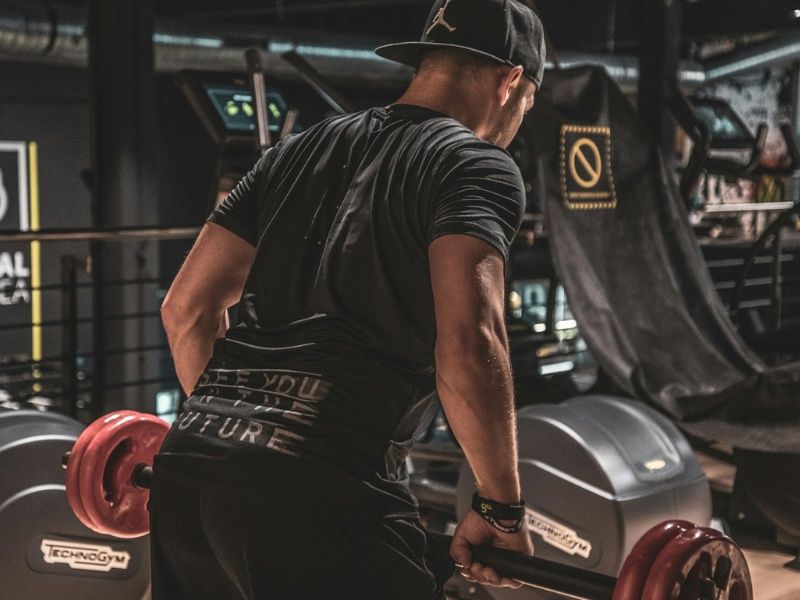
To do a barbell bent-over row, hold the bar with your hands about shoulder-width apart, bend your knees slightly and push your hips back until your torso leans forward at about 45 degrees with a straight back. Then drive your elbows back until the bar reaches your lower ribs or upper belly, squeeze your back, and lower the bar under control until your arms are straight. The exercise works your lats, rhomboids and traps, with help from your lower back, rear shoulders, biceps and forearms.
Looking for an exercise that will give you a powerful, crazy back? Then the barbell row is the exercise for you. The barbell row, or "bent over row" in English, is a classic exercise and an integral part of the training programs of bodybuilders and powerlifters. In this article you will find everything you need to know about it: the benefits, the technique, the grip, common mistakes, variations and more.
It is one of the best exercises you can do in a back workout. The bent-over row is a compound exercise in which all the back muscles work. Of course, it is excellent for women too, because it strengthens the back muscles.
This page goes deep into one exercise. For a complete back workout, see my guide to the best back exercises.
Muscles worked
The main muscles that work in the exercise are the traps, the rhomboids, the latissimus dorsi (lats, the "wings"), the lower back, the biceps and the forearms.
| Muscle | Role in the exercise |
|---|---|
| Lats, the wide muscles on the sides of your back | pull your upper arms back toward your body |
| Rhomboids and middle trapezius, between your shoulder blades | pull your shoulder blades together at the top of each rep |
| Rear shoulders (posterior deltoids) | help pull your arms back, more so when your elbows point out |
| Spinal erectors (lower back) | hold your torso still in the leaning position for the whole set |
| Glutes and hamstrings | hold your hips in the hinge position |
| Biceps and forearms | bend your elbows and hold the bar |
In a study sponsored by the American Council on Exercise (ACE), 19 trained men did eight back exercises while researchers measured muscle activity. The bent-over row ranked first or second for all five back muscles measured. Keep in mind that muscle activity in one session shows which muscles work hard; it does not prove how much they will grow.
Benefits of the barbell row
Builds crazy muscle mass in the back
The back is a part of the body with a huge number of muscles: a common estimate is about 40, 20 on each side, depending on which muscles you count. The barbell row is a compound exercise in which all of them work, the traps, the lats, the rhomboids, the erector spinae and more, whether as primary muscles or as stabilizers.
It gives crazy stimulation to all the fibers of the back muscles, and will help you build a crazy back. In addition, the biceps and the forearms also work hard in the pulling movement. The heavy weight you load onto all these muscles improves your strength and builds serious muscle mass.
Improves your posture
The exercise strengthens the muscles that keep you standing upright, such as the rear shoulders, the rhomboids and the traps. Stronger muscles here can help you with everyday tasks like lifting and carrying.
How to do a bent-over row
You can start the exercise from the floor or from a squat rack, whichever you prefer.
Getting the bar into position
- From a rack: set the bar at about mid-thigh height. Grip it, stand up with it, and take one or two small steps back.
- From the floor: lift the bar the way you would in a deadlift: bar over your mid-foot, hips back, knees bent, back long, then stand up by pushing through your legs. Don't round your back to reach the bar.
The movement
- Grip the bar with your palms shoulder-width apart, and stand with your feet shoulder-width apart.
- Push your butt back so your back is straight at about 45 degrees to the floor, meaning on a diagonal. In this position your knees are slightly bent and your back is completely straight.
- Brace your stomach as if you were about to be poked, and keep your neck in line with your back, eyes on the floor a little in front of you.
- Now start the movement.
- Pull your elbows back until the bar reaches your stomach, and contract your back muscles as hard as you can. For most people the bar touches between the lower ribs and the belly button.
- Lower the bar back down under control until your arms are straight.
- Repeat for the number of reps you planned.
Finishing the set
When you finish, stand up with the bar before you move. Then walk it back into the rack, or lower it to the floor with the same hip hinge you used to lift it: hips back, back straight, bar close to your legs.
Torso angle: how far to lean
About 45 degrees is a good default. The further you lean, the longer the path of the bar and the harder your lower back works to hold you. The more upright you stand, the more weight you can usually move, but the shorter the pull and the more your upper traps take over. Whatever angle you choose, keep it the same from the first rep to the last: if your torso rises as the set goes on, the weight is too heavy.
The leaning position is a hip hinge, the same movement you use in the Romanian deadlift. If you can't yet hold a straight back at 45 degrees, practice the hinge first, or start with the chest-supported row described below.
Overhand vs underhand grip
Both grips work. The steps above only ask you to hold the bar at shoulder width; which way your palms face is your choice.
| Grip | What changes |
|---|---|
| Overhand (palms facing down and back, toward your shins) | the standard version; it lets your elbows travel a little further out if you choose, and with elbows out the rear shoulders help more |
| Underhand (palms facing forward, away from you) | your elbows stay closer to your sides and the pull usually ends a little lower on your belly; many people feel their biceps working more |
What research says: studies that directly compare the two grips on the barbell row are scarce. A 2026 review of 23 muscle-activity (EMG) studies on the lats found that, in the seated row, keeping the elbows closer to the body was linked with higher lat activity. That was a different exercise, and the review calls its findings a tentative starting point, so treat it as a hint, not a rule. The same idea runs through the seated row machine guide: pick the grip that feels comfortable for your shoulders, elbows and wrists, and rotate grips between training blocks if you like both.
A practical note: with an underhand grip, keep your wrists straight and the weight moderate at first. If your elbows or wrists complain, go back to the overhand grip.
Common mistakes
1. Using momentum
Without a doubt this is one of the exercises where it is most tempting to use momentum, especially when working with heavy weights. Many people lift the whole body upward in order to lift the weight, which is a critical mistake. This swinging hurts the effectiveness of the exercise, because in practice you are loading the back muscles less. In addition, it causes pressure on the spine that can lead to injury.
Instead of swinging the whole body down and up, keep a straight and stable back, and move only the elbows backward and forward. If your torso creeps up rep by rep until the row turns into a shrug, pick a spot on the floor to look at, keep your angle, and lower the weight if you can't.
2. Rounding the lower back
This is a critical mistake, in almost every exercise. Rounding the back during training may significantly increase the risk of injury and lower back pain. The rounding causes dangerous pressure on the spine. Keep a straight spine throughout the whole movement of the row.
The row does ask a lot of your lower back, because it has to hold the leaning position for the whole set. In a lab study of seven healthy men, the standing bent-over row produced large muscle activity from the upper to the lower back, and a higher load on the lower spine than the other two rows tested (the inverted row and a standing one-arm cable row). In a study of 15 trained men, the free-weight bent-over row produced more activity in the spinal erectors than a machine row (about 34% more when both arms pulled together). Both were small studies, and neither says the row is dangerous: they show that the leaning position has to be solid before the weight goes up.
3. Pulling the weight with the hands and not from the elbows
One of the most common mistakes in back exercises is to do the movement from the palms and not from the elbows. This mistake makes your hands tire before your back, and the stimulation your back muscles get is dramatically reduced.
In back exercises, think of your hands as a lifting hook. Do not grip the bar too hard, just pull the elbows back. This will make your back exercises much more effective. If your grip is the first thing to fail on heavy sets, lifting straps are an option.
Bent-over row variations

Machine row
This variation is excellent, if you use it properly. The machine row is an isolation exercise that lets you focus the load on your back, and the machine supports your chest. It is not suitable as the main exercise of a back workout, but it is an excellent addition that will give you a serious pump. See the seated row machine guide.
Dumbbell row
The dumbbell row is an excellent exercise in which you simply replace the bar with dumbbells. It suits beginners because its technique is relatively easy to learn, and it is excellent for anyone who wants to improve an imbalance between the right and the left side. You can do it with both arms at once in the same bent-over position, or with one arm, a knee and a hand on a bench.
However, in this variation you will be able to lift less weight, because the weight is divided between the two sides.
Pendlay row
A stricter barbell version. Your torso leans further, close to parallel with the floor, and every rep starts from the floor: you pull the bar up to your body, then put it back down and let it settle before the next rep. The dead stop removes momentum between reps. Holding a flat back that low takes practice and enough hamstring flexibility, so use a light weight until the position feels solid.
Chest-supported row: the back-friendly option
Lie face down on an incline bench set to about 30-45 degrees and row two dumbbells, or use a T-bar or row machine with a chest pad. The bench holds your torso, so your lower back has far less to do and all of your effort goes into the pull. It is a good choice when your lower back is tired, while you are still learning the hinge, or for high-rep sets close to failure.
Sets, reps and where it fits
- Reps: 6-10 per set for most people; 10-12 with a lighter weight works well too.
- Sets: 3-4, with about 2 minutes of rest.
- Effort: stop most sets when you could do one to three more good reps. Leave more in reserve on a free-weight row than on a machine, because your form is the thing holding you safely in position.
- Order: do it early in a back or pull workout, while you are fresh. Machine rows and pulldowns fit well after it.
- Weekly volume: a 2026 position stand from the American College of Sports Medicine found that about 10 or more sets per muscle per week favored muscle growth. Count all of your rows and pulldowns toward that.
Sample back workout
| Exercise | Sets | Reps | Rest |
|---|---|---|---|
| Barbell bent-over row | 3 | 6-10 | 2 min |
| Lat pulldown | 3 | 8-12 | 90 s-2 min |
| Machine row | 3 | 10-12 | 90 s |
| One-arm dumbbell row | 2 | 10-12 each side | 60-90 s |
It fits a pull day in a push/pull/legs plan or an upper day in an upper/lower split.
How to track it and when to go heavier
| Session | Weight (bar included) | Set 1 | Set 2 | Set 3 |
|---|---|---|---|---|
| Week 1 | 50 kg (about 110 lb) | 10 | 9 | 8 |
| Week 2 | 50 kg (about 110 lb) | 10 | 10 | 8 |
| Week 3 | 50 kg (about 110 lb) | 10 | 10 | 9 |
| Week 4 | 50 kg (about 110 lb) | 10 | 10 | 10 |
| Week 5 | 52.5 kg (about 115 lb) | 9 | 8 | 7 |
When all three sets reach 10 reps with the same torso angle and no swinging, add the smallest jump your gym allows, usually 2.5 kg (about 5 lb) in total. If your torso starts rising or the bar stops short of your body, the weight went up too soon: go back to the last weight and add reps first.
Safety
Learn the row with a light bar, and add weight only when your back stays straight and your torso holds the same angle from the first rep to the last. Brace your stomach before every pull and keep your neck in line with your back. If lifting the bar off the floor is awkward, take it from a rack at about mid-thigh height, and when you finish, lower it with the same hip hinge: hips back, back straight, bar close to your legs. Put collars on the plates so the load stays even. End the set when your torso starts to rise, your lower back rounds or the bar stops reaching your body, and stop if something hurts. On a day when your lower back is tired, for example after heavy legs or deadlifts, choose a chest-supported row instead.
Bottom line
The barbell row is a wonderful exercise that suits both women and men. It works the upper back, the lower back, the lats, the forearms and the biceps, and builds serious muscle mass in the back. In addition, it will strengthen your stability and your balance.
The technique of this exercise is not simple, and therefore it is important to practice it a lot before you start working with heavy weights.
Frequently asked questions
What muscles does the bent-over row work?
Mainly your lats, rhomboids and traps. Your rear shoulders, biceps and forearms help pull, and your lower back, glutes and hamstrings hold the leaning position.
Should I use an overhand or underhand grip?
Both work. The overhand grip is the standard version and makes it easier to let your elbows travel out, which brings in the rear shoulders a little more; the underhand grip keeps your elbows closer to your sides, and many people feel their biceps more. Little research compares them directly on the barbell row, so choose the one that feels best for your joints.
Where should the bar touch?
Between your lower ribs and your belly button for most people. With an underhand grip it tends to land a little lower.
How far should I bend over?
About 45 degrees is a good default. A flatter torso, as in the Pendlay row, gives a longer pull; a more upright torso lets you lift more but shortens the pull. Keep the angle the same through the set.
Is the bent-over row bad for your lower back?
It loads your lower back more than most rows, because your back muscles hold you in the leaning position. With a straight back, a braced stomach and a weight you control, that load is part of the training. If your lower back is tired, use a chest-supported row, and if something hurts, stop the set and switch to a lighter or pain-free variation.
What is the difference between a bent-over row and a Pendlay row?
In the Pendlay row your torso is close to parallel with the floor, and the bar returns to the floor after every rep. In the standard row you lean about 45 degrees and the bar stays in your hands between reps.
Is the dumbbell row as good as the barbell row?
Both are great back exercises. The dumbbell row is easier to learn and trains each side on its own; the barbell row lets you lift more total weight.
Is the barbell row good for beginners?
It can be, with a light bar and time spent learning the hip hinge. Many beginners start with dumbbell or machine rows and add the barbell row once the hinge feels solid.
The information on this page and on this website is intended to provide general information only. The content on this website does not constitute a professional opinion, a recommendation, or a substitute for consulting an expert in a specific field or obtaining a medical opinion. It is not medical advice. BodyPlus is not a medical device. If you have a health condition or an injury, or are pregnant, talk to a qualified healthcare professional before starting. Stop exercising and seek appropriate help if you feel pain, dizziness or other concerning symptoms.
Sources
Accessed September 17, 2026.
- Edelburg H. et al., "ACE-Sponsored Research: What Is the Best Back Exercise?", ACE Certified, April 2018. www.acefitness.org/continuing-education/certified/april-2018/6959/ace-sponsored-research-what-is-the-best-back-exercise
- Fenwick C.M., Brown S.H., McGill S.M., "Comparison of different rowing exercises: trunk muscle activation and lumbar spine motion, load, and stiffness", J Strength Cond Res 2009;23(5):1408-1417. pubmed.ncbi.nlm.nih.gov/19620925
- Saeterbakken A. et al., "The Effect of Performing Bi- and Unilateral Row Exercises on Core Muscle Activation", Int J Sports Med 2015;36(11):900-905. pubmed.ncbi.nlm.nih.gov/26134664
- Di Fonza D. et al., "Electromyographic Analysis of Latissimus Dorsi Activation During Common Resistance Training Exercises: A Narrative Review", J Funct Morphol Kinesiol 2026;11(3):315. pubmed.ncbi.nlm.nih.gov/42647355
- Vigotsky A.D. et al., "Longing for a Longitudinal Proxy: Acutely Measured Surface EMG Amplitude is not a Validated Predictor of Muscle Hypertrophy", Sports Med 2022;52(2):193-199. pubmed.ncbi.nlm.nih.gov/35006527
- Currier B.S. et al., American College of Sports Medicine position stand on resistance training (2026). pubmed.ncbi.nlm.nih.gov/41843416