
How to Use the Seated Row Machine: Form, Grips and Muscles Worked
In short
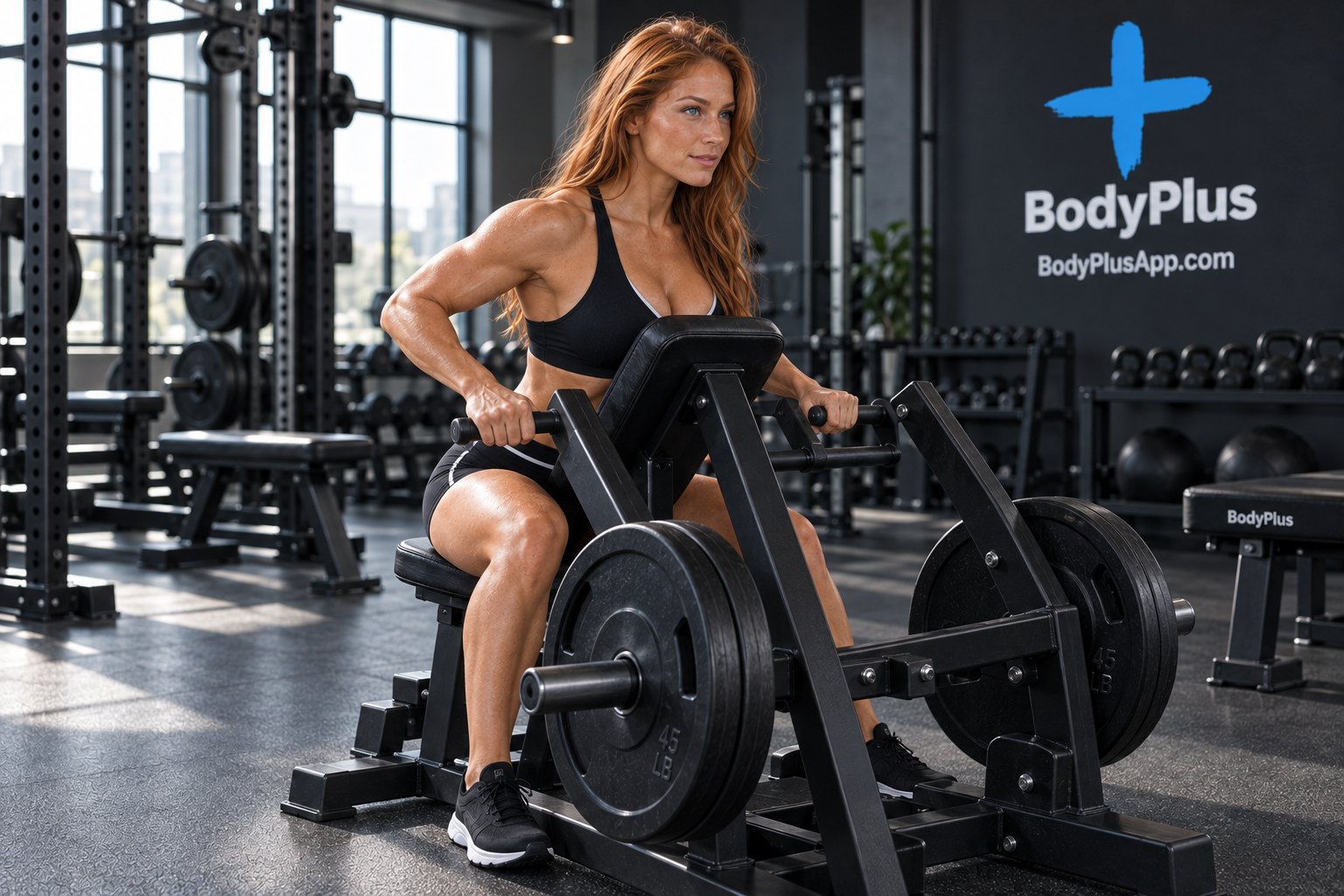
Set the seat so the handles sit around the middle of your chest. Sit tall, take the handles, pull your elbows back, pause for a second, then return slowly until your arms are straight. That is the seated row machine in one rep. It trains your lats, the muscles between your shoulder blades, and the backs of your shoulders; your arms help too.
Seated machine rows are a special isolation exercise for building back muscle when you do them correctly. Do them right and you will feel your back muscles like never before. You sit at a machine, hold its handles and draw them toward your chest with your elbows. I'll walk you through the benefits, technique, tips and variations. Let's start.
Muscles worked
The main muscles are the latissimus dorsi (lats), rhomboids, trapezius and rear shoulders. Your biceps and forearms also help with the pull.
| Muscle | What it does here |
|---|---|
| Lats, along the sides of your back | help draw your upper arms back |
| Rhomboids and middle traps, between your shoulder blades | help bring your shoulder blades together |
| Rear deltoids, at the backs of your shoulders | help draw your arms back |
| Biceps and forearms | bend your elbows and hold the handles |
Lehman and colleagues measured muscle activity in 12 men with weight-training experience during two 10-second static holds in four cable-pulley pulling tasks. The seated row showed the highest middle-trap/rhomboid activity of those tasks; that small, short test did not measure muscle growth or test a chest-supported machine.
Benefits of machine rows
Focus on your back
In many back exercises, such as the bent-over barbell row, your lower back carries a lot of the load and can take your attention away from the upper back. With a seated, chest-supported machine row, you can take the lower back out of the equation and focus on your upper back: the upper part of the lats, rhomboids, traps and rear shoulders.
Fenwick and colleagues found the bent-over row placed the greatest load on the lower spine among three rows tested in seven men. Their study did not include a seated row machine, so it cannot tell us the machine's exact spinal load.
Simple to learn
A barbell row asks you to coordinate the pull while balancing and holding your body position. The machine gives you a seat and a guided path, so you can work on the pull itself. You still need to set it up well and control the return; that is where the next steps help.
How to do machine rows
Machines differ: some use a weight stack, others take plates, and some have a chest pad while others do not. The pulling idea is similar, but adjust your position to the machine in front of you.
- Set the seat. Put the handles around the middle of your chest. If there is a chest pad, adjust it so you can reach the handles with straight arms while your chest stays supported. Plant your feet on the floor or foot platform.
- Take the handles. Sit tall with a steady back. Start around shoulder width; a little wider is fine. Keep your grip relatively loose rather than squeezing the handles tightly.
- Pull with your elbows. Draw them back and bring the handles toward your body. My cue is to imagine your hands as hooks and your elbows doing the pulling.
- Pause. Pull the handles all the way toward your body, squeeze your back hard and hold for about a second without throwing your torso backward.
- Return with control. Let the handles travel forward slowly until your arms are straight, then repeat. Keep your torso steady throughout the set.
That elbow cue is the one I would practice with a light load first. It can make the difference between thinking only about your hands and noticing the back muscles that the row is meant to train. ACE's seated-machine-row instructions also describe an upright trunk, elbows moving back and a slow, controlled return.
Common mistakes in machine rows
Pulling with your hands
Pulling with your hands is the biggest mistake people make when training their back. It can take almost all the effectiveness out of the row: grip the handles too tightly and pull with your hands, and your biceps and forearms may tire before your back muscles.
Try a lighter set, keep your grip relatively loose and picture your hands as hooks attached to the handles. Draw your elbows back. Try it and notice how your back feels when it does the work.
Returning the handles too quickly
If you let the handles rush forward, you miss half the exercise. Making good use of the return clearly increases the stimulus to your back muscles. Lower the handles slowly and with control; about two to three seconds is excellent.
Schoenfeld and colleagues pooled eight training studies and found similar muscle growth across a range of total rep durations; they did not isolate the effect of a two-to-three-second return.
Rounding your lower back forward
Rounding your lower back forward reduces the effect of the exercise and may put pressure on your spine. Keep your lower back straight and stable. The movement I want here is your elbows travelling back and forward, not your lower back rounding. Stop the return when your arms are straight.
ACE also advises an upright torso against the pad and a controlled return. If you need to shrug or lean back to finish a rep, reduce the load and try again with your chest supported.
Variations of the exercise
Close-grip machine row
Some machines let you change the grip. Use a close grip to emphasize the middle of your back, including your rhomboids and traps.
Wide-grip machine row
You can also row with a wide grip. That helps emphasize the outer back, the lats or “wings.” Change your grip from time to time to work your back in different ways.
Di Fonza and colleagues found higher short-term lat activity with narrower grips in separate seated-row studies; those readings do not show which grip builds more muscle over time.
Cable rows
A seated cable row follows the same basic pull without the dedicated machine's fixed path. You can use a triangle handle, a straight bar, a wide V bar, a rope or another attachment your gym provides. With no chest pad on a typical cable station, keep your torso steady yourself.
A single handle lets you train one side at a time. Use that option when you want to work on an imbalance between your left and right sides.
Sets, reps and a sample workout
For a simple starting example, try two or three sets of 8 to 12 reps with a load you can bring in and return under control. Rest long enough to repeat that quality. You can add weight when all your planned reps still have a steady torso, a brief squeeze and a controlled return.
A 2026 American College of Sports Medicine overview combined 137 reviews of resistance training in healthy adults and found that higher weekly training volumes, around 10 or more sets per muscle, favored muscle growth. That is a broad training finding, not a rule to do 10 sets of machine rows in one session.
Sample back workout
Here is one simple way to place the machine row after other back work. The numbers are an example, not a target you have to hit today.
| Exercise | Sets | Reps | Rest |
|---|---|---|---|
| Barbell bent-over row | 2 | 6–10 | About 2 min |
| Lat pulldown | 2 | 8–12 | About 2 min |
| Seated machine row | 2–3 | 8–12 | About 2 min |
If you use a cable row instead, choose a load and grip that let you keep the same controlled pull. Record your reps and weight on the same machine; stack numbers on different machines may not be comparable.
Safety
Set the seat and chest pad before starting, and check that the weight pin is fully seated or the plates are secure. Begin with a light set so you can find the elbow-led pull without jerking the handles. Keep your feet planted and your torso steady, and return the weight under control without letting the stack slam. End the set when you have to lean back or round your lower back to finish a rep. If a rep causes pain or dizziness, stop the set.
Bottom line
Seated machine rows are a wonderful back exercise that help you focus the load precisely on your upper back. They can help you build a wider, stronger back.
The simple technique makes them perfect for most people who train. Still, the details matter: pull with your elbows, return slowly and keep your back straight.
Frequently asked questions
What muscles does the seated row machine work?
Your lats, rhomboids, traps and rear shoulders do much of the pulling. Your biceps and forearms help hold and move the handles.
Which grip is better: close or wide?
Use a close grip to emphasize the middle back, or a wide grip to emphasize the outer back and lats. You can alternate them from time to time.
What is the difference between a machine row and a cable row?
A chest-supported machine gives your torso a pad to lean against. A typical seated cable station offers several attachments but asks you to steady your torso yourself. Some row machines lack a chest pad, so check the one in your gym.
How far should I pull the handles?
Pull toward your body as far as you can while staying tall and keeping your chest on the pad, if there is one. You do not need to throw your shoulders or torso backward for an extra inch.
What if I feel the row mostly in my arms?
I would lower the weight, keep a secure but relaxed grip, and think of driving your elbows back. Try a one-second pause at the end before the slow return.
Is the seated row machine suitable for beginners?
Yes, the seat and guided path can make the movement easier to learn. Start with a load that lets you follow the steps above.
The information on this page and on this website is intended to provide general information only. The content on this website does not constitute a professional opinion, a recommendation, or a substitute for consulting an expert in a specific field or obtaining a medical opinion. It is not medical advice. BodyPlus is not a medical device. If you have a health condition or an injury, or are pregnant, talk to a qualified healthcare professional before starting. Stop exercising and seek appropriate help if you feel pain, dizziness or other concerning symptoms.
Sources
Accessed September 29, 2026.
- Lehman G.J. et al., "Variations in muscle activation levels during traditional latissimus dorsi weight training exercises: An experimental study", Dyn Med 2004;3(1):4. Full study
- Fenwick C.M., Brown S.H., McGill S.M., "Comparison of different rowing exercises: trunk muscle activation and lumbar spine motion, load, and stiffness", J Strength Cond Res 2009;23(5):1408-1417. PubMed abstract
- American Council on Exercise, "Seated Row", exercise library. Exercise instructions
- National Academy of Sports Medicine, "Seated Machine Row Close Grip", exercise library. Exercise instructions
- Schoenfeld B.J., Ogborn D.I., Krieger J.W., "Effect of repetition duration during resistance training on muscle hypertrophy: a systematic review and meta-analysis", Sports Med 2015;45(4):577-585. PubMed abstract
- Di Fonza D. et al., "Electromyographic Analysis of Latissimus Dorsi Activation During Common Resistance Training Exercises: A Narrative Review", J Funct Morphol Kinesiol 2026;11(3):315. PubMed abstract
- Currier B.S. et al., "American College of Sports Medicine Position Stand. Resistance Training Prescription for Muscle Function, Hypertrophy, and Physical Performance in Healthy Adults: An Overview of Reviews", Med Sci Sports Exerc 2026;58(4):851-872. PubMed abstract