
Cardio (Aerobic Exercise): What It Is, How Much You Need and How to Start

In short
Want to start cardio but unsure what to do or how hard to go? Brisk walking, running, cycling and swimming are all options. If you haven't been active for a while, begin with a 5- or 10-minute walk at an effort where you can talk, and build up gradually.
Aerobic exercise is one of the most important pillars of fitness and health. It helps you burn lots of calories, and regular activity has wide-ranging benefits, as the research below explains. In this article, I will explain what you need to know about aerobic activity. So let's get started!
What is aerobic activity?
The word "aerobic" originally meant "living only in the presence of oxygen", from the Greek roots aero ("air") and bios ("life"). So aerobic activity means activity "with oxygen". Your breathing brings oxygen into your body, and your blood carries it to your working muscles. The muscles use that oxygen, together with carbohydrates, fats and a little protein, to make the energy they need to keep moving.
Aerobic exercise makes your heart, lungs and blood vessels work harder than usual. That is why it is often called cardiovascular exercise, or simply "cardio".
Aerobic activity is different from anaerobic activity. Weightlifting and sprinting involve explosive energy: a very hard effort for a short time. In contrast, aerobic activities such as running and swimming can be kept up for much longer.
Benefits of aerobic exercise
Help with weight loss and fat burning
To lose weight, you need a calorie deficit: you take in fewer calories than you burn in a day. Aerobic workouts help you burn lots of calories, increasing your daily energy use and making that deficit easier to reach.
During aerobic workouts, your heart and lungs work hard to supply your muscles with oxygen-rich blood. Your body also needs to refill the energy stores in your muscles. Both use energy.
Be realistic: the American College of Sports Medicine (ACSM) position stand on physical activity and weight loss concluded that 150 to 250 minutes a week of moderate activity helps prevent weight gain but gives only modest weight loss on its own; more than 250 minutes a week was linked to larger weight loss, and moderate activity added to weight loss when it was combined with a moderate (not a severe) cut in calories. Exercise also improves health markers even when your weight does not change. For a starting estimate of your daily energy needs, try the BMR calculator.
Improving endurance and physical fitness
Aerobic workouts help you build physical fitness and endurance. They improve your ability to produce energy using oxygen over time.
A healthier heart and blood vessels
Regular activity can support the fitness of your heart and lungs. The WHO 2020 guidelines, based on systematic reviews of the evidence, link regular physical activity in adults to lower death rates from all causes and from heart disease, fewer new cases of high blood pressure and type 2 diabetes, better sleep and better mental health.

Blood pressure is a good example. A 2013 meta-analysis of 93 randomized trials (5,223 adults without other major disease) found that endurance training lowered resting blood pressure by about 3.5/2.5 mmHg on average. The drop was largest in people who already had high blood pressure (about 8.3/5.2 mmHg) and very small in people with normal blood pressure.
Improving mood
Physical activity can cause your body to release endorphins that bring joy and happiness. Even a small amount of activity counts: the WHO notes that some physical activity is better than none, and lists fewer symptoms of anxiety and depression among its benefits.
In one small pilot study (study), 12 adults with major depression who walked on a treadmill for 30 minutes a day for 10 days had clearly lower depression scores, though a study this small can't prove cause. In another study of 40 adults being treated for major depression, a single 30-minute session of moderate treadmill exercise and 30 minutes of quiet rest both eased distress, but only the exercise raised energy and well-being.
Maintaining quality of life as you get older
Regular aerobic activity helps you stay fit and mobile as you get older. For older adults, the WHO adds activities that train balance and strength on 3 or more days a week to help prevent falls.
Beyond all these benefits, joining an aerobic group or class can help you make new friends: for example, going on group hikes, joining a swimming group or a martial arts class. For many people, being part of a community is what helps them stay consistent.
How do you get started with aerobic activity?
A cardio workout doesn't have to be hard or unpleasant; it can be really fun. Countless people truly enjoy their aerobic workouts, and there are endless options, for example:
- Hiking
- Running
- Swimming
- Soccer
- Boxing
- Basketball
- Zumba
- Tennis
Find an activity you enjoy, alone or with other people. It's a great way to spend time and to connect with your partner, friends or family.
If you haven't done any aerobic training for a long time, I recommend starting small: try a 5- or 10-minute walk every day, or a few times a week. Increase your pace and time slowly and gradually. This lowers your chances of suffering from sore, tight muscles.
While you train: Stop right away if you feel chest pain or pressure, unusual shortness of breath, dizziness or faintness, a racing or irregular heartbeat, or sharp pain. If you have chest pain or pressure, or sudden severe trouble breathing, call your local emergency services immediately; do not wait to see whether it eases.
Here is a practical comparison of the most common options:
| Type | Impact on joints | Good for | Keep in mind |
|---|---|---|---|
| Walking | low | beginners, every day, no equipment | walk briskly or uphill to reach moderate intensity |
| Running | high | fitness and a lot of energy use in little time | build up your distance slowly |
| Cycling (outdoor or stationary) | low | longer sessions, knee-friendly for many people | set the seat height correctly |
| Swimming | very low | the whole body, people with joint pain | technique affects the effort a lot |
| Elliptical | low | a running-like workout with less impact | easy to drift into a very light effort |
| Rowing machine | low | legs, back and arms together | learn the technique: push with the legs first |
| Stair climber | moderate | a hard workout in a short time | hold the rails lightly, don't lean on them |
| Team sports, dance, boxing | varies | fun and motivation | warm up well; stops and turns add strain |
How much cardio should you do each week?
According to the American Heart Association, an adult should aim for:
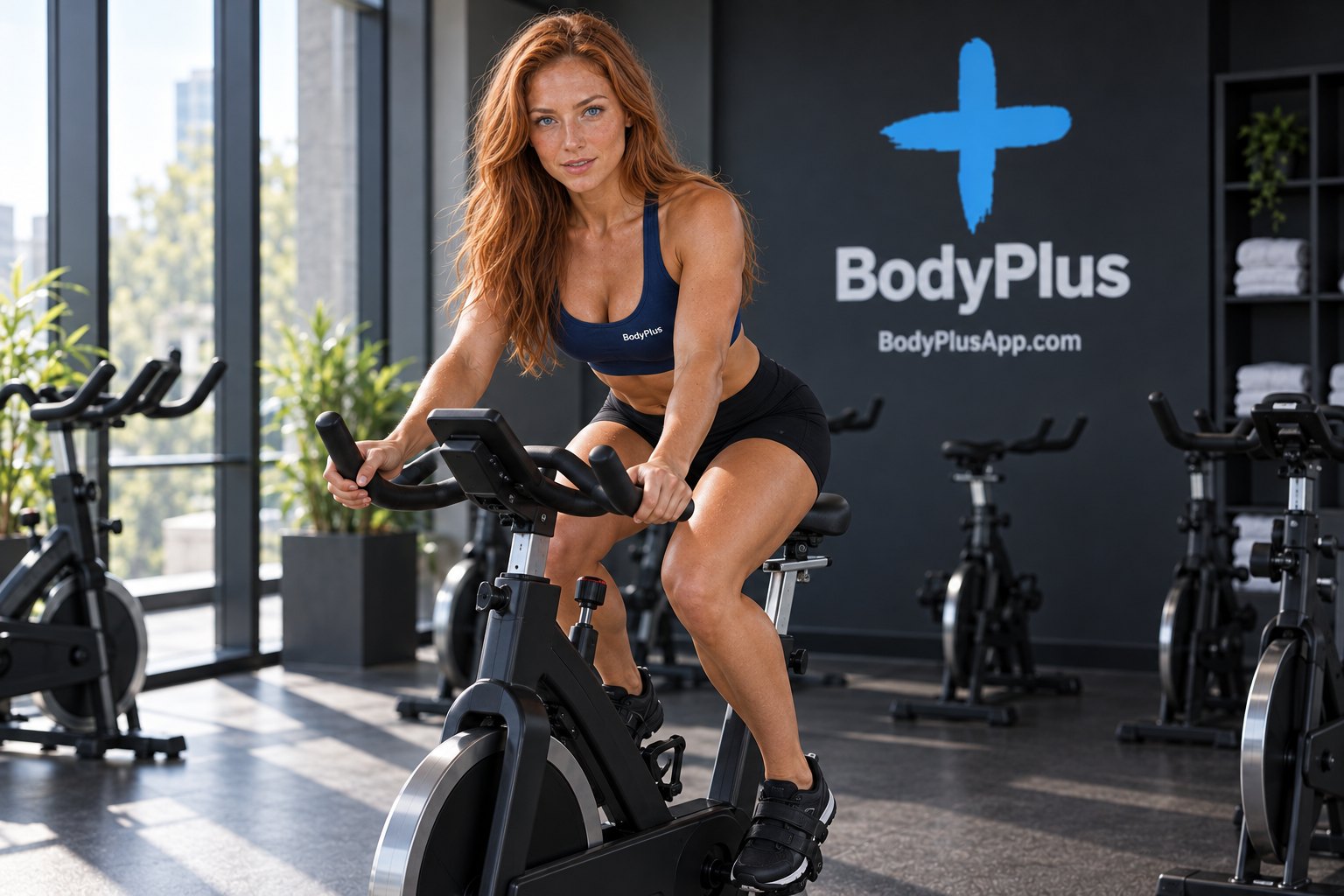
- At least 150 minutes of moderate-intensity aerobic activity a week, or
- 75 minutes of vigorous-intensity aerobic activity a week, or
- an equivalent combination of both.
The WHO 2020 guidelines give a range of 150 to 300 moderate minutes or 75 to 150 vigorous minutes, plus muscle-strengthening activities on 2 or more days a week. Any length of activity counts: three 10-minute walks count toward the total just as one 30-minute walk does.
There is no recommended maximum number of cardio workouts per day or week. How much you do depends on your goals. Allow enough recovery time between workouts; the rest you need depends very much on the intensity.
If building muscle is your goal, I recommend limiting the amount of very intense cardio you add. Too much hard work can make it harder to recover for your weight training. I explain the research on combining the two below.
The three intensity levels
Aerobic activity is usually divided into three levels:
- Low intensity: slow walking, light hikes.
- Moderate intensity: brisk walking, cycling, dancing, active yoga, easy swimming, and even yard work.
- High (vigorous) intensity: running, soccer, basketball, cycling (depending on the effort), swimming, jumping rope, stair climbing.
The WHO describes moderate activity as about a 5 or 6 on a 0 to 10 effort scale, and vigorous activity as about a 7 or 8.
What is the best intensity for ordinary exercisers?
Heart rate zones
Target heart rates are usually given as a share of your maximum heart rate:
| Intensity | Share of maximum heart rate |
|---|---|
| Moderate | about 50% to 70% |
| Vigorous | about 70% to 85% |
These ranges come from the American Heart Association, which calls them averages to use as a general guide. If you are just starting out, aim for the lower end.
Your maximum heart rate is the highest number of beats per minute your heart can reach during hard exercise. A common estimate is 220 minus your age. For example, for a 20-year-old: 220 - 20 = 200 beats per minute.
A worked example for a 40-year-old:
- Estimated maximum: 220 - 40 = 180 beats per minute.
- Moderate zone (50% to 70%): about 90 to 126 beats per minute.
- Vigorous zone (70% to 85%): about 126 to 153 beats per minute.
Heart rate numbers are estimates
- The formula is only an estimate. A large analysis (351 studies, then checked in a lab study of 514 healthy adults) found that 208 - 0.7 x age fits better and that 220 - age underestimates the maximum in older adults: for a 60-year-old, about 166 instead of 160. Your real number can be quite a bit higher or lower than either formula.
- Wearables give estimates, so use them together with how you feel.
- Some medicines change your heart rate. Some blood pressure and heart medicines lower it.
Without a heart rate monitor, pay attention to your breathing and how easily you can talk.
Moderate-intensity physical activity
Here are a few signs of moderate effort:
- You breathe faster, but you are not out of breath.
- You start to sweat lightly after about 10 minutes of activity.
- You can talk, but you don't have enough breath to sing.
High-intensity physical activity
Here are a few signs of vigorous effort:
- Your breathing is deep and fast.
- You start to sweat after just a few minutes of activity.
- You can't say more than a few words without stopping for breath.
Research supports this: the point where talking first gets hard closely matches a key breathing threshold, and a 2014 review called the talk test a valid, cheap way to set intensity for healthy adults and people with heart disease (less so for hard intervals).
Warming up and cooling down in aerobic exercise
I recommend a warm-up and a cool-down for every aerobic workout, whether you train at home, outdoors or in a gym. I don't recommend static stretches while your muscles are still cold; I save them for after the workout.
For a good warm-up, I suggest 5 to 10 minutes. Start with dynamic movements, such as joint circles, then ease into your aerobic activity gradually. The gradual progression allows your body to increase blood flow to your muscles, and this can reduce the likelihood of injury to a muscle or joint.
After the workout, I recommend another 5 to 10 minutes to cool down, gradually reducing your pace. Then you can add stretches for your muscles and flexibility exercises for your elbows.
Which cardio burns the most calories?
Running is one of the aerobic activities that use the most energy per minute. Its energy use rises with your pace and your body weight. Using the Compendium estimates, running even at an easy pace uses roughly 10 to 16 calories a minute, depending on your body weight and speed: about 10 to 11 for a 70 kg (about 154 lb) person at 8 to 10 km/h (5 to 6 mph), up to about 16 for a 90 kg (about 198 lb) person at about 10.8 km/h (6.7 mph), and less for lighter people.
The number of calories you use depends directly on how hard you work. In general, a few factors affect it:
- Heart rate and effort: the higher your heart rate and the harder the workout, the more calories you use.
- Body weight: the more you weigh, the more calories you use during exercise.
- Type of activity: continuous aerobic workouts usually use more calories per minute than weight lifting or yoga.
The table below gives rough estimates for a 70 kg (about 154 lb) adult for 30 minutes. They come from the 2024 Adult Compendium of Physical Activities, which lists measured energy costs (in METs) for adults aged 19 to 59; one MET is about 1 calorie per kilogram of body weight per hour.
| Activity (30 minutes) | METs | About how many calories |
|---|---|---|
| Brisk walking, 5.6-6.3 km/h (3.5-3.9 mph) | 4.8 | 170 |
| Elliptical, moderate effort | 5.0 | 175 |
| Rowing machine, moderate effort | 5.0 | 175 |
| Swimming laps, freestyle, slow | 5.8 | 205 |
| Cycling, 16-19 km/h (10-11.9 mph) | 6.8 | 240 |
| Running, 8.0-8.4 km/h (5.0-5.2 mph) | 8.5 | 300 |
| Elliptical, vigorous effort | 9.0 | 315 |
| Running, 9.7-10.1 km/h (6.0-6.3 mph) | 9.3 | 325 |
| Swimming laps, freestyle, fast | 9.8 | 345 |
These are averages that include your resting energy use; to estimate your own number, multiply the METs by your weight in kilograms and by the hours.
What is the difference between aerobic and anaerobic activity?
Aerobic means "with air": your body produces energy using oxygen. Anaerobic means "without air": your body produces energy without relying on oxygen, usually during very hard efforts.
As a rough rule, activity that lasts longer than a couple of minutes gets most of its energy aerobically, while short, very hard efforts rely more on anaerobic energy. In practice the two systems always work together; what changes is the balance between them.
My rough effort guide is about 60% to 80% of maximum heart rate for sustained work, and about 80% to 90% for harder efforts you cannot keep up for as long. These ranges are not a dividing line between the two energy systems.
Examples of anaerobic activity
- Sprints
- Weight lifting
- Interval training
- HIIT workouts (high-intensity interval training)
Interval workouts lean on anaerobic energy in the hard bursts and on aerobic energy in the easier periods between them. If you want to try them, read my guides to HIIT and Tabata.
What do you eat after aerobic exercise?
Aerobic exercise uses the energy stores in your muscles. These hold glycogen, a stored form of glucose that your muscles use especially during vigorous exercise.
After a cardio workout, eat a simple carbohydrate that is easy to digest, such as fruit. My aim is to refuel after the workout.
I also recommend a serving of protein, either from food or a protein powder. My aim is to support recovery and the body's building work. In gym terms, "anabolic" means building up.
Which should come first, cardio or strength?
If you want to do both in the same workout, I recommend doing your aerobic training after your weight training. If you do cardio first, it uses up a good part of your energy and tires your muscles, so you will have less strength for the weights.
A 2018 meta-analysis of 10 studies in healthy adults supports this: strength training first gave better lower-body strength gains than the reverse order, with no clear difference in muscle growth, aerobic fitness or body fat.
Does cardio hurt muscle gains? (the "interference effect")
Here is what the existing research says about combining cardio and weights:
- Muscle size and maximal strength: a 2022 meta-analysis of 43 studies (supervised programs of at least 4 weeks) found that adding aerobic training to strength training did not reduce gains in muscle size or maximal strength, compared with the same strength program alone.
- Explosive strength: the same analysis found smaller gains in explosive strength (power), especially when both were done in the same session rather than at least 3 hours apart.
- Muscle fibers: a 2022 meta-analysis of 15 studies found a small negative effect on the growth of individual muscle fibers, which was clearer when the aerobic training was running rather than cycling. The authors called this preliminary.
An 8-week starter plan for beginners
This eight-week plan is an example of building from short walks to the WHO minimum of 150 moderate minutes a week. Adapt it to your starting point. You can swap walking for cycling, the elliptical or easy swimming at the same effort. Aim for the talk test: you can talk, but not sing.
| Weeks | Sessions per week | Minutes per session | Weekly moderate minutes |
|---|---|---|---|
| 1-2 | 5 | 10 to 15 | 50 to 75 |
| 3-4 | 5 | 20 | 100 |
| 5-6 | 5 | 25 | 125 |
| 7-8 | 5 | 30 | 150 |
The weekly totals count the moderate-intensity minutes. Add your easier warm-up and cool-down around them.
A sample week (weeks 7-8)
| Day | Activity |
|---|---|
| Monday | 30 minutes of brisk walking + full body strength workout |
| Tuesday | 30 minutes of cycling or elliptical |
| Wednesday | rest or an easy walk |
| Thursday | 30 minutes of brisk walking + full body strength workout |
| Friday | 30 minutes of cycling, swimming or elliptical |
| Saturday | 30 minutes of a fun activity: a hike, a dance class, a game |
| Sunday | rest |
The two strength workouts cover the WHO recommendation for muscle-strengthening activity. If you need a plan, see my full body workout plan and the guide to strength training.
Progression rule
Move to the next step only when the current one feels comfortable for a full week. If a step feels too hard, repeat it. There is no need to rush into longer or harder sessions.
A sample log
| Week | Sessions done | Minutes each | Talk test | Notes |
|---|---|---|---|---|
| 1 | 5 | 10 | easy to talk | legs a little tired on day 2 |
| 2 | 4 | 15 | easy to talk | missed Friday; kept the same step |
| 3 | 5 | 15 | can talk, breathing faster | repeated the step because week 2 was short |
| 4 | 5 | 20 | can talk, not sing | felt good; ready to move on |
A missed session or a tired week is normal; look at the trend over several weeks.
Safety
Before you start, adjust the bike seat or cardio machine to fit you; on a treadmill, attach the safety clip and locate the stop button. Warm up gradually at an easy pace, and if you are returning after a long break, start with a 5- or 10-minute walk rather than a long, hard session.
Keep your pace steady and your movements controlled; for moderate cardio, use the talk test and slow down if you cannot speak comfortably. End the session if you feel pain or dizziness, or if you can no longer keep good form.
Build up gradually, increasing duration or intensity one at a time only when your current sessions feel comfortable. Allow recovery between harder workouts, and choose a shorter, easier session or a rest day when you are still tired from the previous one.
Bottom line
Aerobic exercise deserves a place in your training. It helps you burn lots of calories, and the research above explains its benefits for fitness and mood.
There are many activities you can do. Find one you enjoy, because that will help you stick with it. If you are starting again, begin with that 5- or 10-minute walk and build up gradually.
Frequently asked questions
How much cardio should I do per week?
The WHO recommends that adults do at least 150 to 300 minutes of moderate activity or at least 75 to 150 minutes of vigorous activity a week, or a mix, plus muscle-strengthening activities on 2 or more days.
Is walking good cardio?
Yes. Brisk walking is a moderate-intensity activity for most adults. Walk fast enough that you can talk but not sing.
Does cardio hurt muscle gains?
Current research says adding aerobic training doesn't reduce gains in muscle size or maximal strength; explosive strength may suffer a little, mostly in the same session. If strength is your priority, lift first.
What is the best cardio for fat loss?
Choose an activity you enjoy and will keep doing. Cardio adds to the calories you burn, but weight loss still depends on a calorie deficit.
What cardio can I do at home?
Brisk walking in place, dancing, jumping rope, stair climbing, or a stationary bike or elliptical if you have one. Short HIIT workouts are another option for experienced exercisers.
The information on this page and on this website is intended to provide general information only. The content on this website does not constitute a professional opinion, a recommendation, or a substitute for consulting an expert in a specific field or obtaining a medical opinion. It is not medical advice. BodyPlus is not a medical device. If you have a health condition or an injury, or are pregnant, talk to a qualified healthcare professional before starting. Stop exercising and seek appropriate help if you feel pain, dizziness or other concerning symptoms.
Sources
Research sources accessed September 17, 2026; emergency guidance checked September 26, 2026.
- Bull F.C. et al., "World Health Organization 2020 guidelines on physical activity and sedentary behaviour", Br J Sports Med 2020;54(24):1451-1462. pubmed.ncbi.nlm.nih.gov/33239350
- American Heart Association, "Recommendations for Physical Activity in Adults and Kids". www.heart.org/en/healthy-living/exercise-and-physical-activity/fitness-basics/aha-recs-for-physical-activity-in-adults
- American Heart Association, "Target Heart Rates Chart". www.heart.org/en/healthy-living/exercise-and-physical-activity/fitness-basics/target-heart-rates
- Cornelissen V.A., Smart N.A., "Exercise training for blood pressure: a systematic review and meta-analysis", J Am Heart Assoc 2013;2(1):e004473. pubmed.ncbi.nlm.nih.gov/23525435
- Dimeo F. et al., "Benefits from aerobic exercise in patients with major depression: a pilot study", Br J Sports Med 2001;35(2):114-117. pubmed.ncbi.nlm.nih.gov/11273973
- Bartholomew J.B. et al., "Effects of acute exercise on mood and well-being in patients with major depressive disorder", Med Sci Sports Exerc 2005;37(12):2032-2037. pubmed.ncbi.nlm.nih.gov/16331126
- Donnelly J.E. et al., ACSM Position Stand, "Appropriate physical activity intervention strategies for weight loss and prevention of weight regain for adults", Med Sci Sports Exerc 2009;41(2):459-471. pubmed.ncbi.nlm.nih.gov/19127177
- Persinger R. et al., "Consistency of the talk test for exercise prescription", Med Sci Sports Exerc 2004;36(9):1632-1636. pubmed.ncbi.nlm.nih.gov/15354048
- Reed J.L., Pipe A.L., "The talk test: a useful tool for prescribing and monitoring exercise intensity", Curr Opin Cardiol 2014;29(5):475-480. pubmed.ncbi.nlm.nih.gov/25010379
- Tanaka H. et al., "Age-predicted maximal heart rate revisited", J Am Coll Cardiol 2001;37(1):153-156. pubmed.ncbi.nlm.nih.gov/11153730
- Herrmann S.D. et al., "2024 Adult Compendium of Physical Activities: A third update of the energy costs of human activities", J Sport Health Sci 2024;13(1):6-12: PubMed; activity values: Compendium of Physical Activities
- Eddens L. et al., "The Role of Intra-Session Exercise Sequence in the Interference Effect: A Systematic Review with Meta-Analysis", Sports Med 2018;48(1):177-188. pubmed.ncbi.nlm.nih.gov/28917030
- Schumann M. et al., "Compatibility of Concurrent Aerobic and Strength Training for Skeletal Muscle Size and Function: An Updated Systematic Review and Meta-Analysis", Sports Med 2022;52(3):601-612. pubmed.ncbi.nlm.nih.gov/34757594
- Lundberg T.R. et al., "The Effects of Concurrent Aerobic and Strength Training on Muscle Fiber Hypertrophy: A Systematic Review and Meta-Analysis", Sports Med 2022;52(10):2391-2403. pubmed.ncbi.nlm.nih.gov/35476184
- American Heart Association, "Warning Signs of a Heart Attack", reviewed December 12, 2024. American Heart Association