
Chia Seeds: Nutrition Facts, What Studies Found and How to Eat Them
In short
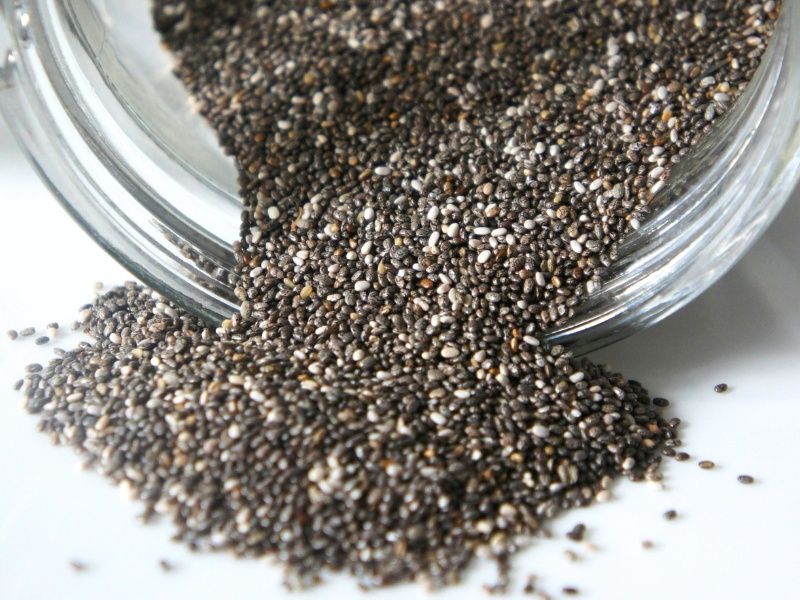
Chia seeds are small, but they bring plenty of fiber, minerals and plant omega-3 to a meal. If you are wondering how to eat them, start with a little stirred into yogurt or another moist food; about two tablespoons is a common daily amount.
Chia used to be something you could find only in health food stores next to flaxseed and spirulina. Today you can find it in almost any supermarket, from bags of granola and cereal to yogurts and energy drinks. Whether you are a bodybuilder or simply want to eat well, these little seeds are worth a look. Let's start!
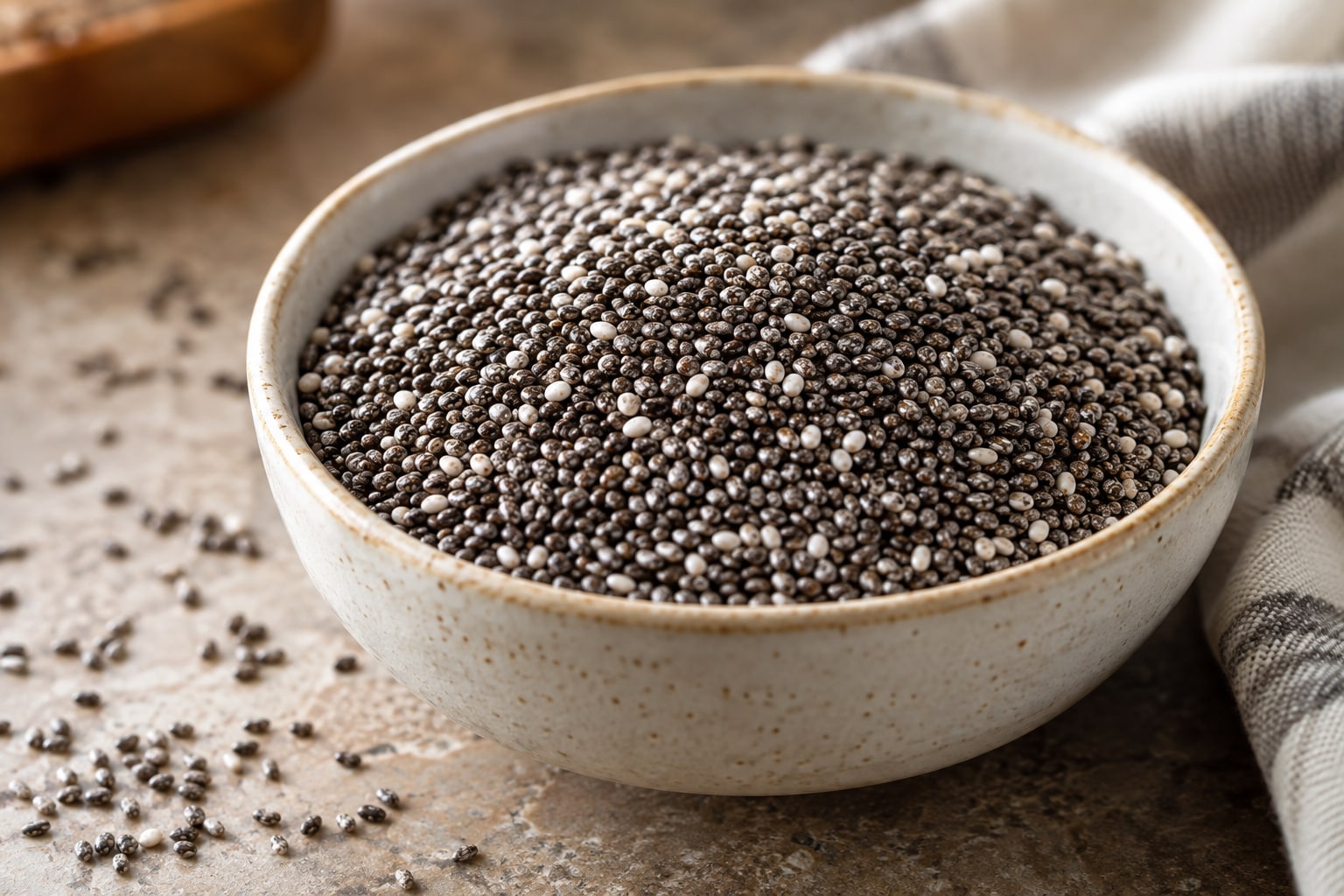
There are white and black chia seeds, with no meaningful nutritional difference between them. Use whichever you find.
Chia seeds nutrition and calories
Here are the values for 100 g and for about two tablespoons. The smaller portion is closer to what you would actually add to a meal.
Values from USDA FoodData Central, "Seeds, chia seeds, dried" (FDC 170554). USDA's portion is 1 ounce (28 g), about 2 tablespoons; spoons differ. % Daily Value uses the FDA's current adult Daily Values.
| Nutrient | Per 100 g (about 3.5 oz) | Per 28 g (1 oz, about 2 tbsp) | % DV per 28 g |
|---|---|---|---|
| Energy | about 486 kcal | about 138 kcal | |
| Protein | about 16.5 g | about 4.7 g | |
| Fat | about 30.7 g | about 8.7 g | |
| of which ALA omega-3 | about 17.8 g | about 5.0 g | |
| of which omega-6 (linoleic acid) | about 5.8 g | about 1.7 g | |
| of which saturated | about 3.3 g | about 0.9 g | |
| of which monounsaturated | about 2 g | about 0.6 g | |
| Carbohydrate | about 42.1 g | about 11.9 g | |
| of which fiber | about 34.4 g | about 9.8 g | about 35% |
| of which sugar | 0 g | 0 g | |
| Calcium | about 631 mg | about 180 mg | about 14% |
| Iron | about 7.7 mg | about 2.2 mg | about 12% |
| Magnesium | about 335 mg | about 95 mg | about 23% |
| Phosphorus | about 860 mg | about 244 mg | about 20% |
| Zinc | about 4.6 mg | about 1.3 mg | about 12% |
| Potassium | about 407 mg | about 115 mg | |
| Thiamin (vitamin B1) | about 0.62 mg | about 0.18 mg | about 15% |
| Niacin (vitamin B3) | about 8.8 mg | about 2.5 mg | about 16% |
About 34 of the 42 g of carbohydrate per 100 g is fiber. Two tablespoons give you roughly 138 calories, 10 g of fiber, 5 g of plant omega-3 and 4.7 g of protein. Chia absorbs water and turns gel-like, which is why it thickens drinks and recipes.
Chia seeds benefits
Rich in antioxidants
Chia contains plant compounds such as flavonoids, phenolic acids and tocopherols. Lab research described in Balakrishnan's review found antioxidant activity, but that does not show that eating chia slows aging or prevents disease. In Nieman's 12-week trial, chia did not change blood markers of inflammation or oxidative stress.
My practical tip goes beyond chia: if you want something sweet, try fruit instead of a highly processed sweet.
Calcium and other minerals for your bones
Chia has calcium, magnesium and phosphorus. Two tablespoons contain about 180 mg of calcium, or 14% of the FDA Daily Value. Gram for gram, that is more calcium than whole milk, but a 250 g glass of milk gives about 280 mg because you eat a much larger portion. Chia is one way to add calcium, alongside other foods.
What about good and bad cholesterol?
A 2021 review by Silva and colleagues pooled 10 trials. Total cholesterol and triglycerides were a little lower and HDL ("good" cholesterol) a little higher on average, but those differences were not statistically clear; LDL ("bad" cholesterol) did not go down. So I would enjoy chia as food, not count on it to change a cholesterol reading.
Chia, omega-3 and heart health
Chia is rich in fiber and alpha-linolenic acid (ALA), a plant omega-3 fat. Your body needs ALA from food; it converts only some into the EPA and DHA found in fish. Jin's small seven-week study of 10 women and Nieman's 12-week study of 76 adults who completed the trial found higher blood ALA with chia; one also found higher EPA, but neither found higher DHA. For more on fats, see the healthy fats guide.
A 2025 review by TaghipourSheshdeh and colleagues pooled eight trials and found lower blood pressure readings on average, but the authors said the data were limited. In Nieman's 12-week trial, 90 adults were assigned 25 g of chia or a placebo twice a day, and 76 finished; it found no change in blood pressure, blood fats, body weight or body composition. The 2025 review found no change in body weight, body fat, waist size, fasting blood sugar or HbA1c. I would not rely on chia to prevent or treat heart disease.
A complete protein source for vegans
It is true that there are not many grams of protein in chia seeds. Still, if you eat them for their fiber and minerals, you get some plant protein too. The USDA entry lists all nine essential amino acids, which your body needs from food, including for muscle repair after training.
If you are vegan or vegetarian, getting enough protein matters. Chia is a useful addition: you get its minerals and a little complete plant protein at the same time. Two tablespoons bring about 4.7 g of protein, so I would enjoy chia alongside other protein-rich plant foods. See the plant-based protein and protein guides for more ideas.
Chia seeds in history
Chia has a long history in the Americas. Stories about the Maya and Aztec peoples describe it as a food valued for energy and strength. The Rarámuri (Tarahumara) runners of Mexico are known for incredibly long runs, sometimes hundreds of kilometers. Their traditional iskiate drink mixes chia, water and lemon or lime, and they credit it with helping them keep going. A small study by Illian and colleagues of six trained runners found no performance advantage from chia.
Disadvantages of chia seeds
These little seeds have plenty going for them, but there are a few things to know.
Eating too much can upset your digestion
Because chia is so high in fiber, a large amount at once can cause constipation, diarrhea, bloating or gas. Build up gradually and drink enough water.
Dry chia can get stuck
Dry chia absorbs water, swells and gets sticky. A dry spoonful can get stuck in your throat. Soak it until the seeds are fully wet and gel-like, or stir it into moist food. Do not follow a dry spoonful with a drink.
Allergies
Allergy to chia is rare, but symptoms can include vomiting, diarrhea and itching of the tongue or lips. A lab study by Albunni and colleagues found that some chia proteins resemble sesame and hazelnut proteins; it did not test what happens when people eat chia. Swelling of the face or throat or trouble breathing after eating calls for emergency care.
How much chia should you eat per day?
There is no official daily amount. Two tablespoons, about 28 g, is a common and reasonable amount. Divide that into one tablespoon at a time because it is a lot of fiber. If chia is new to you, start with a teaspoon and work up only if it feels comfortable. The amount that suits you can vary with how much fiber you already eat and with your age, sex and body weight.
How do you eat chia seeds?
There are plenty of ways to use them. Let them absorb liquid before eating, or mix them well into moist food.
Chia pudding
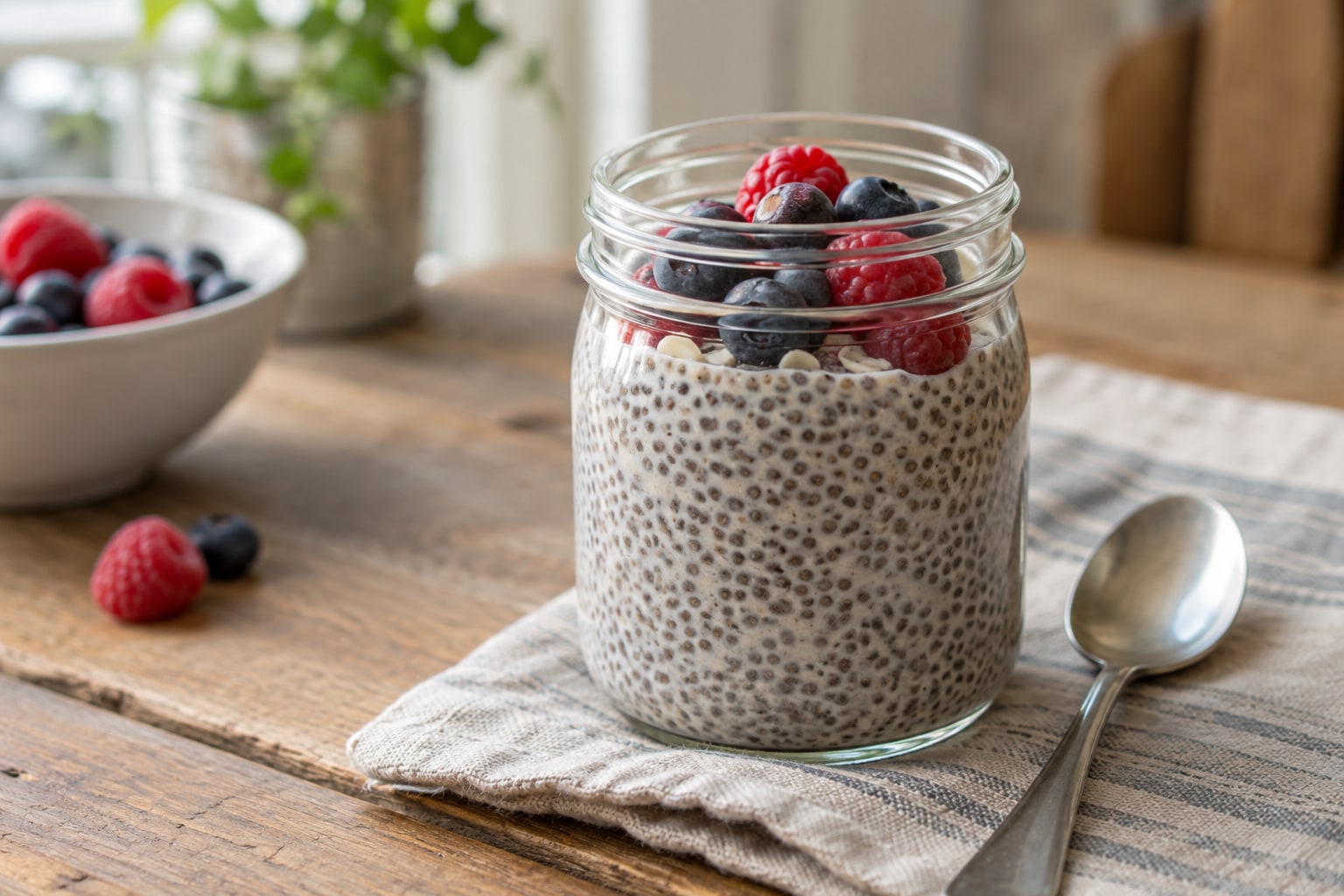
For an easy example, stir about two tablespoons of chia into half a cup (about 120 ml) of milk or a plant drink. Stir again after 10 minutes and chill for at least two hours or overnight. Add fruit, oats or nuts on top.
More ways to use chia
- Protein recipes: add chia to a protein bar or protein pancake recipe.
- Soups: add a little chia to thicken the liquid.
- Baking: try it in muffins, cakes or bread.
- Breakfast cereals: stir it into granola, muesli, oatmeal or cereal with milk or yogurt.
- Shakes: add some to a morning shake or one after training and give it time to soften.
A tip for vegans: chia as an egg replacement
Here is a simple one: put one tablespoon of chia in a small bowl or cup, add three tablespoons of water and wait until it turns gel-like. It often takes about five minutes. Use the mixture in place of one egg in a baking recipe you like.
Frequently asked questions
Can I eat chia seeds every day?
Yes, in a reasonable amount if they do not upset your digestion. About two tablespoons a day is a common amount because they contain so much fiber.
How many calories are in chia seeds?
About 138 calories in a 28 g portion, roughly two tablespoons.
Where can I buy them?
Look in a large supermarket's health food aisle or a local grocery store. They may be packaged or sold loose, whole or ground.
How should I store chia seeds?
My preference is a closed glass jar in the fridge. Room temperature is fine for a short time, but the longer the seeds sit there, the more likely they are to go bad.
Do I need to grind chia seeds?
No. You can eat them whole or ground, according to your preference. Mix them into moist food or soak them first.
Bottom line
Chia gives you plenty of fiber, plant omega-3, minerals and a little protein, and it is easy to add to the foods you already enjoy. Start with a small amount, let the seeds soften in liquid or food, and drink plenty of water as you add more fiber.
The information on this page and on this website is intended to provide general information only. The content on this website does not constitute a professional opinion, a recommendation, or a substitute for consulting an expert in a specific field or obtaining a medical opinion. This article is written for healthy adults. It is not medical advice, not dietetic advice and not a personal diet plan. If you have a health condition, a food allergy, are pregnant or breastfeeding, are under 18, or take medication, talk to a doctor or a registered dietitian before changing what you eat.
Sources
Accessed September 18, 2026.
- USDA Agricultural Research Service, FoodData Central, "Seeds, chia seeds, dried", SR Legacy, FDC ID 170554 (per 100 g and the 1 oz = 28.35 g portion; amino acids). fdc.nal.usda.gov/food-details/170554/nutrients
- USDA Agricultural Research Service, FoodData Central, "Milk, whole, 3.25% milkfat, with added vitamin D", SR Legacy, FDC ID 171265 (calcium per 100 g). fdc.nal.usda.gov/food-details/171265/nutrients
- US Food and Drug Administration, "Daily Value on the Nutrition and Supplement Facts Labels" (content current as of 2024-03-05). www.fda.gov/food/nutrition-facts-label/daily-value-nutrition-and-supplement-facts-labels
- Jäger R. et al., "International Society of Sports Nutrition Position Stand: protein and exercise", J Int Soc Sports Nutr 2017;14:20. pubmed.ncbi.nlm.nih.gov/28642676
- Silva L.A. et al., "Chia seed (Salvia hispanica L.) consumption and lipid profile: a systematic review and meta-analysis", Food Funct 2021;12(19):8835-8849. pubmed.ncbi.nlm.nih.gov/34378609
- TaghipourSheshdeh F. et al., "The Effect of Chia Seed on Blood Pressure, Body Composition, and Glycemic Control: A GRADE-Assessed Systematic Review and Dose-Response Meta-Analysis of Randomized Controlled Trials", Nutr Rev 2025;83(3):448-465. pubmed.ncbi.nlm.nih.gov/39225983
- Nieman D.C. et al., "Chia seed does not promote weight loss or alter disease risk factors in overweight adults", Nutr Res 2009;29(6):414-418. pubmed.ncbi.nlm.nih.gov/19628108
- Jin F. et al., "Supplementation of milled chia seeds increases plasma ALA and EPA in postmenopausal women", Plant Foods Hum Nutr 2012;67(2):105-110. pubmed.ncbi.nlm.nih.gov/22538527
- Illian T.G. et al., "Omega 3 Chia seed loading as a means of carbohydrate loading", J Strength Cond Res 2011;25(1):61-65. pubmed.ncbi.nlm.nih.gov/21183832
- Parker J. et al., "Therapeutic Perspectives on Chia Seed and Its Oil: A Review", Planta Med 2018;84(9-10):606-612 (used only for "the body cannot make ALA"). pubmed.ncbi.nlm.nih.gov/29534257
- Albunni B.A. et al., "Antibody Cross-Reactivity between Proteins of Chia Seed (Salvia hispanica L.) and Other Food Allergens", J Agric Food Chem 2019;67(26):7475-7484. pubmed.ncbi.nlm.nih.gov/31117490
- Balakrishnan G. et al., "A Comprehensive Review of Phenolic Compounds in Chia Seeds and Their Applications in the Food Industry", Plant Foods Hum Nutr 2025;80(1):46 (used only for which compounds chia contains). pubmed.ncbi.nlm.nih.gov/39853445