
Protein Powder Explained: Types, Who It Helps and How to Read the Label
In short
Do you need protein powder to build muscle? No, you do not have to use it if you get enough protein each day. I see it as a convenient way to reach your daily amount when you are busy or do not have the appetite for another meal.
Protein is the most important nutrient in bodybuilding. Because protein is essential for building muscle and improving performance, athletes from many fields use a protein powder supplement. Let's go through the different types, what they are used for, and how to take them.
First, let's understand what protein is
Proteins build almost everything in your body. They are in every cell: in your bones, muscles, tissues and hair, and they help carry nutrients and oxygen around the body. Proteins are made of 20 amino acids. Nine of them are called essential, because your body cannot make them and you have to get them from food. Your body can make the rest, so they are not essential in your diet.
To build muscle mass, you need enough protein, because it gives your body what it needs to build muscle after training. For someone aiming to build muscle, I use about 1.6 to 2.2 g per kg of body weight a day as a guideline. For example, at 70 kg (about 154 lb), that is roughly 110 to 155 g a day.
You will find protein in chicken, fish, meat, eggs and milk. If you are vegan or vegetarian, you can get protein from soy or from a mix of legumes and grains; my plant-based protein guide covers that in full. For more food ideas, see the list of high-protein foods.
Okay, so what is protein powder?
It is a food supplement with a high concentration of protein. Many people drink it as a shake between meals or add it to a meal, such as oats, yogurt or protein pancakes. On its own, a scoop mixed with water is a protein snack, not a full meal: it has little of the fiber, vitamins and other nutrients a meal gives you.
Do you need protein powder to build muscle?
No, you do not have to use protein powder if you get enough protein each day. But most people do not manage to reach that amount, because it is a lot of food. When you are busy, preparing and eating eggs, chicken and other protein foods each day can be difficult, especially if you do not have much appetite.
Count what your meals already give you, and use a shake to fill the gap. You do not need powder to build muscle mass; it just makes reaching your daily protein easier.
What research shows is that total protein is what counts, and a powder is just one way to get there. Morton and colleagues' 2018 meta-analysis pooled 49 randomized trials with 1,863 healthy adults who did resistance training for 6 weeks or more. Adding protein supplements led to slightly bigger gains: on average about 2.5 kg more on a one-rep max and about 0.3 kg more lean mass than training without them. In the pooled results, above a total intake of about 1.6 g per kg a day (about 0.7 g per lb), extra protein gave no further lean mass gain.
That pooled result is not a personal cutoff for everyone. I keep 1.6 to 2.2 g per kg as a guideline, rather than a promise that reaching the upper end will build more muscle.
Isn't protein powder too expensive?
I like comparing the price of a serving of protein, rather than just the price on the tub. Take this example in US dollars: if a can of tuna with 25 g of protein costs $2–2.50, and a powder serving with the same amount costs about $1, the powder is cheaper. These are example prices, not a current price quote.
For a 2.3 kg tub labeled as 69 servings, divide the price by 69 to get the cost per serving. Then compare equal amounts of protein. Notice that some stores sell tubs smaller than 2.3 kg at a price that looks cheaper, but you get fewer servings.
How many types of protein powders are there?
The main types I will go through are whey, casein, soy, egg and protein blends. The table also includes other plant powders, so you can compare the options and their allergens in one place.
| Type | Made from | Allergens to check | May suit |
|---|---|---|---|
| Whey concentrate | Milk | Milk (contains lactose) | Most people who eat dairy |
| Whey isolate | Milk, filtered more | Milk (less lactose) | People sensitive to lactose, not allergic to milk |
| Casein | Milk | Milk | A shake before bed |
| Soy | Soybeans | Soy | Vegans and vegetarians |
| Pea, rice, plant blends | Peas, rice and other plants | Check the label | Vegans and people who avoid dairy |
| Egg white | Egg whites | Egg | People who avoid dairy but eat eggs |
| Blend | Often whey with casein or egg | Depends on the mix | One powder for several uses |
Whey protein powder
Whey is made from milk. When cheese is made, a protein-rich liquid is left over, and that liquid is whey. Whey is digested and absorbed quickly, so it starts the repair and muscle-building process fast. It is rich in the branched-chain amino acids (BCAAs); one of them, leucine, plays a key role in muscle growth and recovery after weight training.
In one small lab study by Tang and colleagues, 18 young men (6 per group) drank whey hydrolysate, casein or soy, each with 10 g of essential amino acids, after one leg session; whey raised muscle protein building the most over the next hours. Over months, Messina and colleagues' 2018 meta-analysis of 9 studies (266 people) found similar gains in strength and lean mass with soy as with whey or other animal proteins.
Whey is one of the most popular sports nutrition products in the world, because it is a high-quality protein, easy to use, and usually costs less than other powders. Whey also contains lactose (milk sugar). If lactose gives you trouble, such as bloating or gas, a whey isolate may be the better choice, because it has less lactose. Lactose intolerance is not the same as a milk allergy: whey is a milk protein, so if you are allergic to milk, avoid every kind of whey, isolate included.
There are three main kinds of whey:
Whey concentrate
It is made by separating the protein from the rest of the whey. This protein supplement is usually about 60 to 80% protein, with the remaining 20 to 40% consisting of fat and carbohydrates. It is the most common and the cheapest kind.
Whey isolate
Isolate goes through extra filtering that removes more of the fat, carbohydrates and lactose that are left. Protein isolate powders contain about 90 to 95% protein. This is the kind people who are sensitive to lactose often choose.
Whey hydrolysate
It is made by treating the protein further with heat and acid or enzymes, which breaks some of the bonds between the amino acids. Your body digests and absorbs this form faster.
Casein protein powder
Casein is the main protein in dairy. It makes up about 80% of the protein in cow's milk, and whey makes up most of the rest; both come from milk. Casein digests and absorbs more slowly than whey.
Because casein digests slowly, it is the perfect source of protein before sleep: it releases amino acids through the night while your body recovers from training. The International Society of Sports Nutrition (ISSN) position stand says that about 30 to 40 g of casein before sleep increased muscle protein building overnight in studies.
Casein suits more advanced trainees who want to keep building muscle through the night while their body recovers. It is expensive compared with whey protein powder.
Soy protein powder
Vegans have an option too: powder made from soybeans. Soy contains all the essential amino acids, which is why it is often called a complete plant protein. To make it, soybeans are hulled, dried into a kind of flour and then processed into a powder. It suits vegetarians and vegans in particular. Soy is a common allergen, so skip it if you are allergic to soy.
You may have heard that soy raises estrogen in men. Reed and colleagues' 2021 meta-analysis of 41 clinical studies in men found that soy protein and soy isoflavones did not change testosterone or estrogen levels, whatever the dose or study length.
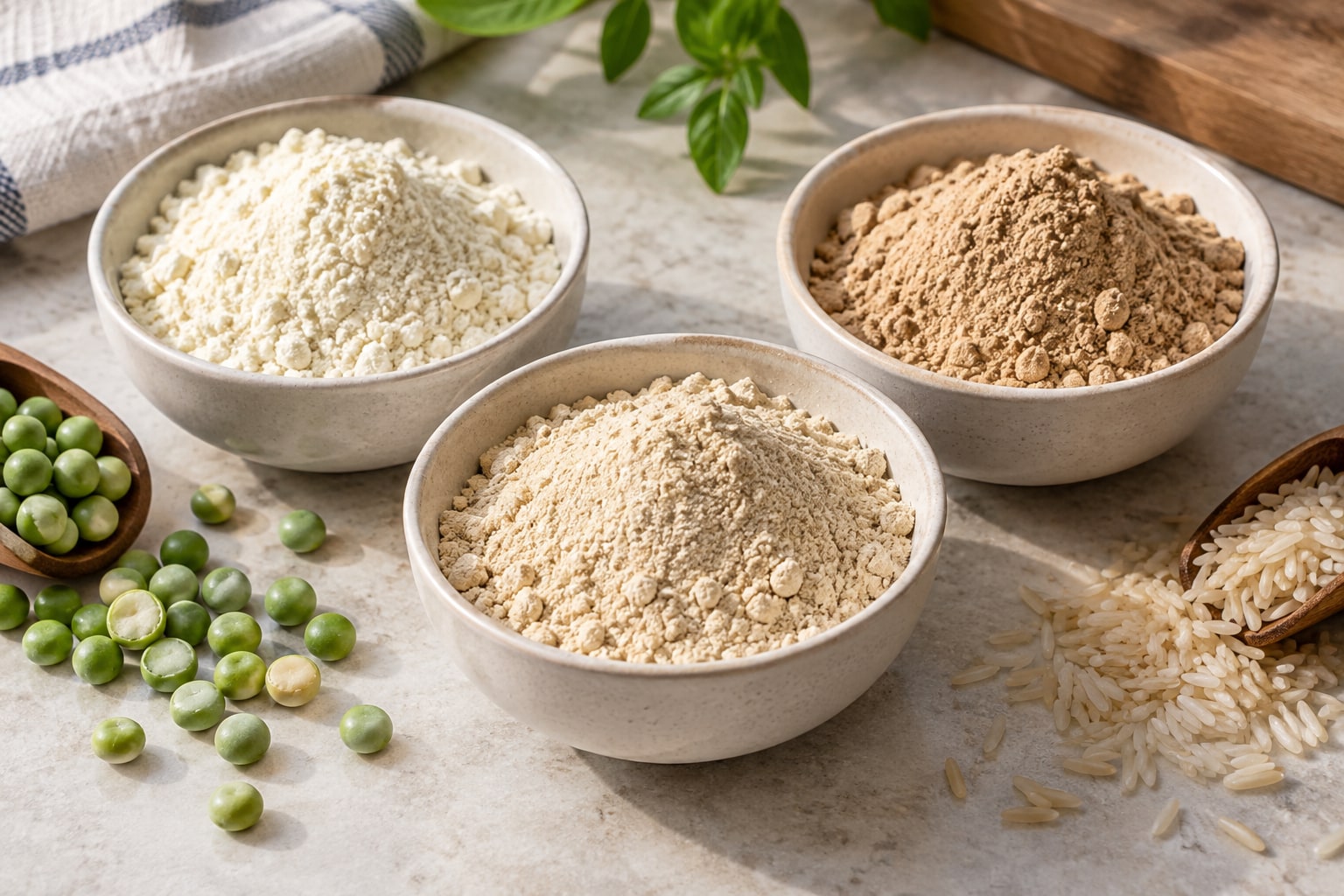
Pea, rice and plant protein blends
Pea, brown rice, hemp and other plant powders are common choices if you avoid dairy. Gorissen and colleagues' 2018 lab analysis found that most plant protein isolates have fewer essential amino acids than animal proteins, often less leucine, lysine or methionine, and that mixing plant proteins brings the profile closer to animal protein. That is why many plant powders are blends, for example pea with rice.
Egg protein powder
This powder is made by separating the egg white from the yolk and drying it. Eggs are an excellent source of quality protein, and egg white protein contains all the essential amino acids.
The downsides are the high price, that these powders often don't taste great, and of course that they are not suitable for anyone allergic to eggs.
Protein blend
A blend is a powder that combines several types of protein. It was created to get the advantages of the different powders in one product. Usually whey is mixed with casein or egg protein. That way your body absorbs the whey in the short term and the casein (and, a little more slowly than whey, the egg) over the next few hours.
If you have a specific goal, for example protein before bed, you are better off buying casein as well as your regular powder.
How to read the label
In the US, a powder sold as a dietary supplement carries a "Supplement Facts" panel (one sold as a food carries "Nutrition Facts"). Here is what I look at:
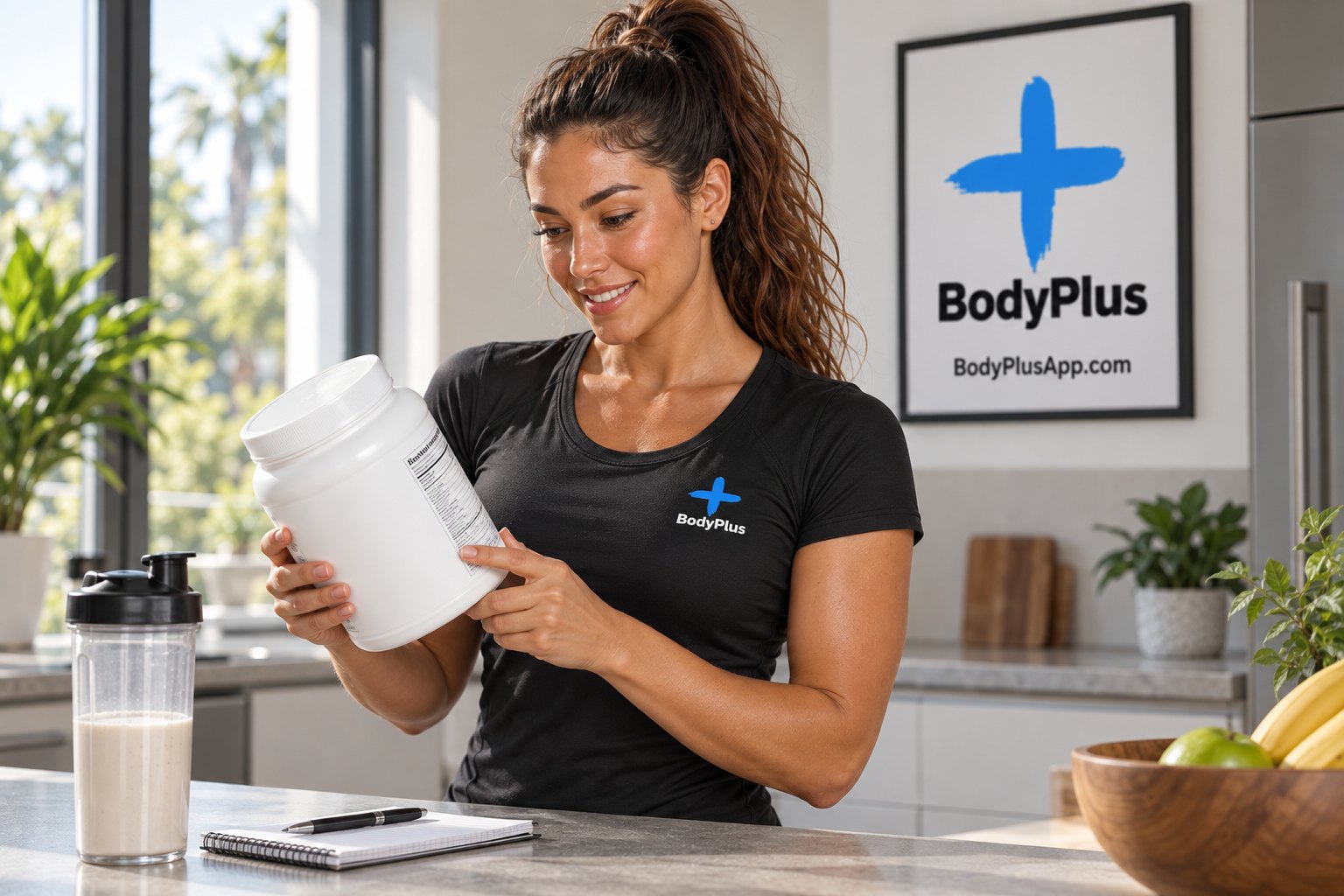
- Serving size and protein per serving. Divide the protein by the scoop weight to see how much of the powder is actually protein.
- Ingredient list. Ingredients are listed from most to least by weight, so the protein you chose (for example "whey protein isolate") should come first.
- Added sugars and calories, if you are watching either.
- Allergens, including any "may contain" line.
- Extras. If the label adds caffeine, creatine, herbal extracts or a "proprietary blend", it is more than a protein product.
A worked example
Say a label lists a 30 g scoop with 24 g of protein. 24 divided by 30 is 0.8, so the scoop is about 80% protein. Flavorings, sweeteners and thickeners add weight too, so a flavored powder shows a lower share than its protein source alone. Use the percentage as a rough check of how much of the scoop is protein, and the ingredient list to see which protein it is. Then fit it into your day: count what your meals already give you, and use a serving only to fill a gap.
What does third-party testing tell you?
In the US, the FDA does not approve dietary supplements before they go on sale. The company that makes a supplement is responsible for its safety and its label, and the FDA can act against a product after it reaches the market. That is why a product checked by an independent testing program is worth looking for. NSF Certified for Sport is one example; it tests supplements for quality, purity and banned substances. A seal is not a guarantee, and it does not make a powder something you need, but it is one more check than the maker's own word.
Check the allergen statement too: many powders are made where milk, soy or egg are also handled.
When and how to use it
The ISSN position stand says the best timing is likely a matter of what suits you, since protein before or after training can both help. Mix it with water or milk, stir it into oats or yogurt, or bake with it, as in protein pancakes or homemade protein bars.
Bottom line
Whey protein powder is a convenient way to add protein to your diet. It is a quality protein with all the essential amino acids, and your body digests and uses it well. It matters most for bodybuilders, athletes and people who want to build muscle. When it comes to building muscle, protein is the king of nutrients.
There are more advantages:
- You make and drink it quickly, unlike chicken breast, steak or eggs.
- If you want to lose weight, compare the calories as well as the protein per serving.
- It can save you money, as in the tuna example above; I compare the cost for the same amount of protein.
- A shake is tasty, light and easy to take along, whether you are at work, at school or on the go.
My bottom line: use powder if it makes your day easier. If your meals already cover your protein, you can skip it. For more, see how to build muscle.
Frequently asked questions
Do I need protein powder?
No. If your food already covers your daily protein, you do not need a powder. I would use it for convenience when preparing or eating enough food is difficult.
Whey vs casein: which should I choose?
Whey is absorbed quickly; casein more slowly. I like casein before bed, and whey as a convenient way to add protein during the day.
How do I compare two protein powders?
I would compare the type of protein, allergens, protein per serving and cost for the same amount of protein. A cheaper-looking tub is not necessarily better value.
The information on this page and on this website is intended to provide general information only. The content on this website does not constitute a professional opinion, a recommendation, or a substitute for consulting an expert in a specific field or obtaining a medical opinion. This article is written for healthy adults. It is not medical advice, not dietetic advice and not a personal diet plan. If you have a health condition, a food allergy, are pregnant or breastfeeding, are under 18, or take medication, talk to a doctor or a registered dietitian before changing what you eat.
Sources
Accessed September 18, 2026.
- Jäger R. et al., "International Society of Sports Nutrition Position Stand: protein and exercise", J Int Soc Sports Nutr 2017;14:20 (full text PMC5477153 for milk being about 80% casein, concentrate 70-80% and isolate over 90% protein, and soy as a complete protein). pubmed.ncbi.nlm.nih.gov/28642676
- Morton R.W. et al., "A systematic review, meta-analysis and meta-regression of the effect of protein supplementation on resistance training-induced gains in muscle mass and strength in healthy adults", Br J Sports Med 2018;52(6):376-384. pubmed.ncbi.nlm.nih.gov/28698222
- Tang J.E. et al., "Ingestion of whey hydrolysate, casein, or soy protein isolate: effects on mixed muscle protein synthesis at rest and following resistance exercise in young men", J Appl Physiol 2009;107(3):987-992. pubmed.ncbi.nlm.nih.gov/19589961
- Messina M. et al., "No Difference Between the Effects of Supplementing With Soy Protein Versus Animal Protein on Gains in Muscle Mass and Strength in Response to Resistance Exercise", Int J Sport Nutr Exerc Metab 2018;28(6):674-685. pubmed.ncbi.nlm.nih.gov/29722584
- Reed K.E. et al., "Neither soy nor isoflavone intake affects male reproductive hormones: An expanded and updated meta-analysis of clinical studies", Reprod Toxicol 2021;100:60-67. pubmed.ncbi.nlm.nih.gov/33383165
- Gorissen S.H.M. et al., "Protein content and amino acid composition of commercially available plant-based protein isolates", Amino Acids 2018;50(12):1685-1695. pubmed.ncbi.nlm.nih.gov/30167963
- US Food and Drug Administration, "Dietary Supplements" (content current as of 2024-10-01). www.fda.gov/food/dietary-supplements
- US Food and Drug Administration, "Dietary Supplement Labeling Guide: Chapter IV. Nutrition Labeling" (the "Supplement Facts" panel; ingredients in descending order of predominance by weight). www.fda.gov/food/dietary-supplements-guidance-documents-regulatory-information/dietary-supplement-labeling-guide-chapter-iv-nutrition-labeling
- NSF, "Certified for Sport" program page. www.nsfsport.com
- NIDDK (NIH), "Definition and Facts for Lactose Intolerance" (lactose intolerance differs from a milk allergy). www.niddk.nih.gov/health-information/digestive-diseases/lactose-intolerance/definition-facts
- Fulgoni V.L., "Current protein intake in America: analysis of the National Health and Nutrition Examination Survey, 2003-2004", Am J Clin Nutr 2008;87(5):1554S-1557S. pubmed.ncbi.nlm.nih.gov/18469286