
Protein: How Much You Need Per Day, How to Split It and Where to Get It
In short
How much protein per day do you need when you train to build muscle? My starting point is about 2 g per kg of body weight: if you weigh 70 kg (about 154 lb), that is 140 g a day. Your body, training and goal help determine the amount that suits you.
Everyone today understands that protein is an important part of our diet, especially for people who work out and do bodybuilding. Still, how many of us really know what protein is? What are its roles? How does it build muscle, and what types of protein are there?
This article has everything you need to know about the nutrient that keeps us alive. Let's start!
What is protein?
Protein is one of the most important compounds for living things. Proteins are the main building blocks of most forms of life, from tiny bacteria to humans.
A protein is a large organic molecule made of a chain of amino acids. Amino acids are organic compounds built from elements that include nitrogen, hydrogen, carbon and oxygen.
Protein is one of the three main nutrients your body needs to survive, together with carbohydrates and fats. Unlike the energy stored as fat, your body has no dedicated store of spare protein. That is why you need to consume it regularly through food.
Types of protein
There are many different types of protein, all built from different combinations of 20 standard amino acids. These amino acids fall into two groups:
- Non-essential amino acids (11): your body can make these itself, so you don't need to worry about them too much.
- Essential amino acids (9): your body can't make these, so you have to get them from food.
From a nutrition point of view, protein foods fall into two main types:
- Complete protein: contains all 9 essential amino acids in useful amounts.
- Incomplete protein: is low in one or more of the 9 essential amino acids.
What happens when you eat protein?
When you finish a workout and drink a protein shake, it doesn't go straight into building your biceps. When you eat protein, your body first breaks it down into the amino acids it is made of. This is true whether the protein is complete or incomplete.
First you chew the food, and it reaches your stomach. In the stomach, acid and enzymes start to break the protein apart. The mix then moves on to the small intestine, where more enzymes finish the job, breaking the protein down into amino acids and very small chains of them, which are absorbed into your blood.
From the gut, the amino acids travel first to the liver and then around your body. Your liver, muscles and other tissues use them to build whatever new proteins your body needs at that moment. Your body needs new proteins all the time, because it keeps replacing cells and renewing tissues.
The roles of protein
Contrary to what many people think, proteins aren't only responsible for building muscle. They run most of the work that happens inside your cells. There are many kinds of proteins, and each kind has a different job. Here is a partial list:
- Movement: proteins such as actin and myosin let your muscles contract and move.
- Enzymes: they speed up almost all of the chemical reactions in your cells, including the ones that read the information in your DNA to build new molecules.
- Antibodies: your immune system uses these proteins to recognize bacteria and viruses and help protect the body.
- Structure: they keep the shape of your cells and help build connective tissues such as bone, cartilage and tendons.
- Messengers: some hormones, such as growth hormone, are proteins that carry signals between cells, tissues and organs.
- Energy: if your body is short of glucose (from carbohydrates), it can break down amino acids and use them for energy.
There are other types of protein with different roles. What matters is that you understand their importance in your diet. Now let's look at them from a nutrition point of view.
How does protein build muscle?
Many people think the protein they eat builds their muscles directly. That isn't quite right. What your body builds muscle tissue from are the amino acids it took out of the protein you ate.
During a workout, you can cause microscopic tears in your muscle fibers. Your body repairs the fibers, joining amino acids together to create new proteins.
Training also activates satellite cells, a kind of stem cell that sits next to your muscle fibers. Research in people suggests they play a key role in repairing and remodeling muscle after exercise: they multiply and can fuse into the muscle fibers.
Over time, a muscle grows when your body builds more muscle protein than it breaks down: the training gives the signal, and the amino acids from your food are the material.
If there are excess amino acids, your body can break them down and use them for energy. Eating more energy than you use overall can lead to fat storage. This is why nutrient amounts need to fit your body, training and goal.
From a nutritional perspective
As you've seen, your body needs protein to break it down into amino acids and build new proteins according to its needs. Your diet needs to supply all the essential amino acids; otherwise, your body cannot use them efficiently. That is why protein quality matters as well as the amount.
In general, the split looks like this:
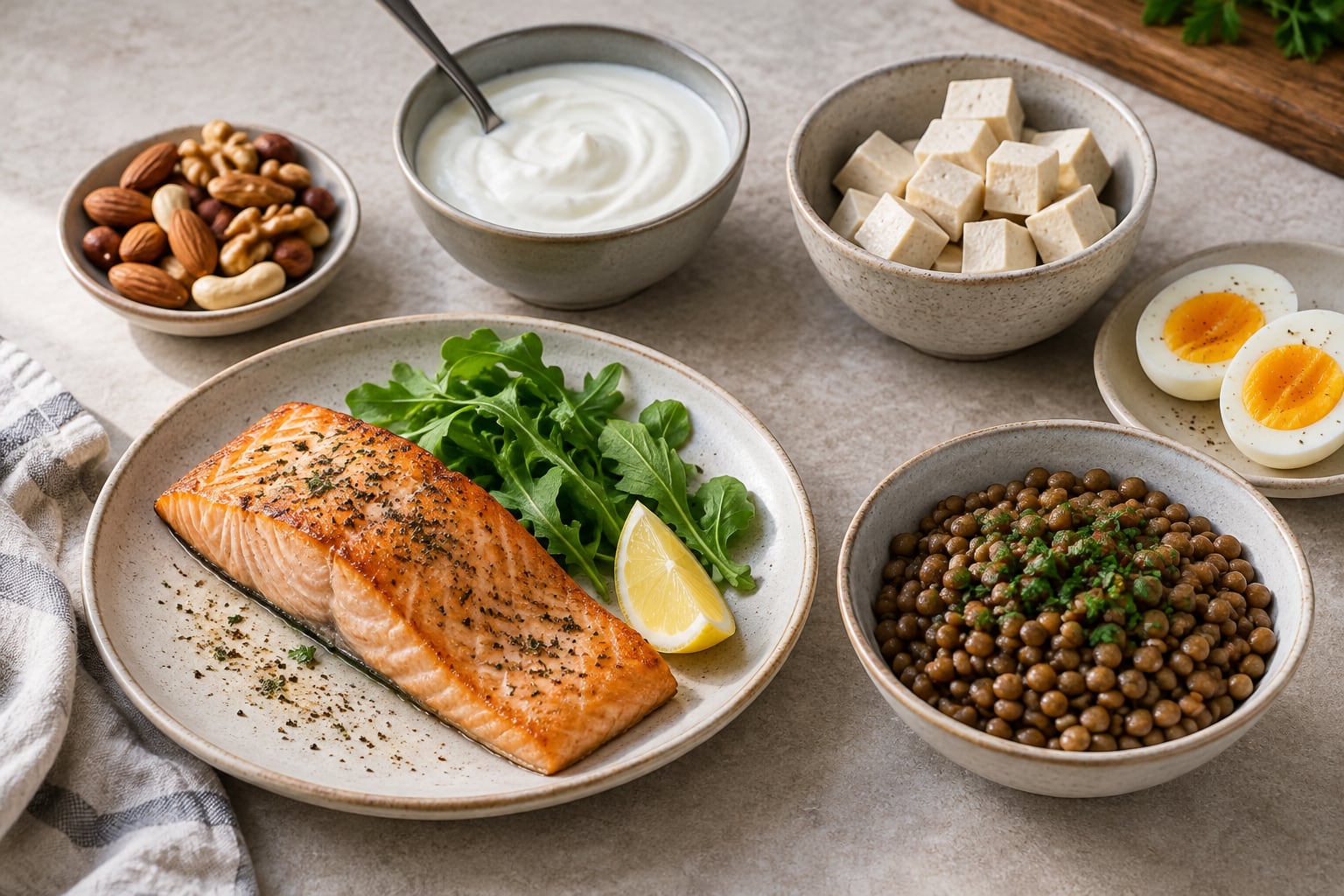
- Complete protein comes mostly from animal foods, for example chicken breast, meat, fish, eggs and cheese.
- Incomplete protein comes mostly from plant foods, for example beans, bread, rice and vegetables.
Complete protein from plants
Vegans can't eat animal foods, but don't worry: there's a solution. You can get all the essential amino acids from plants in two main ways.
- Plant foods that contain all of them, such as soy (tofu, tempeh, edamame).
- Combining legumes and grains. The essential amino acids that legumes are short of are usually found in grains, and the other way around. Grains tend to be low in the essential amino acid lysine, while legumes have plenty of it. Together, you get all the essential amino acids.
When you plan a meal, plan to eat legumes and grains together, for example rice and lentils. They don't have to be eaten at the same meal, though: the vegetarian-diets position paper and MedlinePlus say that a mix of plant foods eaten over the day covers all the essential amino acids when you eat enough overall. For the complete guide, read my plant-based protein guide.
How much protein per day?
How much protein you need depends on many factors, such as your age, height, body weight and, most important, your goal.
For the general public
The European Food Safety Authority (EFSA) sets a reference intake of 0.83 g per kg of body weight a day for a healthy adult. If you weigh 70 kg (about 154 lb), that is about 58 g a day. This applies to healthy people who lead a normal lifestyle.
The Recommended Dietary Allowance (RDA) for a healthy adult with little physical activity is 0.8 g per kg of body weight per day (about 0.36 g per lb), set to cover basic needs, not hard training. The US Dietary Guidelines for Americans 2025-2030 give 1.2 to 1.6 g per kg a day (about 0.5 to 0.7 g per lb) for the general public.
For people who train to build or keep muscle
For people who train to build muscle, there are many studies, and each gives slightly different results. Two good reference points:
- The International Society of Sports Nutrition (ISSN) position stand (2017): about 1.4 to 2.0 g per kg a day, enough for most exercising people to build and keep muscle.
- A 2018 meta-analysis of 49 trials (1,863 healthy adults, at least 6 weeks of resistance training, mostly protein-supplement trials) found no further lean mass gain, on average, above about 1.6 g per kg a day (about 0.7 g per lb). The authors suggested about 2.2 g per kg (about 1 g per lb) as an upper figure for those trying to gain as much as they can.
There is no single answer, because every person has a different body, with different DNA, organs and build. The more muscle you carry, the more protein you tend to need. Because of all this, everyone responds a little differently.
My recommendation is to start with about 2 g per kg of body weight (about 0.9 g per lb). For a healthy adult training for bodybuilding, 2 grams is an excellent starting point.
When you plan how you eat, remember that each gram of protein provides about 4 calories. For a starting estimate of your total energy needs, try the BMR calculator.
How much protein per meal, and when?
Your total for the day matters most, but how you spread it also helps.
- Per meal: the ISSN suggests about 20 to 40 g of protein per meal, or about 0.25 g per kg of body weight, spread fairly evenly every 3 to 4 hours.
- Around training: before or after your workout both work; the ISSN says the best timing is mostly a matter of what suits you. A workout's effect lasts at least 24 hours, though it likely fades with time, so there's no need to rush for a shake.
- Total beats timing: a 2013 meta-analysis of more than 20 trials found no clear effect of protein timing on strength or muscle size once total daily protein was taken into account.
A worked example
For example, take a hypothetical 70 kg (about 154 lb) person who lifts three or four times a week:
| Reference | Per kg per day | For 70 kg (about 154 lb) |
|---|---|---|
| RDA for inactive adults | 0.8 g | about 56 g |
| US Dietary Guidelines 2025-2030 | 1.2-1.6 g | about 84-112 g |
| ISSN range for exercising adults | 1.4-2.0 g | about 98-140 g |
Using the ISSN range in the last row, 98 to 140 g spread over four meals is roughly 25 to 35 g per meal. At my starting point of 2 g per kg, that is 140 g a day, or 35 g at each of four meals. This is an example of the arithmetic; your amount still depends on your body, training and goal.
To see how much of each food gives about 25 g of protein, see the table in my high-protein foods guide.
Which foods contain protein?
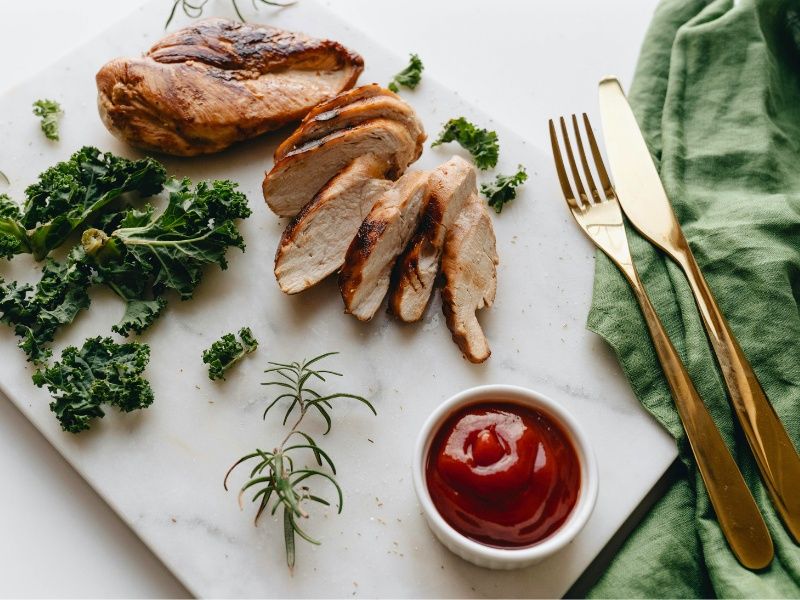
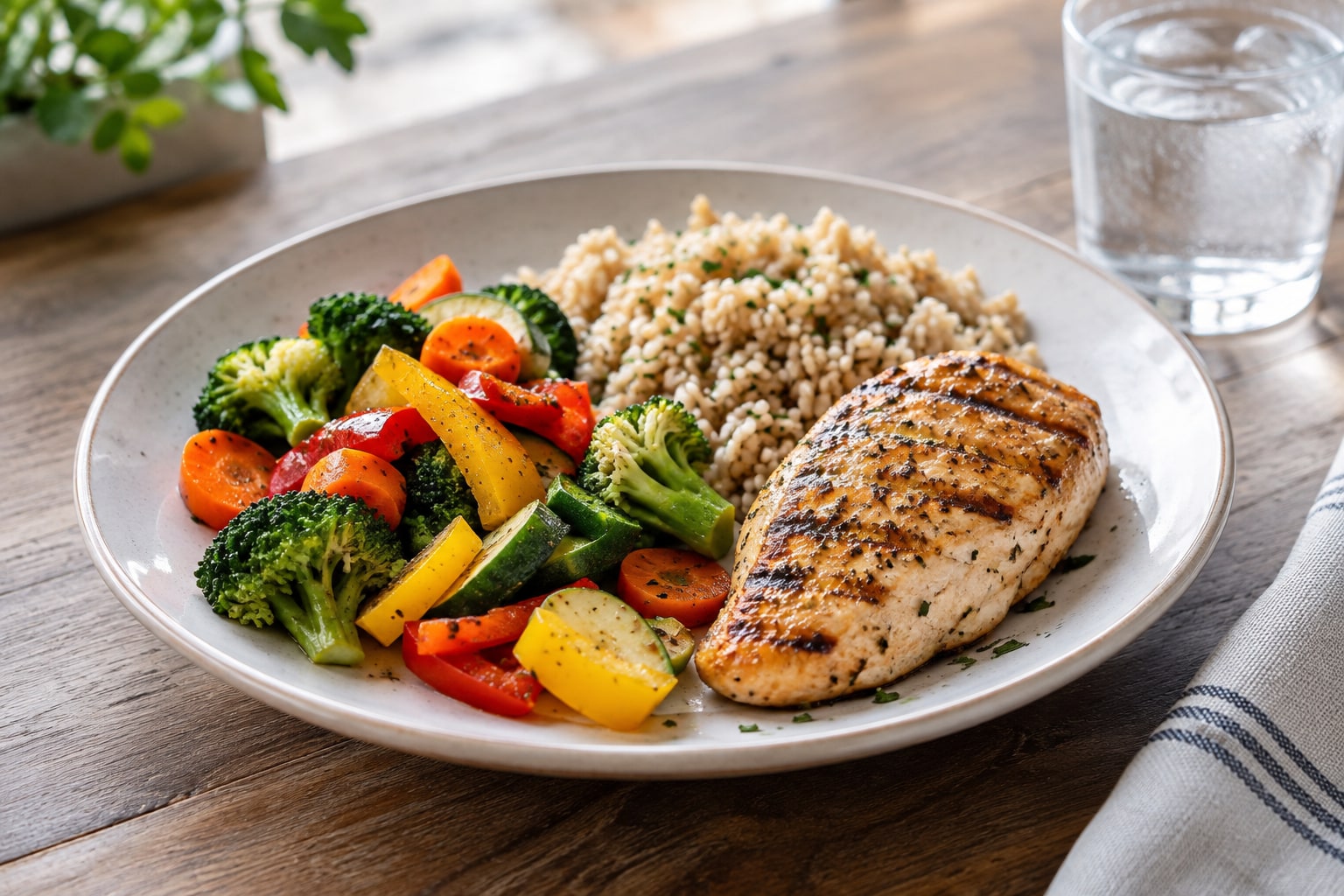
Chicken breast
It's no accident that you see bodybuilders eating chicken breast all day. Chicken breast is a food you can do a lot with. You can bake it, grill it, barbecue it or cook it in a pot. Most of its taste comes from how you season it, so you can add it to a wide range of dishes.
Roasted chicken breast has about 31 g of protein per 100 g. It is also rich in niacin (a B vitamin) and selenium, with some vitamin B6 and zinc.
Eggs
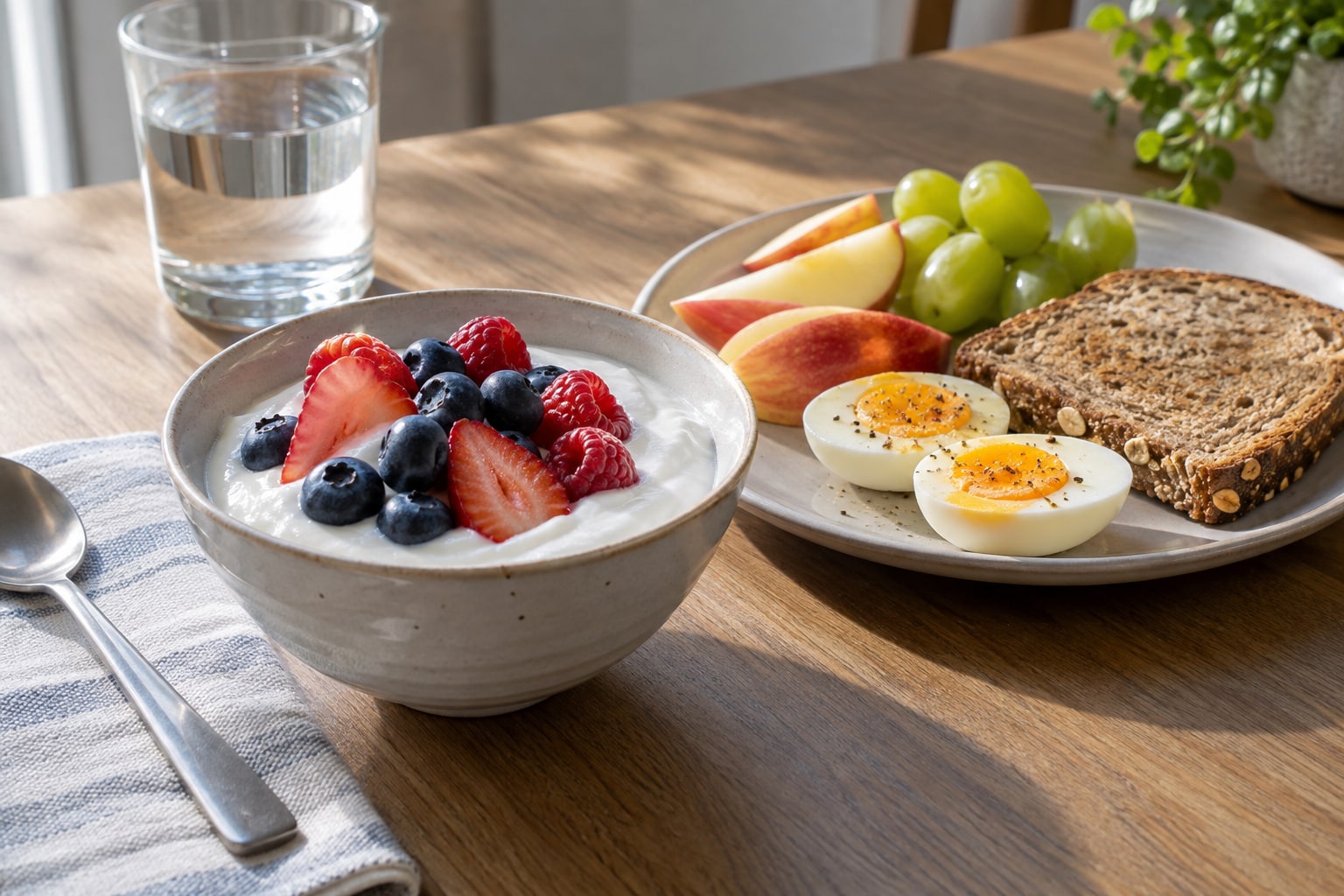
Eggs are one of the most nutrient-rich foods there are. Like chicken breast, you can cook them in many ways. There are countless egg recipes; you just need to find the one you like.
A large egg (about 50 g without the shell) has about 6 g of protein. Eggs also contain healthy fats, vitamins, minerals and antioxidants such as lutein.
Lentils
If you're vegan, this one is for you. Whether they're brown, green or red lentils, half a cup of cooked lentils adds about 9 g of protein to a meal. You can include them in a salad, in soups or add them to rice. They also contain antioxidants, iron and folate.
Do you need protein powder?
Some people can eat about 2 g of protein per kg and get it all from food. But most people do not manage to reach that amount. They realize that getting there means cooking and eating a lot. Food isn't always available and easy to reach, because you'd have to carry food around all day. It can also be expensive.
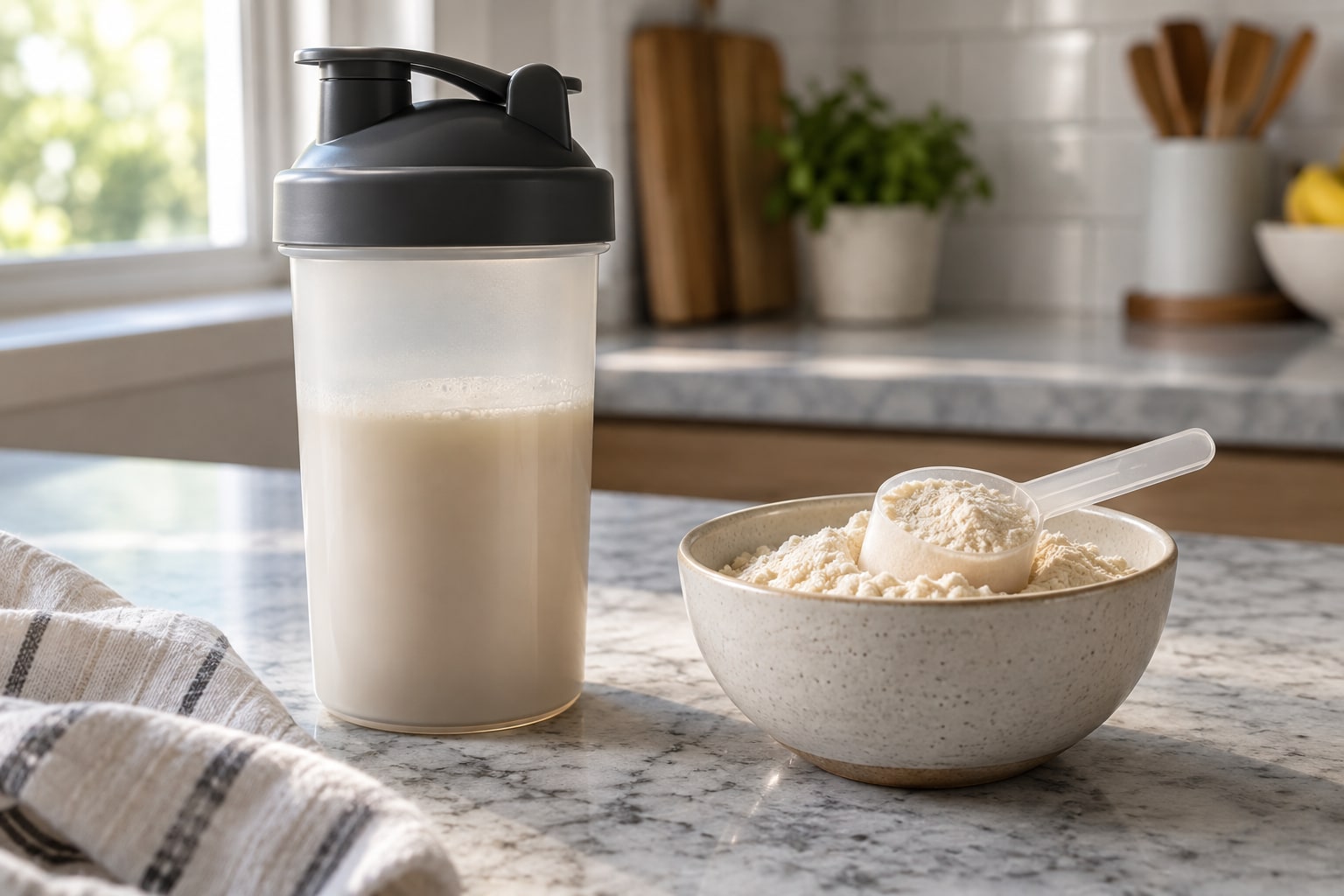
These are the reasons people start using protein powder and protein bars. Here are a few everyday situations where protein powder can make things easier:
- On days when you can't eat for many hours.
- When you're too busy to cook.
- When you can't eat a meal after training.
- When you can't carry food containers around every day.
There are countless other situations where a shake or a bar can help. Bodybuilding is hard enough as it is. Make things easier for yourself wherever you can.
You can get the whole amount from food; powder simply makes it more convenient. The FDA does not approve supplements before sale. More in my protein powder guide.
Bottom line
Protein may be the most important nutrient for people who want to do bodybuilding. The amino acids it is made of are the building blocks of your muscles. If you don't get enough amino acids from your diet, you won't build muscle well.
My recommendation is to start with about 2 g of protein per kg of body weight. Yes, it can be hard, but you can make it easier with a protein shake or bar when you need one. See also my guides to bodybuilding nutrition and how to build muscle.
Frequently asked questions
Do women need a different amount of protein?
The ranges in this guide are set per kg of body weight for exercising adults, not by sex, so a lighter person simply lands on a smaller number of grams.
How much protein is in an egg?
About 6 g in a large egg (about 50 g without the shell), according to USDA values.
The information on this page and on this website is intended to provide general information only. The content on this website does not constitute a professional opinion, a recommendation, or a substitute for consulting an expert in a specific field or obtaining a medical opinion. This article is written for healthy adults. It is not medical advice, not dietetic advice and not a personal diet plan. If you have a health condition, a food allergy, are pregnant or breastfeeding, are under 18, or take medication, talk to a doctor or a registered dietitian before changing what you eat.
Sources
Accessed September 18, 2026.
- Jäger R. et al., "International Society of Sports Nutrition Position Stand: protein and exercise", J Int Soc Sports Nutr 2017;14:20. pubmed.ncbi.nlm.nih.gov/28642676
- Morton R.W. et al., "A systematic review, meta-analysis and meta-regression of the effect of protein supplementation on resistance training-induced gains in muscle mass and strength in healthy adults", Br J Sports Med 2018;52(6):376-384 (the ~2.2 g/kg figure is in the full text, PMC5867436). pubmed.ncbi.nlm.nih.gov/28698222
- Schoenfeld B.J., Aragon A.A., Krieger J.W., "The effect of protein timing on muscle strength and hypertrophy: a meta-analysis", J Int Soc Sports Nutr 2013;10(1):53. pubmed.ncbi.nlm.nih.gov/24299050
- Devries M.C. et al., "Changes in Kidney Function Do Not Differ between Healthy Adults Consuming Higher- Compared with Lower- or Normal-Protein Diets: A Systematic Review and Meta-Analysis", J Nutr 2018;148(11):1760-1775. pubmed.ncbi.nlm.nih.gov/30383278
- Wu G., "Dietary protein intake and human health", Food Funct 2016;7(3):1251-1265 (RDA of 0.8 g/kg; digestion in the small intestine and transport through the portal vein). pubmed.ncbi.nlm.nih.gov/26797090
- Snijders T. et al., "Satellite cells in human skeletal muscle plasticity", Front Physiol 2015;6:283. pubmed.ncbi.nlm.nih.gov/26557092
- Craig W.J., Mangels A.R., "Position of the American Dietetic Association: vegetarian diets", J Am Diet Assoc 2009;109(7):1266-1282 (complementary proteins need not be eaten at the same meal; cereals tend to be low in lysine). pubmed.ncbi.nlm.nih.gov/19562864
- US Dietary Guidelines for Americans 2025-2030 (protein 1.2-1.6 g/kg/day). realfood.gov
- MedlinePlus Genetics, "What are proteins and what do they do?" (updated 2021-03-26). medlineplus.gov/genetics/understanding/howgeneswork/protein
- MedlinePlus Medical Encyclopedia, "Amino acids" (reviewed 2025-01-21). medlineplus.gov/ency/article/002222.htm
- 21 CFR 101.9(c)(1)(i)(B), general factors of 4, 4 and 9 calories per gram. www.law.cornell.edu/cfr/text/21/101.9
- FDA, "Dietary Supplements". www.fda.gov/food/dietary-supplements
- USDA FoodData Central, SR Legacy (per 100 g): chicken breast, meat only, roasted, FDC 171477 (31.0 g protein); egg, whole, raw, FDC 171287 (12.6 g; large egg 50 g); lentils, boiled, FDC 172421 (9.02 g; 7.9 g fiber; 1 cup 198 g). fdc.nal.usda.gov
- EFSA Panel on Dietetic Products, Nutrition and Allergies, "Scientific Opinion on Dietary Reference Values for protein", EFSA Journal 2012;10(2):2557 (population reference intake of 0.83 g/kg/day for adults). efsa.europa.eu/en/efsajournal/pub/2557
- Fulgoni V.L., "Current protein intake in America: analysis of the National Health and Nutrition Examination Survey, 2003-2004", Am J Clin Nutr 2008;87(5):1554S-1557S. pubmed.ncbi.nlm.nih.gov/18469286