
Plant-Based Protein for Muscle Gain: Best Sources
In short
When you think about protein, steak or chicken may come to mind. But whether you are vegetarian, vegan or just want to vary your diet, you can get the protein you need for bodybuilding from plants too. In controlled training studies, young adults on high-protein vegan diets gained about as much muscle and strength as omnivores eating the same amount of protein.
A common concern about vegetarian and vegan diets is that it is hard to consume enough plant-based protein to build muscle. As every athlete knows, protein is one of the building blocks of the body and a main nutrient in building muscle mass and strength.
Contrary to popular belief, chicken breast and meat are not the only foods that contain protein. Plant sources provide amino acids your muscles use to repair muscle fibers after a workout. Even if you are not vegetarian or vegan, including plant protein can greatly diversify your menu.
When comparing meat and plant sources, look at the amount of protein in relation to both the calories and the weight of the food. Plants do not automatically give more protein for their calories or weight. USDA food values show that lean chicken is more concentrated than cooked lentils or quinoa, while soy isolate and dry wheat gluten are more concentrated still.
Why do we need protein?
Let's go back to the basics. Protein is made up of smaller units called amino acids, and it is essential for repairing damaged cells and building new cells. This is essential in building tissues, muscles and bones. My starting point is to make sure your body has what it needs.
For more on protein needs, see my complete protein guide.
The difference between animal and plant protein
Your body builds its proteins from 20 amino acids. Nine of them are called essential, because your body can't make them and you have to get them from food. Your body can make the others, so they are called non-essential.
Animal protein contains all nine essential amino acids in sufficient amounts. Plants also contain all nine essential amino acids. However, apart from a few exceptions, they usually offer a small amount of at least one essential amino acid. This is why many plant proteins are called "incomplete". And what you need from protein is the amino acids.
For example, beans, lentils, peas and many vegetables tend to be low in the sulfur amino acids methionine and cysteine (in legumes the gap is small). On the other hand, grains, nuts and seeds tend to be low in lysine.
However, as long as you include a variety of plant-based protein sources in your diet, this should not be a problem. You can still get sufficient amounts of all the essential amino acids needed for bodybuilding. A 2019 review found no evidence that you must combine proteins in the same meal: a reasonable variety over the day appears to be enough.
The benefits of plant protein
Plant protein and mortality: an observed association
A report in JAMA Internal Medicine followed more than 400,000 people aged 50–71 for more than 15 years. It found that replacing 3% of energy from animal protein with plant protein was associated with 10% lower overall mortality in men and women; this is an association, not a promise of a personal health outcome.
Plant foods and fiber
Beans, lentils and whole grains bring fiber as well as protein.
A study published in Nutrition compared several diets, including vegan and Mediterranean diets, and reported greater weight loss with the vegan diet. That is a finding from that comparison, not a promise about what changing your protein source will do for you.
The drawbacks of plant protein
Plant protein is digested less completely
Plant-based protein is generally digested less completely than animal protein. Increase your plant protein intake to compensate.
Plant foods also bring compounds that reduce how much of some minerals you absorb.
Vitamin B12
Plant foods don't naturally contain vitamin B12; it is found mainly in meat and dairy products. That puts vegans at higher risk of a deficiency, and vegetarians who eat little dairy or eggs can be too. A deficiency can lead to anemia and nerve problems.
Fortified foods or a vitamin B12 supplement provide a reliable source. Plan that source of B12 alongside your protein, rather than leave it out of your menu.
Plant-based protein sources
Yes, the list of plant-based protein sources extends far beyond tofu. Here are some examples. Protein values come from USDA FoodData Central; brands and recipes differ.
For a longer list that includes animal foods, see my guide to high-protein foods.
Seitan
Seitan is a meat substitute made from wheat gluten. Of course, it is not suitable for people who are sensitive to gluten. Prepared seitan can contain about 25 g of protein per 100 g, making it one of the richest plant protein sources available. The recipe matters, so check the label.
Seitan contains some of all nine essential amino acids, but basic seitan contains little lysine. Complement it with foods such as soy, quinoa, beans and lentils.
Soybeans: tofu, tempeh and edamame
Soy products are among the richest sources of protein in a plant-based diet. Tofu, tempeh and edamame are all based on soy. They are complete proteins, which means they provide the body with all the essential amino acids it needs.
They can contain about 12–20 g of protein per 100 g, depending on preparation; some tofu products have less. They also provide iron, and tofu made with calcium sulfate is rich in calcium. Check the label for the product you buy. If you are allergic to soy, I recommend choosing another protein source.
Rice and beans
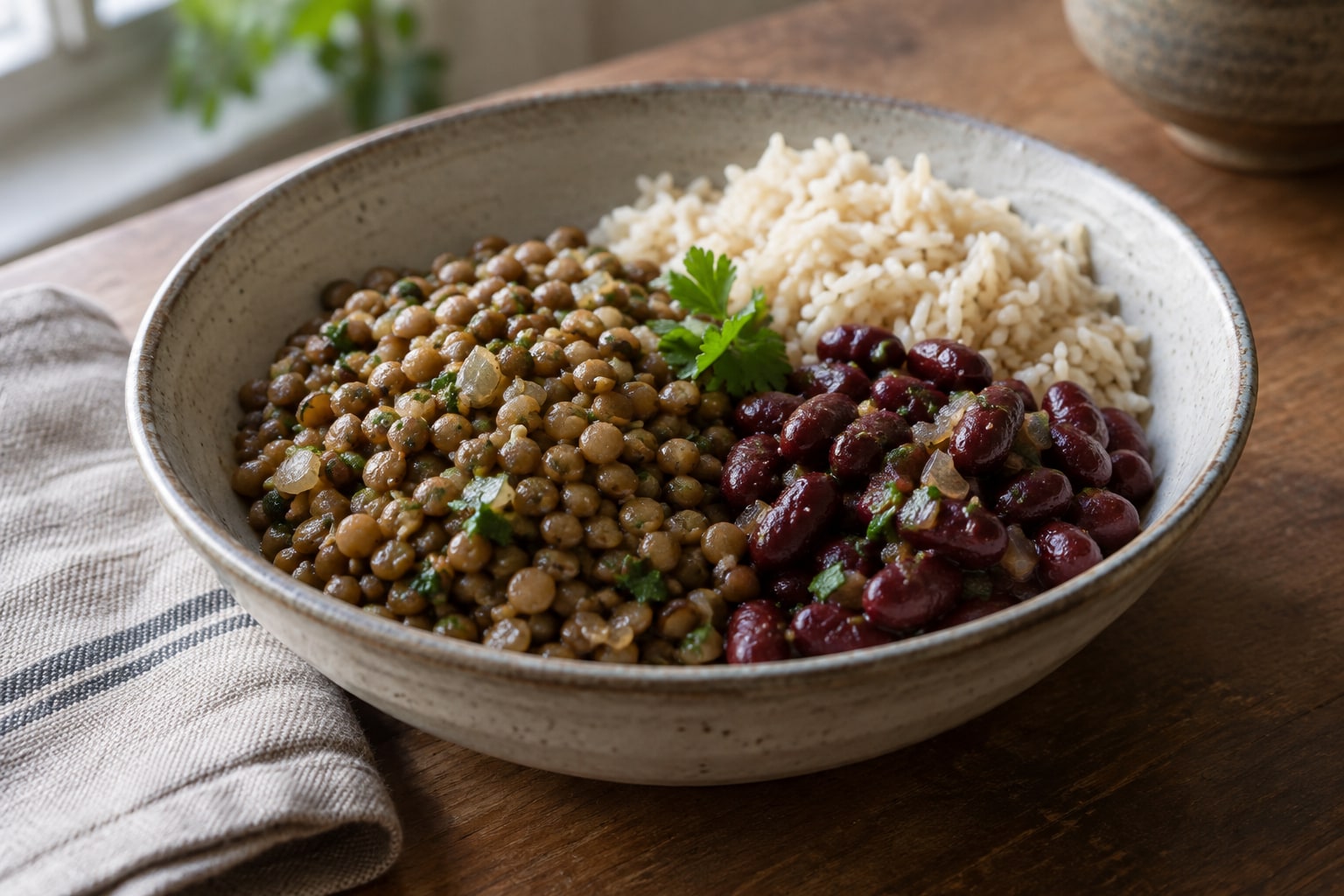
Rice and beans are plant-based protein sources, each low in a different essential amino acid. Eaten together, this classic meal can provide about 12 g of protein per cup (240 g), depending on the proportions.
Rice is low in lysine but relatively richer in methionine. Beans, on the other hand, are rich in lysine but low in methionine. So when you combine rice and beans you get enough of each one, as well as the other essential amino acids, and the meal counts as a complete protein.
Lentils
Whether they're brown, green or red, half a cup of cooked lentils (about 100 g) added to soups, salads or rice adds about 9 g of protein to your meal. Check your grocery store's bulk bins for a good deal on dry lentils. Lentils are also rich in folate, antioxidants and iron.
Quinoa
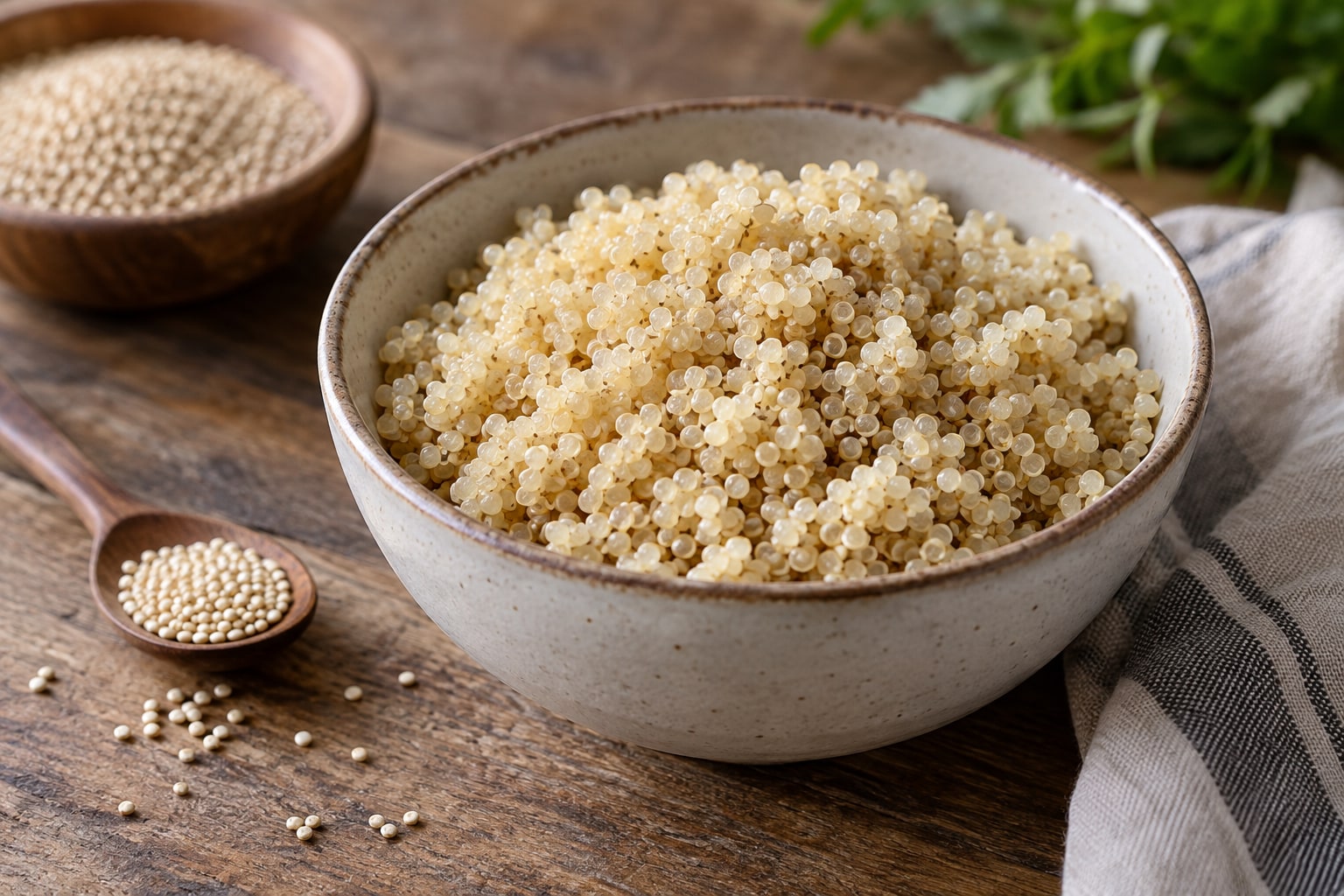
Quinoa is special because it makes the list of foods with complete protein: it contains all nine essential amino acids. In 100 g of cooked quinoa, there are about 4.4 g of protein, roughly 5 g. It also provides magnesium, zinc, iron and folate.
Soy protein powder
Soy-based protein powder is a perfect, convenient and inexpensive way to make up your daily amount of protein. It contains all the essential amino acids, making it a good, high-quality complete protein.
This powder suits vegetarians, vegans and people who are sensitive to dairy products. In USDA data, 30 g of soy protein isolate gives about 26 g of protein and about 100 calories, with nearly all of those calories coming from protein. Check the serving size on the label.
The FDA does not approve supplements before sale. If you are allergic to soy, I recommend choosing another protein source. My protein powder guide covers types and how to choose.
What studies on vegan and omnivore lifters found
A few well-controlled studies have tested plant-based diets during real training:
- Vegans vs omnivores, 12 weeks (Hevia-Larraín 2021). Both groups gained about 1.2 kg (2.6 lb) of leg lean mass, with no difference in muscle size or leg press strength. Limits: small groups of young untrained men, legs only.
- Fully vegan vs omnivorous diets, 10 weeks (Monteyne 2023). Lean mass rose about 3.1 kg (6.8 lb) in the vegan group and 2.6 kg (5.7 lb) in the omnivore group (not a significant difference), and thigh muscle volume about 8% in both. Limits: very small groups, a mycoprotein-rich diet, and one author worked for a mycoprotein maker.
- Soy vs animal protein supplements (Messina 2018). A meta-analysis of 9 studies (266 people, 6 weeks or more of training) found similar gains in strength and lean mass with soy as with whey or other animal proteins. Limits: mostly small supplement studies.
In conclusion
A well-planned diet can help vegetarians and vegans meet their protein needs. Both meat and plant-based protein have advantages and disadvantages. If you eat animal foods, it is better to vary your diet and consume protein from both sources, with an emphasis on chicken, fish and plant-based proteins over red meat.
With an all-plant menu, increase protein intake because of the lower digestibility. Some people may want to increase their plant protein intake for other reasons too. My preference is to keep the menu varied.
For the training side, see how to build muscle and hypertrophy training. For more meal ideas, see foods to build muscle.
Frequently asked questions
Can you build muscle with plant-based protein?
Yes. In two controlled training studies, young adults on high-protein vegan diets gained about as much muscle and strength as omnivores eating the same amount of protein.
Is plant protein as good as whey for muscle growth?
After a single meal, whey tends to raise muscle building more than soy. Over weeks of training, a meta-analysis of 9 studies found similar gains with soy and animal protein supplements.
What are complete plant proteins?
Soy foods, soy protein powder and quinoa are usually counted as complete. Most other plant proteins are low in one essential amino acid, mostly lysine in grains, nuts and seeds.
Can you build muscle on a vegan diet without protein powder?
Yes, if your meals cover your protein. Powder just makes it easier.
Do vegans need to worry about vitamin B12?
Yes. Plant foods don't naturally contain it, so vegans need fortified foods or a supplement.
The information on this page and on this website is intended to provide general information only. The content on this website does not constitute a professional opinion, a recommendation, or a substitute for consulting an expert in a specific field or obtaining a medical opinion. This article is written for healthy adults. It is not medical advice, not dietetic advice and not a personal diet plan. If you have a health condition, a food allergy, are pregnant or breastfeeding, are under 18, or take medication, talk to a doctor or a registered dietitian before changing what you eat.
Sources
Accessed September 18, 2026.
- Jäger R. et al., "International Society of Sports Nutrition Position Stand: protein and exercise", J Int Soc Sports Nutr 2017;14:20 (1.4-2.0 g/kg/day; 20-40 g or 0.25 g/kg per meal every 3-4 hours; 700-3,000 mg leucine per dose). pubmed.ncbi.nlm.nih.gov/28642676
- Rogerson D., "Vegan diets: practical advice for athletes and exercisers", J Int Soc Sports Nutr 2017;14:36 (narrative review; vegan athletes toward the higher end of the ISSN range; lower digestibility; phytates and tannins; B12 sources). pubmed.ncbi.nlm.nih.gov/28924423
- Mariotti F., Gardner C.D., "Dietary Protein and Amino Acids in Vegetarian Diets - A Review", Nutrients 2019;11(11):2661 (lysine low in grains, sulfur amino acids slightly low in legumes; no evidence proteins must be combined in the same meal). pubmed.ncbi.nlm.nih.gov/31690027
- Hevia-Larraín V. et al., "High-Protein Plant-Based Diet Versus a Protein-Matched Omnivorous Diet to Support Resistance Training Adaptations: A Comparison Between Habitual Vegans and Omnivores", Sports Med 2021;51(6):1317-1330. pubmed.ncbi.nlm.nih.gov/33599941
- Monteyne A.J. et al., "Vegan and Omnivorous High Protein Diets Support Comparable Daily Myofibrillar Protein Synthesis Rates and Skeletal Muscle Hypertrophy in Young Adults", J Nutr 2023;153(6):1680-1695. pubmed.ncbi.nlm.nih.gov/36822394
- Messina M. et al., "No Difference Between the Effects of Supplementing With Soy Protein Versus Animal Protein on Gains in Muscle Mass and Strength in Response to Resistance Exercise", Int J Sport Nutr Exerc Metab 2018;28(6):674-685. pubmed.ncbi.nlm.nih.gov/29722584
- van Vliet S., Burd N.A., van Loon L.J., "The Skeletal Muscle Anabolic Response to Plant- versus Animal-Based Protein Consumption", J Nutr 2015;145(9):1981-1991. pubmed.ncbi.nlm.nih.gov/26224750
- Melina V., Craig W., Levin S., "Position of the Academy of Nutrition and Dietetics: Vegetarian Diets", J Acad Nutr Diet 2016;116(12):1970-1980 (abstract). pubmed.ncbi.nlm.nih.gov/27886704
- Ankar A., Kumar A., "Vitamin B12 Deficiency", StatPearls, NCBI Bookshelf, updated 2024-09-10. www.ncbi.nlm.nih.gov/books/NBK441923
- FDA, Dietary Supplements (updated 2024-10-01). www.fda.gov/food/dietary-supplements
- USDA ARS, FoodData Central, SR Legacy entries per 100 g: vital wheat gluten FDC 168147; soy protein isolate FDC 174276; tempeh FDC 174272; tofu, raw, firm, prepared with calcium sulfate FDC 172475; tofu, raw, regular, prepared with calcium sulfate FDC 172476; edamame, frozen, prepared FDC 168411; lentils, cooked, boiled, without salt FDC 172421; black beans, cooked, boiled, without salt FDC 173735; chickpeas, cooked, boiled, without salt FDC 173757; quinoa, cooked FDC 168917; rice, white, long-grain, regular, enriched, cooked FDC 168878; oats, regular and quick, not fortified, dry FDC 173904; peanut butter, smooth style, without salt FDC 172470; pumpkin and squash seed kernels, dried FDC 170556; hemp seed, hulled FDC 170148; soymilk, unsweetened, with added calcium, vitamins A and D FDC 175215; chicken breast, meat only, cooked, roasted FDC 171477. fdc.nal.usda.gov
- Budhathoki S. et al., "Association of Animal and Plant Protein Intake With All-Cause and Cause-Specific Mortality in a Japanese Cohort", JAMA Intern Med 2019;179(11):1509-1518. jamanetwork.com/journals/jamainternalmedicine/article-abstract/2768358
- Turner-McGrievy G.M. et al., "Comparative effectiveness of plant-based diets for weight loss: a randomized controlled trial of five different diets", Nutrition 2015;31(2):350-358. pubmed.ncbi.nlm.nih.gov/25592014