
Simple vs Complex Carbs: What Carbohydrates Do and How to Use Them When You Train
In short
If you have been told to cut carbs, it helps to know what they actually do before you take them off your plate. Carbs fuel your brain and muscles. I would get most of them from whole foods, keep fruit in the mix, and use it when you want quick energy before training. Let's start with the difference between simple and complex carbs.
What are carbohydrates?
Carbohydrates are a main source of energy for your body. The body breaks down the carbs you eat into glucose, a sugar that fuels the brain, muscles, organs and other cells. Carbohydrates themselves are molecules made of carbon, hydrogen and oxygen.
After you eat them, your digestive system breaks them down into simple sugars that enter your blood. As blood sugar rises, the pancreas releases insulin. Insulin helps move sugar from the blood into cells, where it can be used for energy or stored.
The roles of carbohydrates
Producing energy
Their main role is to provide energy to the body's cells. Some cells, such as red blood cells, use glucose as their fuel. The brain also relies heavily on glucose, although it can use other fuels during long periods without food. If you have ever found it hard to concentrate while cutting, this is one reason to pay attention to what and how much you eat.
Filling the glycogen stores in your muscles
Glycogen is made of glucose and stored in your muscles and liver. Your muscles use it as fuel when you train. Eat too little carbohydrate for your training load and those stores can run low. A review of natural bodybuilding nutrition notes that too little carbohydrate can impair strength training (Helms 2014).
Because you use glycogen for energy, it makes sense to refill it. I like to eat carbs after training. The ISSN position stand says rapid refilling matters most when the next session is less than about four hours away (Kerksick 2017); otherwise your regular meals have time to do the job.
When you eat more than you use
If you eat a lot of carbohydrates and a lot of calories overall, body fat can increase. The point is the total amount of energy you eat compared with what you use over time, whether those calories come from carbs, fat or protein. Your body does not turn every unused gram of sugar straight into fat.
Simple carbohydrates
As the name suggests, simple carbohydrates have a simple chemical structure. There are two kinds:
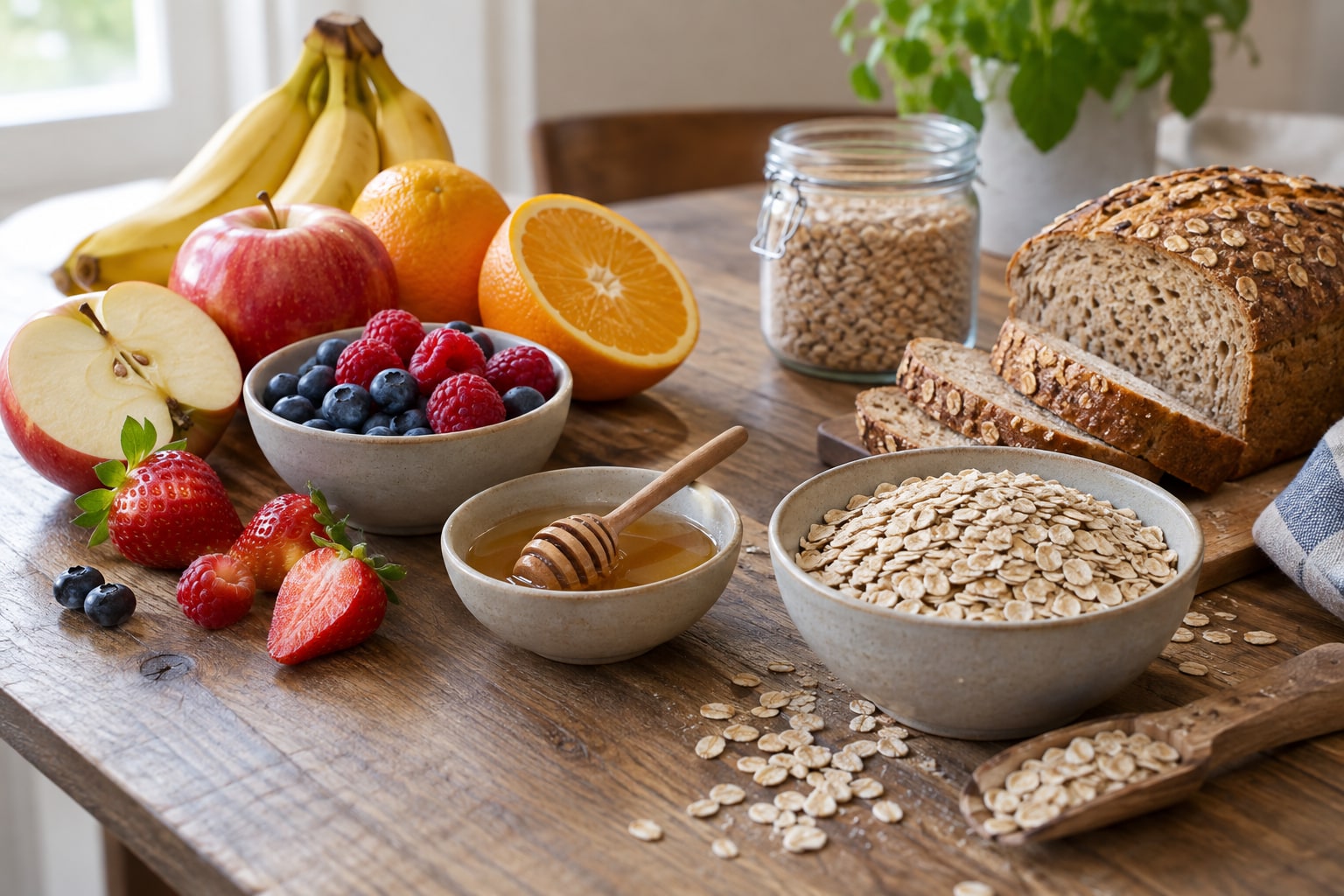
- Monosaccharides: one sugar molecule, such as glucose or fructose.
- Disaccharides: two linked sugars, such as lactose in milk or sucrose in table sugar.
Enzymes in the small intestine break them down before they enter your blood. But simple does not mean every food acts the same way. Fruit has fiber, so its sugar may affect your blood sugar differently from sugar in a sweetened drink. Fruit also brings vitamins and minerals. That is why I would keep it in your diet.
Eat a lot of sugar in a short time and your blood sugar can rise quickly. Some people feel tired or hungry again soon after. Simple-carb examples include sugar, sweets, sweetened drinks, dairy products and fruit.
Complex carbohydrates
Complex carbohydrates are made of three or more sugars linked together. Starch and fiber are common examples. Many whole foods that contain complex carbs take longer to digest and can keep you full for longer. They often bring fiber, vitamins and minerals too; sweet potato, for example, is rich in vitamin A (from beta-carotene).
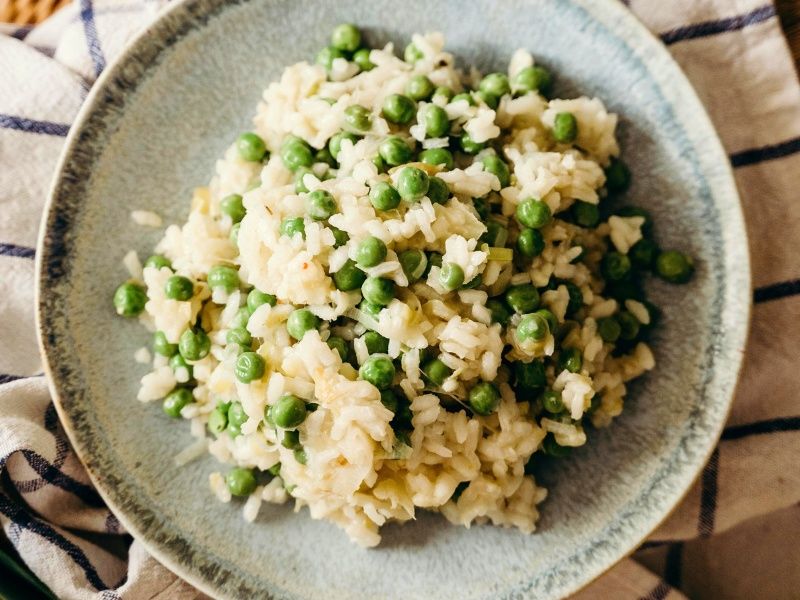
My list of complex-carb foods is sweet potato, rice, oats, bread, pasta and beans. When you plan your meals, aim to get most of your carbs from whole complex foods. Processing matters, though: white rice and white bread contain starch but are low in fiber.
Dietary fiber
Fiber is the part of plant food your body cannot digest or absorb. It passes through the stomach and small intestine relatively intact. In the large intestine, gut bacteria break some of it down; the rest leaves your body.
Fiber helps you feel full, slows how quickly sugar from a meal reaches your blood, and supports regular digestion. It also supports gut health and can help lower cholesterol, as described by the Mayo Clinic fiber guide.
Food examples and portions
Here are five examples with typical portions. The values are rounded from USDA FoodData Central, so read them as "about":
| Food and portion | Calories | Carbs | Fiber | Protein | Fat |
|---|---|---|---|---|---|
| White rice, cooked, 1 cup (158 g) | 205 kcal | 45 g | 0.6 g | 4 g | 0.4 g |
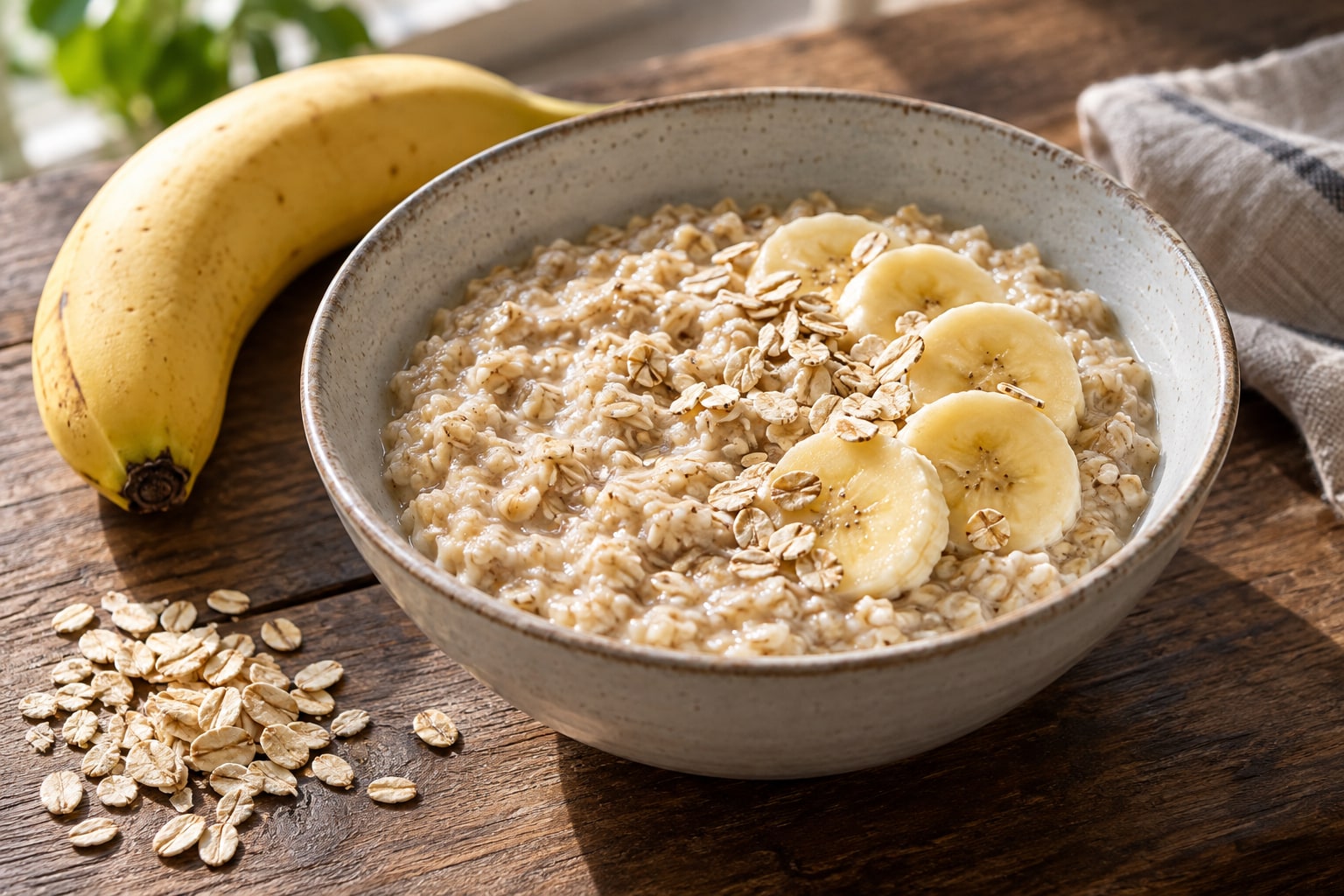
| Oats, dry, 1/2 cup (40 g) | 150 kcal | 27 g | 4 g | 5 g | 2.6 g |
| Sweet potato, baked, 100 g | 90 kcal | 21 g | 3.3 g | 2 g | 0.2 g |
| Green peas, boiled, 1/2 cup (80 g) | 67 kcal | 12.5 g | 4.4 g | 4.3 g | 0.2 g |
| Whole-wheat bread, 1 slice (30 g) | 75 kcal | 13 g | 2 g | 4 g | 1 g |
Rice is cheap and easy to cook, and oats give you fiber alongside their carbs. For more portions, see high-carb foods.
Empty carbohydrates
By "empty carbs," I mean processed sugars and starches from which much of the fiber and other nutrients have been removed. The phrase is an everyday shortcut, not a separate kind of molecule. Most sugars are easy to recognize: sweet crystals, syrup or powder. Refined grains can be harder to spot.
Take whole wheat. When it is refined into white flour, the starch remains but the bran and germ are removed. The bran contains fiber and vitamins; the germ contains vitamins, minerals and a little fat. Eat as little as possible of foods such as sweetened drinks, snacks, syrups, sweet sauces and baked goods. The US Dietary Guidelines 2025-2030 also advise reducing highly processed refined carbs and avoiding sugar-sweetened drinks.
How to include simple and complex carbohydrates in your diet
People can respond very differently to foods; there is no single diet for everyone. Focus on carbs from whole foods, such as fruit and whole grains, rather than processed foods. I would include both simple and complex carbs, with most of your carbs coming from whole complex-carb foods. If you have not eaten for a long time or are about to train and want quick energy, fruit is an excellent idea.
Simple vs complex carbs at a glance
| Simple carbs | Complex carbs | Refined carbs | |
|---|---|---|---|
| Structure | one or two sugar units | chains of three or more (starch, fiber) | sugars and starches stripped from whole foods |
| Fiber | fruit has some; sugar and sweets have none | whole grains and beans have a lot; potatoes have some | usually little |
| Examples | fruit, dairy, sugar, sweets, sweetened drinks | sweet potato, rice, oats, bread, pasta, beans | sweetened drinks, sweets, crackers, syrups, pastries, white bread |
What the glycemic index tells you
"Complex" does not guarantee a slow rise in blood sugar: white bread and many types of white rice are starches, yet they can raise it quickly. The glycemic index (GI) compares a food's blood sugar rise with the rise from the same amount of carbohydrate as pure glucose, on a scale of 0 to 100; 55 or below counts as low. The 2021 international GI tables, a systematic review of over 4,000 foods, found dairy, legumes, pasta and fruit usually low GI, most potatoes high, and breads, cereals and rice (even whole-grain ones) anywhere from low to high (Atkinson 2021).
The GI also varies from person to person. In a study of 63 healthy adults who each had white bread and a glucose drink three times, the average GI of the bread was 62, but it varied a lot: by about 20% on average within the same person and 25% between people. The authors concluded that this variation makes the GI unlikely to be a good way to guide food choices (Matthan 2016). Limits: one food, healthy adults only.
So treat "simple vs complex" and GI as rough guides. Processing, fiber, portion and what you eat with a food all affect its response. This is why I choose whole foods most often instead of relying on the label alone.
How many carbohydrates should you eat per day?
The amount you need depends on your weight, age, sex and how much you move. For adults in general, the US National Academies give a range of 45% to 65% of daily calories from carbohydrates. Each gram has about four calories. So at 2,000 calories a day, that works out to about 225–325 grams. It is a general range, not a personal prescription.
If you train hard, your needs may be different. The Helms 2014 review cites about 4–7 grams per kilogram of body weight (about 1.8–3.2 grams per pound) for strength training, depending on training phase; the 2016 joint nutrition position says needs rise with training load (Thomas 2016).
For example, at 70 kg (about 154 lb), that strength-training range would be about 280–490 grams a day. It is an illustration, not a target for you. The BMR calculator can help you estimate energy needs.
What happens on a diet with almost no carbohydrates?
When cutting, you might wonder whether eating fewer than 50 grams of carbs a day will put you in ketosis. It can, but not automatically. In ketosis, the body uses more fat and ketones as fuel. That may sound like everyone's dream, but it does not guarantee weight loss.
Here are possible effects to keep in mind: headaches, fatigue, constipation, nausea, changes in sleep and bad breath can occur on a very low-carb diet. The WebMD ketosis guide describes them.
You can be in ketosis and still gain weight if you eat more calories than you use, including calories from fat and protein. I would keep strength training during a cut to give my muscles a reason to stay, rather than treat ketosis as a shortcut.
Bottom line
Carbohydrates have an important role in a balanced lifestyle. Simple carbs include fruit as well as sweets and sweetened drinks; I would choose fruit over sweets because it also brings fiber, vitamins and minerals. Get most of your carbs from whole complex-carb foods such as oats, beans and whole grains. Remember that processing, fiber and what you eat with a food matter more than the simple-or-complex label alone.
Frequently asked questions
Which is better, simple or complex carbs?
Neither label is enough on its own. I would get most carbs from whole, fiber-rich foods and choose fruit when I want something quick before a workout. A glass of soda and a piece of fruit are both sources of simple sugar, but they are not the same food.
Should I cut carbs when I train?
I would first look at how much and how hard you train. Very little carbohydrate can make strength training harder (Helms 2014), and ketosis by itself does not decide whether your weight changes.
The information on this page and on this website is intended to provide general information only. The content on this website does not constitute a professional opinion, a recommendation, or a substitute for consulting an expert in a specific field or obtaining a medical opinion. This article is written for healthy adults. It is not medical advice, not dietetic advice and not a personal diet plan. If you have a health condition, a food allergy, are pregnant or breastfeeding, are under 18, or take medication, talk to a doctor or a registered dietitian before changing what you eat.
Sources
Accessed September 18, 2026.
- Helms E.R., Aragon A.A., Fitschen P.J., "Evidence-based recommendations for natural bodybuilding contest preparation: nutrition and supplementation", J Int Soc Sports Nutr 2014;11:20 (full text; carbohydrate section). pmc.ncbi.nlm.nih.gov/articles/PMC4033492
- Academy of Nutrition and Dietetics, Dietitians of Canada and American College of Sports Medicine (Thomas D.T., Erdman K.A., Burke L.M.), "Nutrition and Athletic Performance", joint position, J Acad Nutr Diet 2016;116(3):501-528; the PubMed abstract gives only the scope, and the training-load guidance is in the full paper. pubmed.ncbi.nlm.nih.gov/26920240
- Mata F. et al., "Carbohydrate Availability and Physical Performance: Physiological Overview and Practical Recommendations", Nutrients 2019;11(5):1084, a review that describes the 2016 joint position's point that carbohydrate needs follow training loads and goals. pmc.ncbi.nlm.nih.gov/articles/PMC6566225
- Kerksick C.M. et al., "International society of sports nutrition position stand: nutrient timing", J Int Soc Sports Nutr 2017;14:33. pubmed.ncbi.nlm.nih.gov/28919842
- Atkinson F.S. et al., "International tables of glycemic index and glycemic load values 2021: a systematic review", Am J Clin Nutr 2021;114(5):1625-1632. pubmed.ncbi.nlm.nih.gov/34258626
- Matthan N.R. et al., "Estimating the reliability of glycemic index values and potential sources of methodological and biological variability", Am J Clin Nutr 2016;104(4):1004-1013. pubmed.ncbi.nlm.nih.gov/27604773
- Institute of Medicine (National Academies), Dietary Reference Intakes, Acceptable Macronutrient Distribution Ranges (carbohydrate 45-65% of energy for adults). www.ncbi.nlm.nih.gov/books/NBK56068/table/summarytables.t5
- Dietary Guidelines for Americans 2025-2030 (whole grains, refined carbohydrates, added sugars). realfood.gov
- USDA FoodData Central, per 100 g: rice, white, long-grain, regular, enriched, cooked (FDC 168878); rice, brown, long-grain, cooked (FDC 169704); cereals, oats, regular and quick, not fortified, dry (FDC 173904); sweet potato, cooked, baked in skin, flesh, without salt (FDC 168483); peas, green, cooked, boiled, drained, without salt (FDC 170420); bread, whole-wheat, commercially prepared (FDC 172688). fdc.nal.usda.gov
- Mayo Clinic, carbohydrate overview (source from the original article). mayoclinic.org/healthy-lifestyle/nutrition-and-healthy-eating/in-depth/carbohydrates/art-20045705?pg=2
- Mayo Clinic, dietary fiber (source from the original article). mayoclinic.org/healthy-lifestyle/nutrition-and-healthy-eating/in-depth/fiber/art-20043983
- WebMD, ketosis (source from the original article). webmd.com/diabetes/type-1-diabetes-guide/what-is-ketosis#1