
High Carb Foods: A List of 20 Healthy Carbs, With Values per 100 g
In short
Looking for high carb foods to put on your plate? Fruit, rice, oats, sweet potatoes, whole-wheat pasta, quinoa, beans and peas are all on my list. Here are my tips for choosing them, with values per 100 g for 20 foods and an example for your training day.
Carbohydrates are one of the three main nutrients your body needs to function properly, along with protein and fat. They are the body's main source of energy and are found in a wide variety of foods. Here is my carbohydrate list to help you choose foods for your own meals.
What carbohydrates are
Carbohydrates are biomolecules made of carbon, hydrogen and oxygen atoms. They are basically your body's "fuel." Your body breaks carbohydrates down into glucose, a simple sugar carried in the blood to different cells and tissues. Chemical reactions in those cells release the energy they use to carry out their activities.
Types of carbohydrates
Simple carbohydrates have one or two sugar units. Think of sweet foods such as candy, cookies and soda. They can be absorbed quickly and cause a rapid rise in blood sugar. Fruit is a source of simple carbohydrates too, but it is a healthy choice; I will explain more below.
Complex carbohydrates are longer chains of sugar units found in foods such as whole grains and legumes. Whole, fiber-rich foods usually digest more slowly and give you a steadier release of energy. Focus on these when building your meals, although "complex" alone does not tell you how quickly a food raises blood sugar.
When it comes to a healthy diet, I recommend choosing nourishing carbohydrates. There are plenty on this list; for more on the two types, read the guide to carbohydrates.
Fruit
Fruit is a source of simple carbohydrates. If you want something sweet in the middle of the day, it is my first choice. It is tasty and rich in dietary fiber, vitamins, minerals and antioxidants, with relatively few calories compared with candy.
There are many different kinds of fruit you could put on this list, but they are quite similar: they have sugar, but also dietary fiber. Because they have fiber, they can raise blood sugar more gently than candy does.
Eat a piece of fruit after your workout. Its sugar helps replenish the glycogen, or stored carbohydrate, in your muscles.
Rice
There is a reason so many bodybuilders eat rice and chicken breast all the time. Rice undoubtedly ranks near the top of my list. It is an excellent carbohydrate source, with relatively few calories per 100 g cooked. Brown rice has more fiber than white rice, but rice is not as rich in fiber as oats or beans.
Many people consider white rice a poor source of carbohydrates because it loses nutrients when the bran and germ are removed. However, enriched white rice still contains nutrients such as iron and B vitamins. Brown rice keeps more fiber and minerals, but white rice is still nutritious.
One point on brown rice: rice takes up arsenic more readily than other crops, and a 2023 review notes that brown rice has more of it than white rice. The US Food and Drug Administration (FDA) says rice can be part of a well-balanced diet and advises eating a variety of foods. Cooking rice like pasta, in plenty of water that you drain, cuts its inorganic arsenic by about 40-60%, but also about half or more of the added folate, iron, niacin and thiamine in enriched rice. My view: white or brown, rice is a good carb, and mixing it with oats, quinoa, potatoes and whole-wheat pasta is the sensible way to eat it.
Oats
Oats are a whole grain and a complex carbohydrate. They are rich in dietary fiber, especially a soluble fiber called beta-glucan, and fiber helps keep your digestion regular. In a fiber-rich meal, oats can give you a slower, steadier release of energy.
They are also a good source of vitamins and minerals, especially magnesium, potassium and zinc. Your body uses these minerals for your bones, muscles and nerves.
Another advantage of oats is how easily they fit into your meals. You can cook them, make dishes with them, eat them with fruit and use them in many other ways.
Sweet potato
Sweet potato is an excellent source of complex carbohydrates. It has a lot going for it: it is tasty and sweet, rich in vitamins and minerals, low in fat and relatively low in calories per 100 g.
It is especially rich in vitamin A, from beta-carotene, and potassium. Your body needs vitamin A for normal vision and potassium for normal muscle function. Its dietary fiber helps with digestion and feeling full. If you want a filling carb while managing your weight, sweet potato is one I would put on your plate.
Sweet potato also contains antioxidants.
Whole-wheat pasta
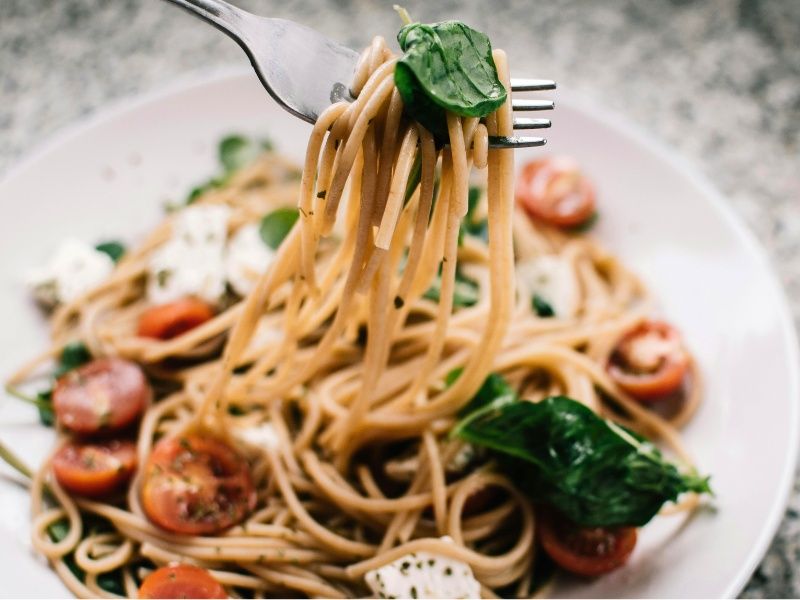
Whole-wheat pasta is on my list too. It is an excellent choice if you want to gain weight and muscle mass. Compared with many other foods, pasta is easy to eat in large quantities. There are more ideas in foods to build muscle.
Whole-wheat pasta contains B vitamins, which help your body use the energy in your food, plus iron and zinc. Compared with regular pasta made from refined wheat, it also has more nutrients and fiber. I would use it in anything from pasta with meat sauce to different stir-fries.
Quinoa
Quinoa is cooked and eaten like a whole grain and is a great source of complex carbohydrates. It is also a good protein source for vegetarians and vegans. Quinoa has complete protein, meaning it contains all the essential amino acids.
It is rich in fiber, so it helps you feel full. It also contains minerals such as magnesium, potassium and zinc, which your body uses for bones, muscles and nerves.
Quinoa is also gluten-free, making it an excellent alternative if you avoid gluten. My suggestion: add it to salads and soups, or serve it as a side dish.
Beans
If you are cutting body fat and looking for a healthy, filling carbohydrate with relatively few calories, I recommend beans. They are rich in protein and dietary fiber. They are also known for a low glycemic index: they are absorbed slowly, raise blood sugar moderately and give you a steady release of energy.
Beans are legumes, so combining them with a grain gives you a complete protein, with all the essential amino acids. That makes them an excellent choice for vegetarians and vegans.
They are also a good source of minerals such as iron, potassium and zinc, which have roles in your bones, muscles and nerves. I would eat beans as a side dish or add them to salads, soups and stews. There are plenty of ways to make them fit your meals.
Peas
Peas have a place of honor on my carbohydrate list. If you want to lose weight, they are an excellent option. Their dietary fiber and relatively few calories help you feel full without consuming many calories.
They are rich in protein, but it is not a complete protein. Combine them with a grain to cover the full set of essential amino acids.
Peas are also a good source of several vitamins and minerals, including vitamin C, vitamin A, vitamin K, folate, iron, phosphorus and manganese. These nutrients play a wide range of roles in your body. I would add peas to soups, stews, curries and salads.
High carb foods list: values per 100 g
Here are the numbers for the foods above, plus a few more options from the same food groups. The tables let you compare foods rather than pick a single "best" carb.
How to read the numbers
All values are per 100 g from USDA FoodData Central, rounded, so read each one as "about". Three things help:
- Cooked or dry matters. Grains soak up water when you cook them. For example, dry white rice has about 80 g of carbs per 100 g, and cooked white rice about 28 g. Weigh your food the same way every time.
- USDA's carb number includes fiber. In the US, total carbohydrate on a food label also includes fiber; in the EU and some other regions, fiber is listed separately.
- The last column shows how much of each food gives about 30 g of carbs. It is a unit for comparing foods, not a portion you should eat.
Grains
| Food (per 100 g) | Carbs | Fiber | Protein | Energy | About 30 g of carbs in |
|---|---|---|---|---|---|
| White rice, long-grain, cooked | 28 g | 0.4 g | 2.7 g | 130 kcal | 105 g cooked (about 2/3 cup) |
| Brown rice, long-grain, cooked | 26 g | 1.6 g | 2.7 g | 123 kcal | 115 g cooked (a heaping 1/2 cup) |
| Oats, rolled or quick, dry | 68 g | 10 g | 13 g | 379 kcal | 45 g dry (about 1/2 cup) |
| Whole-wheat pasta, cooked | 30 g | 3.9 g | 6 g | 149 kcal | 100 g cooked (a scant cup) |
| Quinoa, cooked | 21 g | 2.8 g | 4.4 g | 120 kcal | 140 g cooked (about 3/4 cup) |
| Whole-wheat bread | 43 g | 6 g | 12 g | 252 kcal | 70 g (about 2 slices) |
Starchy vegetables
| Food (per 100 g) | Carbs | Fiber | Protein | Energy | About 30 g of carbs in |
|---|---|---|---|---|---|
| Sweet potato, baked in skin (flesh) | 21 g | 3.3 g | 2 g | 90 kcal | 145 g (a medium-large sweet potato) |
| Potato, baked, flesh and skin | 21 g | 2.2 g | 2.5 g | 93 kcal | 140 g (a small-medium potato) |
| Sweet corn, yellow, boiled | 21 g | 2.4 g | 3.4 g | 96 kcal | 145 g (about 1 cup of kernels) |
| Green peas, boiled | 16 g | 5.5 g | 5.4 g | 84 kcal | 190 g (about 1 1/4 cups) |
Legumes
| Food (per 100 g) | Carbs | Fiber | Protein | Energy | About 30 g of carbs in |
|---|---|---|---|---|---|
| Kidney beans, boiled | 23 g | 7.4 g | 8.7 g | 127 kcal | 130 g (about 3/4 cup) |
| Lentils, boiled | 20 g | 7.9 g | 9 g | 116 kcal | 150 g (about 3/4 cup) |
| Chickpeas, boiled | 27 g | 7.6 g | 8.9 g | 164 kcal | 110 g (about 2/3 cup) |
Fruit
| Food (per 100 g) | Carbs | Fiber | Protein | Energy | About 30 g of carbs in |
|---|---|---|---|---|---|
| Banana | 23 g | 2.6 g | 1.1 g | 89 kcal | 130 g (one large banana) |
| Apple, with skin | 14 g | 2.4 g | 0.3 g | 52 kcal | 220 g (one large apple) |
| Orange | 12 g | 2.4 g | 0.9 g | 47 kcal | 250 g (about two medium oranges) |
| Medjool dates | 75 g | 6.7 g | 1.8 g | 277 kcal | 40 g (1-2 dates) |
| Raisins, seedless | 79 g | 4.5 g | 3.3 g | 299 kcal | 40 g (about 1/4 cup) |
More carbohydrate options
Whole-wheat bread
Bread is the easiest carb to carry: a sandwich before or after the gym takes a minute to make. Whole-wheat bread gives you more fiber than white bread: about 6 g per 100 g, against about 2.7 g. It contains wheat (gluten).
Potato
The regular potato has about the same carbs per 100 g as a sweet potato, a little less fiber and plenty of potassium: a simple, cheap carb for any meal.
Lentils and chickpeas
Lentils and chickpeas work the same way as beans: carbs, a lot of fiber and about 9 g of protein per 100 g cooked. Lentils cook fast and need no soaking; chickpeas go into hummus, salads and curries.
Milk and yogurt
| Food (per 100 g) | Carbs | Fiber | Protein | Energy | Carbs in a common portion |
|---|---|---|---|---|---|
| Milk, whole | 4.8 g | 0 g | 3.2 g | 61 kcal | about 12 g in a 250 ml glass |
| Plain yogurt, whole milk | 4.7 g | 0 g | 3.5 g | 61 kcal | about 9 g in a 200 g pot |
Milk and plain yogurt are not high in carbs by weight, but their natural sugar (lactose) comes with protein, so yogurt with oats and fruit gives you both at once. If you are lactose intolerant or allergic to milk, choose other foods from the list. Flavored yogurts usually have added sugar.
How to use carbs around your training
As a general range for healthy active adults in strength sports, a review cited in a bodybuilding nutrition paper (Helms 2014) recommends about 4-7 g of carbohydrate per kg of body weight per day (about 1.8-3.2 g per lb), depending on the phase of training, and a joint position of the Academy of Nutrition and Dietetics, Dietitians of Canada and the American College of Sports Medicine (2016) says needs rise with training load. Your needs may differ. For energy needs, start with the BMR calculator; the basics are in the guide to carbohydrates.
Before training
- 2-4 hours before: a normal meal with one of the grains or starchy vegetables above and some protein works well for most people, for example rice or potatoes with chicken or fish.
- Within the last hour: keep it small and easy to digest: a banana, a couple of dates, a slice of bread with honey, or some white rice.
- Watch the fiber: beans, lentils, peas and big bowls of oats are great foods, but a lot of fiber right before training can sit heavy. Many people eat them at meals further from the workout.
After training
A meal with carbohydrate and protein is a simple choice after training, such as pasta with meat sauce, or yogurt with fruit and oats. The ISSN position stand on nutrient timing (Kerksick 2017) treats fast glycogen refilling as important mainly when your next hard session is less than about 4 hours away; if you train once a day, enough carbohydrate across the day matters more. Pair your carbs with protein from the high-protein foods guide.
A worked example
Here is how the "about 30 g" units add up over a training day. It is an example to show the math, not a menu to copy:
- Lunch, 3 hours before training: 150 g of cooked white rice (about 42 g of carbs) with chicken and vegetables.
- 45 minutes before training: one large banana (about 30 g).
- After training: 200 g of plain yogurt with 40 g of raisins (about 9 + 32 = 41 g).
That is about 113 g of carbohydrate around one workout, from four simple foods.
Bottom line
Carbohydrates are a very important nutrient: their main job is to give your body energy. This list includes both simple and complex carbohydrates.
To stick with your nutrition over time, choose the foods you like. Use different spices, look for recipes and pick the foods that suit you. That is the best way to make your eating habits last.
When you build your meals, I recommend focusing on complex carbohydrates from whole, fiber-rich foods. They help you feel full for longer. The tables above let you compare calories too: "complex" does not automatically mean low in calories.
Frequently asked questions
Which high carb foods are good for bulking?
My pick is pasta if you find it easy to eat in large quantities. Rice, bread, oats and dried fruit are other options; see foods to build muscle.
What carbs should I eat before the gym?
I would have a normal meal with rice, potatoes, pasta or bread plus some protein a few hours before. Within the last hour, my suggestion is something small and low in fiber, such as a banana, dates or a slice of bread.
Is white rice or brown rice better?
Brown rice has more fiber, magnesium and phosphorus; enriched white rice has more iron and less fiber, which many people find easier to eat before training. Brown rice also tends to carry more arsenic, so eating a variety of grains is a good idea whichever you choose.
The information on this page and on this website is intended to provide general information only. The content on this website does not constitute a professional opinion, a recommendation, or a substitute for consulting an expert in a specific field or obtaining a medical opinion. This article is written for healthy adults. It is not medical advice, not dietetic advice and not a personal diet plan. If you have a health condition, a food allergy, are pregnant or breastfeeding, are under 18, or take medication, talk to a doctor or a registered dietitian before changing what you eat.
Sources
Accessed September 18, 2026.
- USDA FoodData Central, SR Legacy, grains: rice, white, long-grain, regular, enriched, cooked (FDC 168878); rice, white, long-grain, regular, raw, enriched (FDC 168877); rice, brown, long-grain, cooked (FDC 169704); cereals, oats, regular and quick, not fortified, dry (FDC 173904); pasta, whole-wheat, cooked (FDC 168910); quinoa, cooked (FDC 168917); bread, whole-wheat, commercially prepared (FDC 172688); bread, white, commercially prepared (FDC 174924). fdc.nal.usda.gov
- USDA FoodData Central, SR Legacy, starchy vegetables: sweet potato, cooked, baked in skin, flesh, without salt (FDC 168483); potatoes, baked, flesh and skin, without salt (FDC 170093); corn, sweet, yellow, cooked, boiled, drained, without salt (FDC 169999); peas, green, cooked, boiled, drained, without salt (FDC 170420). fdc.nal.usda.gov
- USDA FoodData Central, SR Legacy, legumes: beans, kidney, red, mature seeds, cooked, boiled, without salt (FDC 175194); lentils, mature seeds, cooked, boiled, without salt (FDC 172421); chickpeas, mature seeds, cooked, boiled, without salt (FDC 173757). fdc.nal.usda.gov
- USDA FoodData Central, SR Legacy, fruit and dairy: bananas, raw (FDC 173944); apples, raw, with skin (FDC 171688); oranges, raw, all commercial varieties (FDC 169097); dates, medjool (FDC 168191); raisins, dark, seedless (FDC 168165); milk, whole, 3.25% milkfat, with added vitamin D (FDC 171265); yogurt, plain, whole milk (FDC 171284). fdc.nal.usda.gov
- Helms E.R., Aragon A.A., Fitschen P.J., "Evidence-based recommendations for natural bodybuilding contest preparation: nutrition and supplementation", J Int Soc Sports Nutr 2014;11:20. pubmed.ncbi.nlm.nih.gov/24864135
- Academy of Nutrition and Dietetics, Dietitians of Canada and American College of Sports Medicine (Thomas D.T., Erdman K.A., Burke L.M.), "Position of the Academy of Nutrition and Dietetics, Dietitians of Canada, and the American College of Sports Medicine: Nutrition and Athletic Performance", J Acad Nutr Diet 2016;116(3):501-528 (the PubMed abstract gives only the scope; the training-load guidance is in the full paper). pubmed.ncbi.nlm.nih.gov/26920240
- Mata F. et al., "Carbohydrate Availability and Physical Performance: Physiological Overview and Practical Recommendations", Nutrients 2019;11(5):1084, a review that describes the 2016 joint position's training-load point. pmc.ncbi.nlm.nih.gov/articles/PMC6566225
- Kerksick C.M. et al., "International society of sports nutrition position stand: nutrient timing", J Int Soc Sports Nutr 2017;14:33. pubmed.ncbi.nlm.nih.gov/28919842
- Su L.J., Chiang T.C., O'Connor S.N., "Arsenic in brown rice: do the benefits outweigh the risks?", Front Nutr 2023;10:1209574. pubmed.ncbi.nlm.nih.gov/37521417
- European Union, Regulation (EU) No 1169/2011 on food information to consumers, Annex I (carbohydrate is defined without fibre; fibre is declared separately). eur-lex.europa.eu/eli/reg/2011/1169/oj
- US Food and Drug Administration, "What You Can Do to Limit Exposure to Arsenic" (updated 2022-04-27). www.fda.gov/food/environmental-contaminants-food/what-you-can-do-limit-exposure-arsenic